Defense News Digest: May 2026 Update
Add bookmarkWelcome to IDGA's monthly news roundup. For over two decades, IDGA has organized conferences designed to further the national security objectives of the current administration and to facilitate the acquisition priorities of the DoD, DHS, and other federal agencies. Now, through this weekly series, we look to educate the community on the latest research, program updates and news in the defense and government sector.
While the conflict in Iran and FY 2027 funding lead conversations in the defense and security industries, this month we look at four stories you might have missed, including plans to test a hypersonic weapon interceptor, a new Army marketplace for arms exports, and more.
Missile Defense Agency Plans to Test Hypersonic Weapon Interceptor in 2027
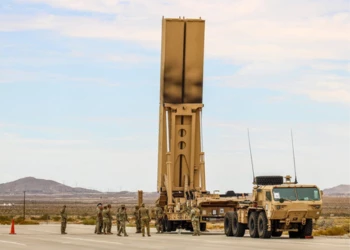
The Missile Defense Agency (MDA) is accelerating efforts to develop a near-term defense against hypersonic weapons through Project Maverick. The program aims to demonstrate the ability to track and intercept a hypersonic missile during a 2027 flight test along the U.S. East Coast using advanced sensor networks and offboard targeting data. If successful, the capability could serve as an interim counter-hypersonic solution until the more advanced Glide Phase Interceptor enters service in the early 2030s.
The effort reflects growing urgency within the Pentagon to counter increasingly sophisticated hypersonic threats capable of maneuvering at speeds above Mach 5. MDA officials emphasized that Project Maverick is intended to validate the full "kill chain" for hypersonic defense while supporting broader missile defense modernization efforts tied to the Trump administration's proposed "Golden Dome" homeland missile shield initiative.
The agency is also advancing its Low-Cost Interceptor program, which seeks to field affordable interceptors in large quantities, with a prototype demonstration expected in 2028.
IDGA's Next Generation Missiles and Hypersonics Conference will return in 2026 for two days of discussion surrounding advancements in hypersonic technology, including Project Maverick.
Army Launches Marketplace to Streamline Arms Exports to Allies
The Army is preparing to launch a new Foreign Military Sales (FMS) Marketplace designed to accelerate weapons exports to allied and partner nations. Expected to go live in the coming weeks, the online platform will initially be available to 25 partner countries and will feature pre-approved unmanned aerial systems (UAS) and counter-drone technologies. Army leaders described the marketplace as an "Amazon-like" portal that will simplify the traditionally lengthy FMS process, allowing eligible nations to quickly identify and purchase approved U.S. defense systems.
The initiative stems from President Trump's February executive order establishing an "America First Arms Transfer Strategy," which directed federal agencies to streamline arms sales, strengthen the U.S. defense industrial base, and improve burden-sharing with allies. Army officials said the marketplace will focus on capabilities already cleared for export, reducing bureaucratic delays while increasing production opportunities for American defense manufacturers.
Beyond accelerating sales, Army leaders emphasized the operational benefits of equipping allies with the same systems used by U.S. forces. By expanding access to common UAS and counter-UAS technologies, the marketplace is intended to improve interoperability, strengthen coalition readiness, and create a more integrated defense ecosystem across key partners in Europe and the Indo-Pacific.
Pentagon CTO Looks to Be More Direct with Industry
The Pentagon's Chief Technology Officer, Emil Michael, outlined a new approach to defense innovation that emphasizes providing technology vendors—particularly startups and small businesses—with rapid decisions on whether the Department of Defense intends to pursue their products. Speaking at SOF Week, Michael said the Pentagon aims to deliver "fast yeses and fast nos" to prevent companies from spending years navigating acquisition processes without a clear path to adoption.
To accelerate decision-making, the Department plans to involve military services earlier in the evaluation process, allowing operational users to quickly test emerging technologies and determine whether they meet mission requirements. Michael emphasized that transparent feedback, even when negative, helps companies refine their products or redirect resources more effectively.
Michael also highlighted interoperability as a central requirement for future defense technologies, particularly as the Pentagon pursues capabilities such as autonomous drone swarms and collaborative autonomy.
White House Releases 2026 Counterterrorism Strategy
The White House released its 2026 Counterterrorism Strategy, outlining a broader approach to national security that expands counterterrorism priorities beyond traditional terrorist organizations to include drug cartels, transnational criminal networks, state-sponsored threats, and domestic violent extremism. The strategy identifies three primary threat categories: narcoterrorist and transnational gang organizations, Islamist extremist groups, and violent domestic extremist actors.
A key focus of the strategy is the administration's effort to treat major cartels and criminal organizations as terrorist threats. Building on recent designations of several cartels as Foreign Terrorist Organizations, the strategy calls for continued military, intelligence, cyber, financial, and law enforcement operations to disrupt narcotrafficking networks and reduce the flow of illicit drugs into the United States. The document also emphasizes border security and targeting transnational criminal organizations operating throughout the Western Hemisphere.
The strategy identifies Iran as the leading state sponsor of terrorism and highlights ongoing efforts to counter Iranian support for proxy groups and regional destabilization activities. It also reaffirms continued pressure on Islamist terrorist organizations, including Al-Qaeda, through military, intelligence, and diplomatic operations designed to prevent external attacks against the United States and its allies.
Regionally, the strategy calls for sustained counterterrorism cooperation with partners across Africa, the Middle East, Europe, and Asia while maintaining a relatively lighter U.S. military footprint where possible. It also highlights protecting critical maritime chokepoints, preventing terrorist acquisition of weapons of mass destruction, and addressing fentanyl trafficking as a significant national security challenge.
Join IDGA's Border Technology Summit this September 17-18 in San Diego, California as leaders in federal law enforcement discuss how technology is supporting counter-cartel efforts.