DRPM-UxS: How the Pentagon’s New Drone Office Could Reshape U.S. Unmanned Systems | IDGA Explained
Add bookmark
The Pentagon has created a new office designed to centralize how the U.S. military develops, buys, fields and sustains unmanned and autonomous systems.
The new organization, the Direct Reporting Portfolio Manager for Unmanned Systems, or DRPM-UxS, was announced by the U.S. Department of War on July 1, 2026. According to the official announcement, the office will consolidate unmanned and autonomous systems activity under a direct-report position to the Deputy Secretary of War, with the aim of accelerating development, procurement and fielding at scale.
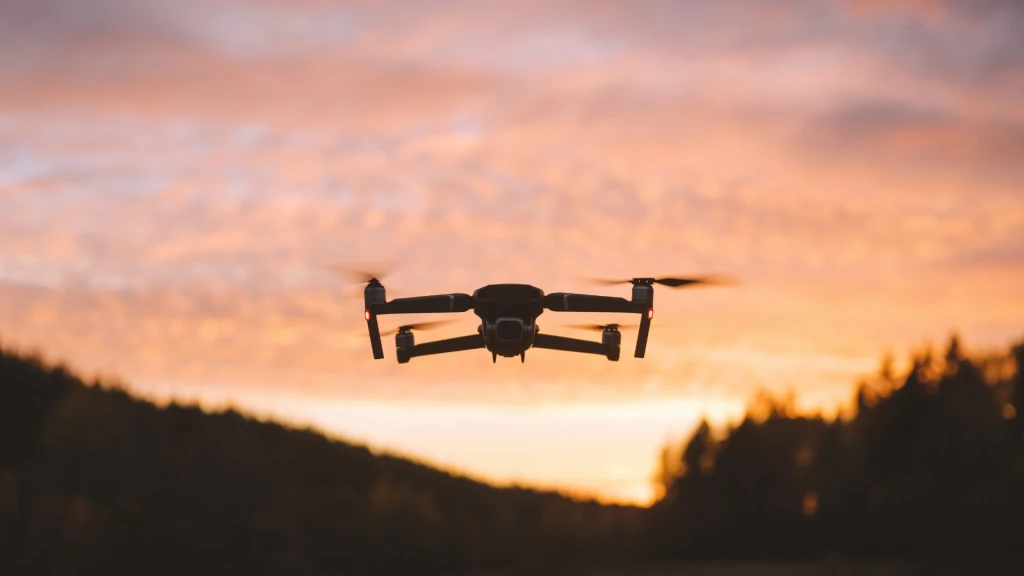
The move comes as drones and autonomous systems are becoming central to modern military operations, from small tactical UAS and loitering munitions to unmanned surface vessels, counter-UAS defenses, AI-enabled autonomy and swarming software.
IDGA has already explored the growing importance of counter-drone operations in JIATF 401 Explained, as well as the role of defense-grade drone protection in Counter-UAS for Critical Infrastructure. DRPM-UxS could be the next major step in that transformation: not just a new office, but a new command-and-acquisition structure for America's unmanned systems strategy.
Key stats: The scale of the U.S. drone push
| Statistic | More Details |
|---|---|
| $74 billion+ total FY2027 drone and counter-drone request | The combined figure across two budget categories — the largest drone and counter-drone investment in U.S. history, triple the FY2026 level. |
| $53.6 billion for autonomous systems, contested logistics and drone dominance | The Pentagon's primary drone budget category, covering contested logistics, collaborative autonomy, force generation, counter autonomous systems and asset purchases. This is the category DRPM-UxS is positioned to execute against. |
| ↳ $39.2 billion of that is specifically Drone Dominance mandatory funding | The reconciliation-funded component directed at autonomous systems procurement, domestic production capacity and advanced capabilities. This is the figure associated specifically with the Drone Dominance program. |
| $20.6 billion for other autonomous and remotely operated systems | A separate budget category covering one-way attack drones, counter-small UAS, the Air Force's Collaborative Combat Aircraft and the Navy's MQ-25 — programs largely outside DRPM-UxS scope. |
| 250+ sites targeted for expanded counter-UxS protection | Counter-UXS funding will help expand protection to more than 250 sites. |
| Millions of unmanned systems produced by adversaries each year | The DRPM-UxS memorandum states that adversaries collectively produce millions of unmanned systems each year across all domains. |
What is DRPM-UxS?
DRPM-UxS stands for Direct Reporting Portfolio Manager for Unmanned Systems.
According to the Secretary of War memorandum establishing DRPM-UxS, the office is intended to act as the single joint integrator for unmanned and autonomous system programs across the Department of War. The Director of DRPM-UxS will report directly to the Deputy Secretary of War and will direct activity to "develop, procure, field, sustain, and operationalize" unmanned and autonomous systems across all domains.
In practical terms, DRPM-UxS is designed to reduce fragmentation across U.S. drone and autonomous systems efforts. Rather than allowing UAS, unmanned ground systems, unmanned maritime systems, swarming software and counter-UAS initiatives to develop in separate silos, the new office creates a central portfolio manager with authority across multiple unmanned systems categories.
What systems will DRPM-UxS oversee?
The memorandum gives DRPM-UxS directive authority over several unmanned and counter-unmanned systems categories, excluding current Major Defense Acquisition Programs or equivalent programs. These include unmanned aerial Group 1-3 systems, unmanned surface vessels, unmanned underwater vessels, unmanned ground systems, autonomy, AI and swarming software, counter-unmanned systems, logistics support and unmanned systems marketplaces.
| DRPM-UxS portfolio area | What it includes | Why it matters |
|---|---|---|
| Unmanned aerial systems | Group 1-3 unmanned aerial systems | Supports tactical UAS, small drones and lower-cost aerial systems that can be fielded at scale |
| Unmanned maritime systems | Unmanned surface vessels and unmanned underwater vessels | Extends the drone dominance push into sea and undersea operations |
| Unmanned ground systems | Robotic ground platforms and unmanned ground vehicles | Supports logistics, reconnaissance, mobility, force protection and potentially lethal ground autonomy |
| Autonomy, AI and swarming software | AI-enabled autonomy and swarm coordination software | Connects unmanned platforms to broader decision advantage, collaborative autonomy and AI-enabled operations |
| Counter-unmanned systems | Detection, tracking, defeat and protection against hostile drones | Aligns with the growing threat of low-cost drones targeting bases, infrastructure and deployed forces |
| Logistics support | Sustainment and support for unmanned systems | Addresses the challenge of operating drones at scale in contested environments |
| UxS marketplaces | Unmanned and counter-unmanned system marketplaces | Could accelerate how military units identify, test and procure relevant drone capabilities |
How does DRPM-UxS connect to JIATF 401?
One of the most important parts of the DRPM-UxS announcement is its relationship with Joint Interagency Task Force 401, or JIATF 401.
IDGA has previously explained the role of JIATF 401, examining how the task force is intended to align counter-UAS authorities, resources and capabilities across the Department.
The new DRPM-UxS memorandum takes this further. It states that the Directors of JIATF 401 and the Defense Autonomous Warfare Group will be dual-hatted as elements under DRPM-UxS. It also states that the Director of JIATF 401 gains responsibility for counter-unmanned systems under the DRPM-UxS structure.
This matters because counter-UAS is no longer just a defensive niche. It is becoming one side of a broader unmanned systems competition. The same department that needs to field drones at scale must also protect U.S. forces, bases and infrastructure from adversary drones at scale.
That makes DRPM-UxS a potential bridge between two urgent priorities:
- Building and fielding U.S. unmanned systems faster
- Defending against hostile unmanned systems more effectively
Why was DRPM-UxS created?
The official rationale is speed, scale and battlefield relevance.
The Department of War's announcement states that drones and autonomous systems are considered essential to maintaining U.S. military advantage, while the Secretary's memorandum says adversaries are producing millions of unmanned systems every year across all domains.
This reflects a broader lesson from Ukraine, the Red Sea, the Middle East and other contested environments: low-cost unmanned systems can impose high costs on traditional military platforms and infrastructure.
Small UAS, FPV drones, one-way attack drones, uncrewed maritime systems and loitering munitions have changed the economics of battlefield sensing and strike. At the same time, defending against those systems requires layered counter-UAS capabilities, including radar, radio-frequency detection, electronic warfare, directed energy, kinetic interceptors and command-and-control integration.
Why the FY2027 budget makes DRPM-UxS more significant
DRPM-UxS is not being created in isolation. It arrives alongside a major budgetary push for drone dominance, autonomy and counter-unmanned systems.
The FY2027 Department of War Budget Overview includes $53.6 billion for the wider Drone Dominance effort, made up of $39.2 billion for autonomous systems procurement, domestic production capacity and advanced capabilities, plus $14.4 billion for counter-unmanned systems development and deployment.
The FY2027 Mandatory Funding Overview breaks this down further, identifying funding for contested logistics, collaborative autonomy, force generation, counter-UXS, and asset purchases and industrial demand signalling.
This means DRPM-UxS could become the portfolio structure that helps turn budget ambition into operational capability.
How DRPM-UxS could reshape U.S. unmanned systems
1. Faster procurement and fielding
One of the clearest goals of DRPM-UxS is to accelerate procurement and fielding. Traditional defense acquisition processes can struggle to keep pace with drone technology cycles, where commercial innovation, software iteration and battlefield adaptation can happen in months rather than years.
A centralized portfolio manager could help identify high-priority systems, reduce duplication, support faster testing and evaluation, and ensure successful platforms move more quickly from demonstration to deployment.
2. A stronger domestic drone industrial base
The Department's Drone Dominance spotlight says the War Department is focused on bolstering the U.S. drone manufacturing base, arming combat units with low-cost attack drones and training personnel to overcome bureaucratic risk aversion in drone procurement and training.
This industrial-base focus is critical. Drone dominance is not just about inventing new platforms; it is about producing them in sufficient quantities, at acceptable cost, with secure supply chains and rapid replenishment capacity.
3. More coherent counter-UAS strategy
Counter-UAS is likely to be one of the biggest beneficiaries of the new structure.
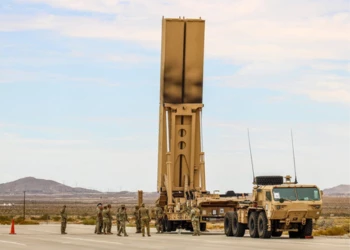
The FY2027 budget request includes $20.6 billion for Counter-Unmanned Systems, including $14.4 billion associated with the Drone Dominance mandatory funding request. The budget overview links those efforts to JIATF 401 and the goal of rapidly delivering joint counter-small UAS capabilities to the warfighter.
With JIATF 401 now operating under the DRPM-UxS umbrella, counter-drone strategy could become more closely aligned with the wider unmanned systems portfolio.
4. Better integration of AI, autonomy and swarming
DRPM-UxS also has authority over unmanned autonomy, artificial intelligence and swarming software. That is significant because the future of unmanned systems is not just about airframes, ground robots or vessels. It is about how those systems sense, decide, communicate and operate together.
IDGA covered this shift in a recent article, which explores how embedded AI is changing drone operations and reducing reliance on continuous remote control.
The DRPM-UxS model could help connect those software-led capabilities to procurement, testing, sustainment and operational doctrine.
5. Cross-domain unmanned operations
The DRPM-UxS portfolio spans air, land, surface and subsurface domains. That makes it broader than a traditional UAS office.
This matters because future unmanned operations are likely to be multi-domain. A battlefield drone may support ground maneuver. An unmanned surface vessel may support maritime reconnaissance or strike. Unmanned underwater systems may contribute to seabed security. AI-enabled swarms may operate across multiple platforms and mission sets.
A single portfolio structure could help ensure that data architecture, communications standards and interface design are aligned across these different systems.
What questions remain?
DRPM-UxS could create a more coherent approach to U.S. unmanned systems, but several questions remain.
First, how much authority will the office have in practice across the Services, combatant commands and defense agencies? The memorandum gives DRPM-UxS directive authority over several categories, but it also excludes current Major Defense Acquisition Programs including the Air Force's Collaborative Combat Aircraft, the Navy's MQ-25 Stingray, the MQ-4C Triton, and the Navy's medium unmanned surface vessel program.
Second, how quickly can the office translate budget lines into fielded capability? The U.S. military's drone challenge is not only about funding; it is also about requirements, testing, contracting, training, data standards, sustainment and the ability to iterate quickly.
Third, how will DRPM-UxS balance speed with safety, cybersecurity and operational control? AI-enabled autonomy and swarming software create major opportunities, but they also raise important questions about reliability, command authority, spectrum resilience and contested communications.
Finally, how will industry engage with the new structure? If DRPM-UxS becomes the central interface for unmanned and counter-unmanned systems, vendors may need to adapt how they position products, prove capability and align with joint requirements.
Conclusion: DRPM-UxS could become the Pentagon's drone-era integrator
The creation of DRPM-UxS signals a major shift in how the Pentagon wants to manage unmanned and autonomous systems.
Instead of treating drones, counter-drone systems, ground robots, maritime autonomy, swarming software and unmanned logistics as separate capability areas, DRPM-UxS creates a single portfolio structure intended to accelerate fielding and improve integration.
The timing is important. The FY2027 budget request includes tens of billions of dollars for drone dominance, autonomous systems and counter-unmanned systems, while the Department's own documents warn that adversaries are producing unmanned systems at massive scale.
For the defense community, DRPM-UxS is therefore more than a bureaucratic reorganization. It could become the acquisition and integration mechanism behind the next phase of U.S. unmanned systems strategy.
For industry, the message is clear: the Pentagon wants drones, autonomy, swarming, counter-UAS and unmanned systems delivered faster, at scale, and across every domain.