What Are the Top Defense Technology Priorities for 2026? A Quick Guide
Add bookmark
The Fiscal Year 2026 National Defense Authorization Act (NDAA) approved this December secured $900.6 billion for national defense, including funds for the Department of War and Department of Energy nuclear programs. Funds from the NDAA support national security activities including new weapons & tech, military construction, R&D, troop support, and revitalizing the defense industrial base.
In the latest article from IDGA we will look at how these funds can support some of the DoW’s top technology priorities in 2026, which includes AI, hypersonic weapons, C-UAS, supply chain security, and air superiority.
These priorities reflect how the DoW, DHS, and partner agencies are preparing for a more contested, data-driven, and resource-constrained security environment.
Artificial Intelligence
Over the past decade, AI has moved from experimentation to a foundational element of U.S. defense operations, doctrine, and investment. In November 2025, Defense Secretary Pete Hegseth further enforced the DoW’s commitment to AI when he announced the department was narrowing its technology development focus to six areas, one of which included artificial intelligence. The DoW is actively pursuing applied AI across warfighting and enterprise domains, recognizing that AI can dramatically improve decision speed, predictive insights, and operational outcomes.
The War Department is already launching new AI capabilities. For example, in December, the department introduced GenAI.mil, the War Department’s new bespoke generative AI platform. The platform debuted with Google Cloud’s Gemini for Government as its first frontier model, immediately making advanced generative and agentic AI tools available to civilians, contractors, and military personnel across the Pentagon and installations worldwide.
This initiative directly supports the White House’s AI Action Plan and follows a presidential mandate issued earlier in 2025 to achieve an unprecedented level of U.S. AI technological superiority.
Other critical AI for defense programs include Project Maven, an effort to integrate AI and machine learning (ML) into military intelligence, and the Advana platform, the DoD’s enterprise data and analytics environment, serving as a secure, centralized hub that integrates data, analytics tools, and AI to support data-driven decision-making across defense. To read more about these programs, check out this recent report from IDGA.
Hypersonic weapons and missile defense
Hypersonic weapons are a central focus of U.S. defense modernization due to both their offensive potential and the need to defend against similar systems fielded by potential adversaries.
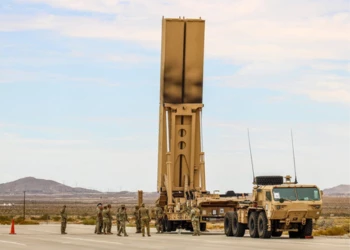
Programs like the Army’s Long Range Hypersonic Weapon (LRHW) are progressing toward limited testing and integration, emphasizing range, survivability, and operational relevance. The FY26 NDAA also grants multiyear procurement authority for low‑cost hypersonic strike systems, ensuring stable production and long‑term investment in the technology.
However, the program that has received the most public attention and financial support is the Golden Dome for America. The One Big Beautiful Bill Act approved by congress this past summer secured around $25 billion for the initial phase of the missile defense system. This year’s NDAA includes a provision that aims to hold the Golden Dome program accountable by requiring an annual report to Congress that includes air and missile threats to the US, cost and schedule updates, a test schedule for the following year, and a request for any new legal authorities needed to operate the system.
Supply chain security
The COVID-19 pandemic revealed significant vulnerabilities in supply chains for defense manufacturing, especially for critical materials (microelectronics, rare earths) and munitions production. Today more than ever defense leaders see resilient supply chains as strategic infrastructure, not just logistical overhead.
The DoW agency responsible for securing the nation’s defense supply chain is the Defense Logistics Agency (DLA). According to the DLA, AI is transforming how the department identifies, assesses, and mitigates supply chain risk, moving from reactive responses to predictive, data-driven resilience.
The DLA has found AI-driven supply chain risk management provides enhanced visibility and early warning, powers risk-based supplier oversight, and can create response to known and unknown risks.
In 2026, as peer competitors target logistics nodes and supply chains become increasingly global and data-dependent, sustaining resilient supply chains is key for deterrence. AI allows the department to see supply chain risks sooner, respond faster, and maintain operational continuity under pressure.
This fall, IDGA sat down with Adarryl Roberts, Chief Information Officer at the DLA for a conversation regarding the future of defense logistics through data and AI. To read the whole interview, click here.
Counter UAS and airspace security
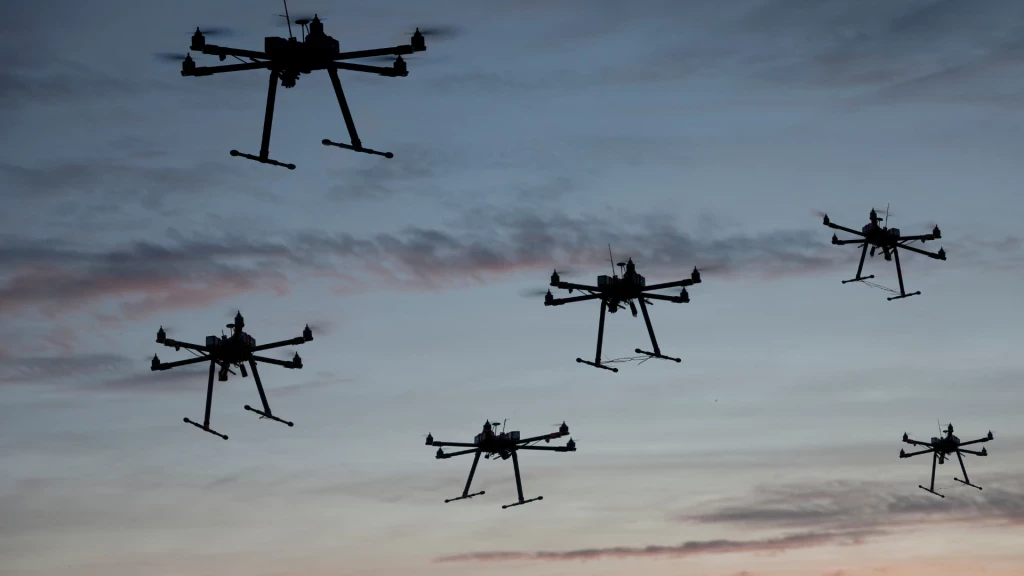
Since the Trump administration began shaping national security policy in 2025, protecting American airspace has become a top priority for DHS, FAA, and other federal agencies. In recent years unmanned aircrafts such as small, agile drones have proliferated on battlefields in Ukraine and in contested airspace, posing threats to troops, infrastructure, and civilian populations.
In response to the growing drone threat, Congress has explicitly directed the DoW to accelerate research, development, test, and evaluation of counter-UAS technologies and integrate them with broader air defense systems. The NDAA also created a new framework for coordinating DoD’s response to small-UAS threats by establishing the Joint Interagency Task Force 401. The new task force will be responsible for integrating counter-sUAS solutions across the services as well as developing and sharing counter-UAS training material.
As the U.S. prepares to deliver major sporting events such as the World Cup in 2026, the federal law enforcement community and DoW are looking to layer counter-UAS technologies, using kinetic interceptors, electromagnetic warfare, and advanced sensors powered by AI to detect, classify, and defeat unmanned threats.
NGAD, F/A-XX, and CCA
Maintaining air superiority is a longstanding DoW objective, and initiatives like the Navy’s F/A-XX, the Air Force’s NGAD, and CCA programs being run by both demonstrate how the department is developing air superiority in the 21st century.
- F/A-XX – The Navy’s program to develop and acquire a sixth-generation fighter to replace the F/A-18E/F Super Hornet. The recent NDAA secured $74 million for F/A-XX, far less than required to accelerate the program. For comparison, in July, the House passed its version of the 2026 defense appropriations bill with $972 million for the F/A-XX. The Navy is expected to choose between Boeing and Northrop Grumman in 2026.
- NGAD – One reason for the lack of support for the F/A-XX is the White House’s commitment to the F-47, the sixth generation fighter that will be the result of the Air Force’s Next Generation Air Dominance Program. This past March the Air Force awarded Boeing the contract for Engineering and Manufacturing Development (EMD) the F-47.
- CCA – Collaborative Combat Aircraft (CCA) is an effort by the Air Force and Navy to pair a semi-autonomous aircraft with crewed fighters like the F-35A or F-47. As of January 2026, Norrthrop Gruman, Anduril and General Atomics are the frontrunners to win the autonomous wingman program for the Air Force. The Navy’s CCA program is also progressing. This past September, the Navy announced Anduril Industries, Boeing, GA, and Northrop Grumman received CCA concept development contracts.
These three programs, NGAD, F/A-XX, and CCA , are vital to preserving U.S. air dominance against near-peer competitors. They represent a generational leap in adaptability, survivability, and integration across aerial platforms.