Defense News Digest: April 2026 Update
Add bookmarkWelcome to IDGA's monthly news roundup. For over two decades, IDGA has organized conferences designed to further the national security objectives of the current administration and to facilitate the acquisition priorities of the DoD, DHS, and other federal agencies. Now, through this weekly series, we look to educate the community on the latest research, program updates and news in the defense and government sector.
While the conflict in Iran and FY 2027 funding lead conversations in the defense and security industries, this article will cover five stories that flew under the radar such as SOUTHCOM's new Autonomous Warfare Command, a Space Force decision for the Golden Dome, and more.
Navy's F/A-XX Nears Key Decision
The U.S. Navy is set to downselect the prime contractor for its sixth-generation F/A-XX fighter in August, according to Chief of Naval Operations Adm. Daryl Caudle. The competition has narrowed to Boeing and Northrop Grumman, following the earlier elimination of Lockheed Martin.
The F/A-XX is intended to replace the Navy's aging F/A-18 Super Hornet and E/A-18 Growler fleets, addressing growing threats from advanced enemy air defenses. After roughly a year of uncertainty, including consideration of cancelation and concerns about strain on the defense industrial base, the program now appears set to move into the engineering and manufacturing development phase.
Officials remain cautious about contractor capacity, particularly given overlapping commitments to other major programs like the F-35 and the Air Force's next-generation F-47 fighter. Despite these concerns, Congress has demonstrated strong support, allocating nearly $900 million above the Navy's FY2026 request and continuing to fund development in future budgets.
SOUTHCOM Launches Autonomous Warfare Command to Expand Drone Operations
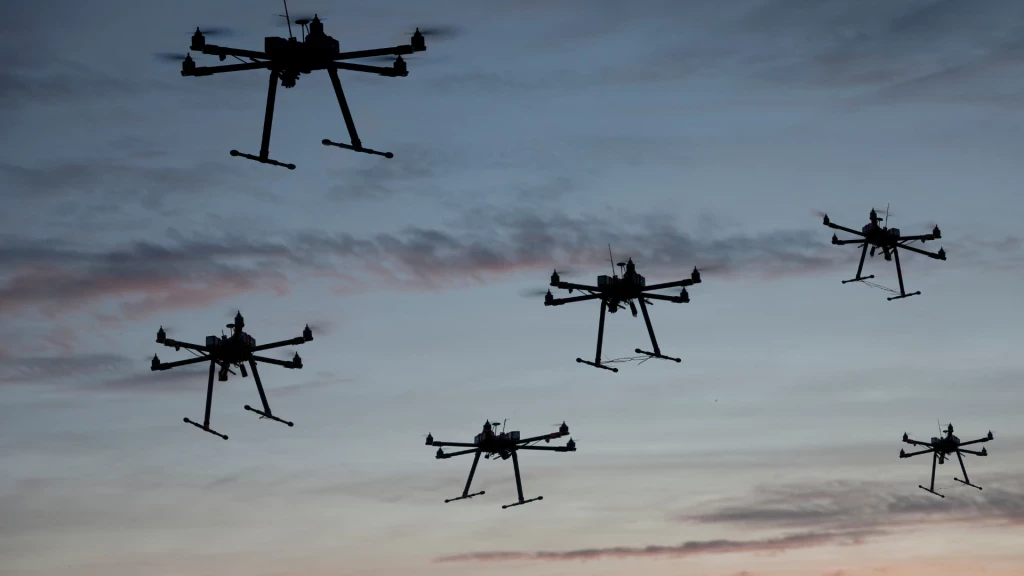
The U.S. Southern Command (SOUTHCOM) has established a new Autonomous Warfare Command (SAWC) to accelerate the use of drones and AI-enabled systems across its area of responsibility. The command will deploy aerial, maritime, and undersea unmanned platforms to counter drug trafficking networks and regional security threats across Central and South America and the Caribbean.
SAWC will support a wide range of missions, including counter-narcotics operations, maritime patrol, and kinetic strikes, while integrating autonomous and semi-autonomous technologies into ongoing efforts like Operation Southern Spear. The initiative reflects a broader Pentagon push toward scalable, low-cost drone capabilities and AI-driven warfare concepts.
The command will be developed in phases, coordinating closely with the Defense Department's Defense Autonomous Warfare Group, which is rapidly expanding with a proposed $54.6 billion FY2027 budget. Once operational, SAWC is expected to enhance situational awareness, increase operational lethality, and strengthen partnerships with regional allies.
Space Force Makes Golden Dome Announcement
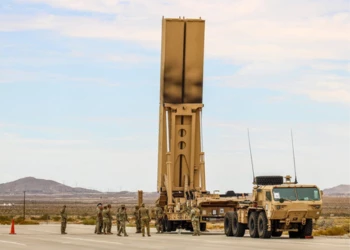
The U.S. Space Force has selected 12 companies to compete for contracts to develop space-based interceptors under the Golden Dome missile defense initiative. The agreements, worth up to $3.2 billion, aim to accelerate innovation using flexible acquisition mechanisms and include both major primes and emerging defense startups.
The program focuses on deploying low Earth orbit satellites capable of intercepting missiles across multiple phases of flight. However, Space Force Gen. Michael Guetlein, who is leading the effort, warned that some capabilities, particularly boost-phase intercept, may prove too costly within the program's projected $185 billion budget.
Golden Dome faces additional scrutiny over its scale and funding model, with analysts suggesting the system could require tens of thousands of satellites to achieve full coverage. Despite these concerns and reliance on uncertain congressional funding, the Space Force is targeting an initial operational demonstration by 2028, signaling continued momentum behind the next-generation missile defense architecture.
DLA Powers Artemis II Mission
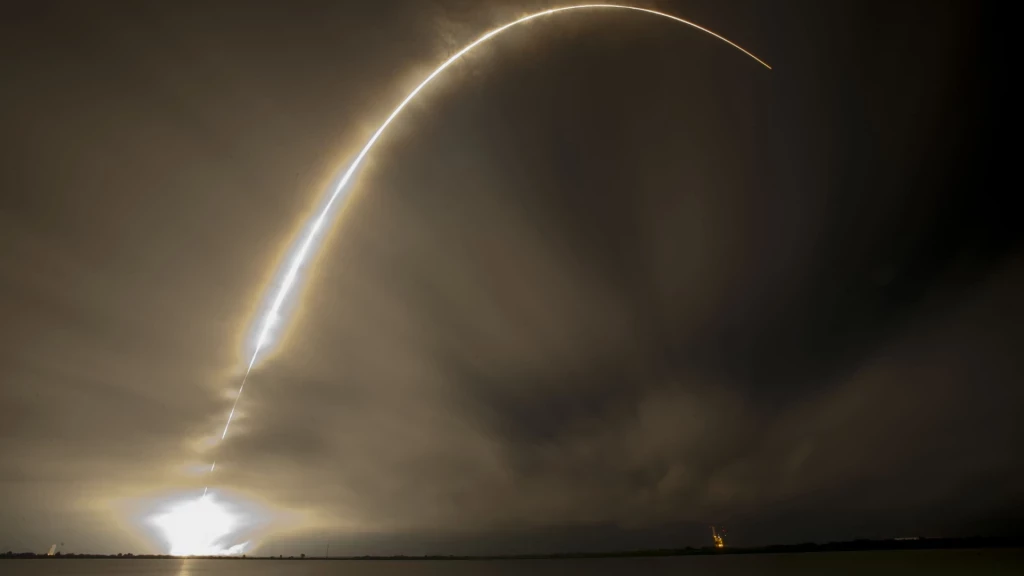
Defense Logistics Agency Energy played a vital behind-the-scenes role in Artemis II, supplying over 21,000 pounds of specialized propellants that enabled Orion spacecraft to carry astronauts on the first crewed lunar mission in more than 50 years.
The operation required a highly precise and tightly controlled supply chain to manage volatile fuels such as hydrazine and dinitrogen tetroxide, with rigorous quality assurance processes conducted in coordination with NASA and the U.S. Air Force. Officials emphasized that maintaining purity and safety standards was critical, given the risks to human life.
Despite delays caused by technical issues during launch preparations, DLA Energy demonstrated resilience by adapting its logistics pipeline to meet shifting timelines. The effort underscores the agency's growing role in supporting complex, whole-of-government missions and positions it to contribute to future initiatives, including sustained lunar operations and the planned Gateway space station.
DLA Energy will be one of the DLA units on-site at this year's Defense Logistics & Energy Summit taking place September 9-10 in Washington, DC. The two-day conference will bring together the US Department of War, including service leaders, allied nations, and industry, to tackle today's toughest logistics, energy, and industrial base support challenges head-on.
Army Advances XM30 Program
The U.S. Army is pressing forward with the XM30 Combat Vehicle, its latest attempt to replace the long-serving Bradley Fighting Vehicle, as outlined in newly released budget documents. The service is requesting nearly $547 million in FY2027 to procure an initial tranche of vehicles and plans to acquire 108 XM30s through FY2031.
The program remains a central component of the Army's ground modernization strategy, despite past delays and repeated failed efforts to replace the Bradley Fighting Vehicle. Industry teams led by General Dynamics Land Systems and American Rheinmetall Vehicles are expected to deliver prototype vehicles this summer, marking a key milestone in the program's progression.
While the Army has signaled openness to reassessing requirements and avoiding past acquisition pitfalls, current budget plans indicate continued commitment to the XM30 as it seeks to field a more advanced, survivable infantry fighting vehicle for future combat environments.