Defense Conferences 2026: Upcoming U.S. Defense Industry Events and Summits from IDGA
Add bookmark
The U.S. defense and national security landscape is changing rapidly. Military modernization, contested logistics, energy resilience, border security, pilot readiness, hypersonic weapons and homeland missile defense are all creating new requirements for government, military and industry.
For professionals looking for defense conferences in 2026, IDGA's remaining calendar brings together senior government officials, military leaders, acquisition professionals, program managers and defense industry experts across four specialist events.
What defense conferences is IDGA hosting in the rest of 2026?
From September through December 2026, IDGA will host the Defense Logistics & Energy Summit, Border Technology Summit, Military Flight Training USA Summit, Port Security & Trade Summit, and the Next Generation Missiles and Hypersonics Summit.
Each defense summit focuses on a distinct mission area, but there is a common theme across all four: translating evolving U.S. national security priorities into practical capability, acquisition and operational outcomes.
Explore the full IDGA defense events calendar.
U.S. Defense Events 2026: dates, locations and key topics
| Defense conference | Date | Location | Main focus |
|---|---|---|---|
| Defense Logistics & Energy Summit | September 9–10, 2026 | Falls Church, Virginia | Contested logistics, operational energy, defense supply chains, AI, sustainment and industrial base resilience |
| Border Technology Summit | September 17–18, 2026 | San Diego, California | Border security, CBP priorities, biometrics, surveillance, cybersecurity and cross-agency operations |
| Military Flight Training USA | October 27–28, 2026 | San Antonio, Texas | Pilot training, readiness, LVC environments, simulation, AI-enabled training and allied cooperation |
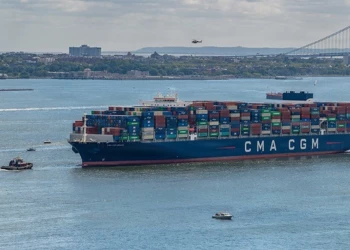
| Port Security & Trade Summit | December 8–9, 2026 | Miami, Florida | Port security, maritime trade, cargo security, critical infrastructure, customs and supply chain resilience |
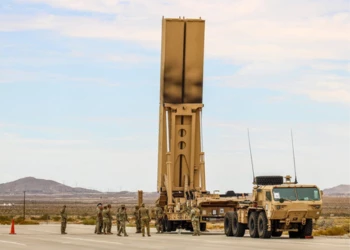
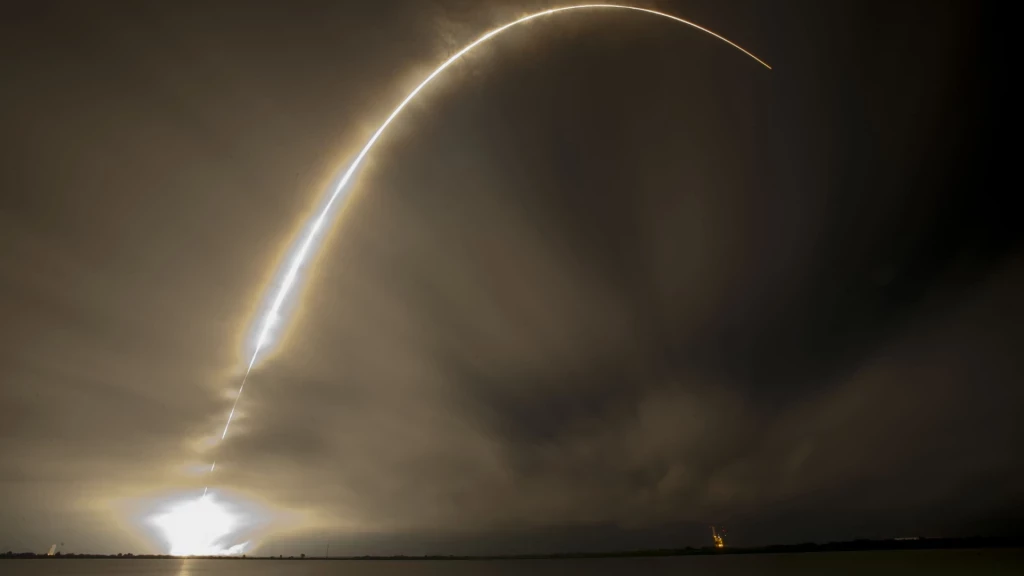
| Next Generation Missiles and Hypersonics Summit | December 15–16, 2026 | Arlington, Virginia | Hypersonic weapons, Golden Dome, missile defense, space sensing, testing and industrial-scale production |
Why attend U.S. defense industry events in 2026?
Defense conferences have become particularly important as the Department of Defense and wider U.S. national security community move from experimentation toward deployment across several major technology areas.
Artificial intelligence is increasingly being integrated into logistics, intelligence and training. Autonomous systems are changing the way military and homeland security organizations operate across air, land and maritime domains. New missile and hypersonic capabilities are moving toward operational deployment, while technologies such as space-based sensing are becoming increasingly important to homeland defense.
At the same time, operational lessons from current conflicts have reinforced the importance of supply chain resilience, munitions production, energy security, secure transportation networks and the ability to sustain forces in contested environments.
This makes defense industry events valuable not simply as networking opportunities, but as forums where military requirements, government acquisition priorities and industry capabilities can be discussed together.
IDGA's 2026 conferences are designed around specialist communities rather than functioning as broad defense trade shows. Each event provides a concentrated environment for examining one mission area in greater depth.
Defense Logistics & Energy Summit 2026
September 9-10, 2026 | Falls Church, Virgina

The Defense Logistics & Energy Summit brings together two increasingly interconnected defense priorities: getting equipment and resources to the warfighter, and ensuring military forces have the energy required to operate.
Modern military logistics involves considerably more than transporting equipment from one location to another. In a contested environment, adversaries may target ports, communications infrastructure, supply chains, energy networks and transportation nodes. This creates a requirement for logistics networks that are both efficient and resilient.
The conference will examine how AI, machine learning and data analytics can improve logistics planning and predictive maintenance, alongside the role of unmanned delivery technologies, defense industrial base resilience and supply chain security.
Energy is becoming equally important. U.S. military installations and deployed forces are consuming more power as sensors, communications systems, computing infrastructure and advanced weapons become increasingly energy-intensive.
One emerging area is nuclear microreactors. IDGA has recently examined the U.S. Army's plans in its coverage of Project Janus, which aims to use commercial microreactors to strengthen energy resilience at military installations.
That convergence between energy and logistics explains why the two subjects increasingly need to be discussed together: energy supply is itself a logistics requirement, while resilient logistics increasingly depends on reliable power.
For defense contractors working in supply chains, logistics technologies, autonomous delivery, energy systems, data analytics, sustainment or infrastructure, the Defense Logistics & Energy Summit provides an opportunity to understand how those priorities are evolving together.
Border Technology Summit 2026
September 17–18, 2026 | San Diego, California

The Border Technology Summit brings together leaders from U.S. Customs and Border Protection, U.S. Border Patrol, Immigration and Customs Enforcement, state and local law enforcement and industry.
Although border security sits at the intersection of homeland security and law enforcement, the technology challenges increasingly overlap with the wider defense and national security ecosystem.
Surveillance systems, unmanned aircraft, biometrics, AI, cybersecurity, sensors, maritime awareness and secure communications all play an expanding role in protecting U.S. borders and ports of entry.
The conference will examine how technology and cross-agency collaboration can improve detection, enforcement and trade facilitation while responding to increasingly sophisticated transnational criminal networks.
A particularly important trend is the movement toward integrated border operations. Instead of treating air, land and maritime surveillance independently, agencies increasingly need information from multiple sensors and operational domains to contribute to a common operating picture.
The summit will also examine digital transformation within Department of Homeland Security agencies and current CBP operational priorities.
For organizations looking for U.S. defense events and homeland security conferences, Border Technology Summit provides a specialist forum focused on the technologies and operational strategies shaping modern border security.
Military Flight Training USA 2026
October 27–28, 2026 | San Antonio, Texas
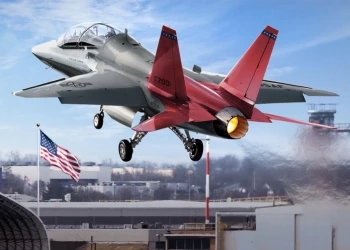
The Military Flight Training USA Summit focuses on one of the most fundamental questions facing military aviation: how do U.S. and allied forces train enough pilots, quickly enough and realistically enough, for a rapidly changing operational environment?
Pilot training is changing because the aircraft and missions pilots are being prepared for are changing. Advanced simulation, Live, Virtual and Constructive training environments, AI-enabled learning and increasingly sophisticated aircraft mean training organizations can no longer rely solely on traditional classroom instruction and live flying hours. Future aircrew may also operate alongside autonomous and semi-autonomous aircraft.
The growth of Collaborative Combat Aircraft creates an important new training challenge. Pilots will increasingly need to understand how to command, coordinate with and employ autonomous platforms as part of wider combat formations.
The 2026 Military Flight Training USA agenda therefore goes beyond flight simulators. It looks at the complete pilot-development cycle, including competency mapping, performance assessment, emerging training technologies and how military organizations can modernize training while maintaining readiness.
For companies operating in military simulation, aviation training, AI, XR, synthetic environments, aircraft systems or training infrastructure, this is one of IDGA's most directly focused U.S. defense industry events.
Port Security & Trade Summit 2026
December 8–9, 2026 | Miami, Florida
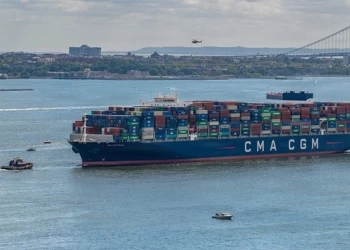
The Port Security & Trade Summit broadens IDGA's 2026 event portfolio into one of the most strategically important areas of homeland and economic security: protecting the movement of goods, people and commerce through ports, airports, border crossings and transportation networks.
Ports are critical infrastructure. They sit at the intersection of global trade, customs enforcement, law enforcement, transportation, supply chains and national security. That makes port security about far more than physical access control.
Modern ports increasingly depend on digital operating systems, automated cargo handling, connected logistics platforms, surveillance technologies and cyber infrastructure. At the same time, authorities must respond to organized crime, trafficking, smuggling, cyber threats and potential disruption to supply chains.
The Port Security & Trade Summit brings together stakeholders responsible for both security and trade facilitation. Key issues include cargo security, infrastructure modernization, cybersecurity, counter-trafficking operations, customs enforcement, trusted trade programs and the use of emerging technologies across transportation networks.
The event is especially relevant because ports and logistics infrastructure are increasingly viewed through a resilience lens. A major cyberattack, physical disruption or supply chain incident at a strategically important port can have effects far beyond the local area.
For government and industry, the challenge is therefore to protect critical gateways without unnecessarily slowing the movement of legitimate trade.
The event is relevant to professionals working across:
- Port and maritime security
- Customs and border operations
- Cargo screening
- Transportation security
- Critical infrastructure protection
- Supply chain resilience
- Cybersecurity
- Law enforcement and counter-trafficking
For organizations looking beyond traditional military conferences, the Port Security & Trade Summit also provides a useful bridge between defense, homeland security and economic security.
Next Generation Missiles and Hypersonics Summit 2026
December 15–16, 2026 | Arlington, Virginia
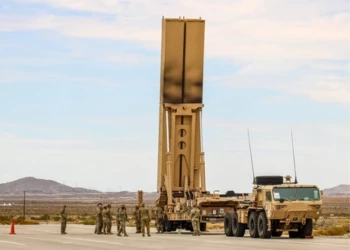
The Next Generation Missiles and Hypersonics Summit closes IDGA's 2026 U.S. defense conference calendar with a focus on both the next generation of offensive missile capabilities and the technologies required to defend against them.
For years, U.S. hypersonic programs were primarily discussed in terms of research, development and testing. The conversation is now increasingly shifting toward fielding weapons, expanding production and integrating them into operational forces.
Programs including the Army's Dark Eagle Long-Range Hypersonic Weapon, the Navy's Conventional Prompt Strike capability and the Air Force's Hypersonic Attack Cruise Missile form part of that transition.
At the same time, missile defense has moved rapidly up the national security agenda. The U.S. government's Golden Dome initiative calls for a layered homeland missile defense architecture capable of responding to ballistic missiles, hypersonic weapons, advanced cruise missiles and other aerial threats.
This creates a much broader engineering challenge than developing an interceptor alone. Effective missile defense requires sensing, tracking, command and control, target discrimination, communications, testing and the ability to connect different defensive layers.
Space is increasingly important to that architecture. Space-based sensors can provide persistent coverage and improve the ability to detect and maintain custody of hypersonic and ballistic threats that may be difficult for terrestrial radar networks to track continuously.
The 2026 defense summit will therefore bring together the offensive and defensive sides of the missile mission: strike, sensing, interception, test infrastructure and the defense industrial base needed to manufacture systems at scale.
This makes the event particularly relevant to professionals working in missile development, hypersonics, propulsion, advanced materials, sensors, space systems, missile defense, modeling and simulation, test infrastructure and manufacturing.
Which IDGA defense conference should you attend in 2026?
The best conference depends largely on the mission area in which you operate.
The Defense Logistics & Energy Summit is most relevant to organizations working in military logistics, supply chains, sustainment, energy resilience, infrastructure and the defense industrial base.
The Border Technology Summit is aimed at professionals involved in border security, surveillance, biometrics, law enforcement technology, cybersecurity and homeland security.
Military Flight Training USA is designed around military aviation readiness, pilot development, simulation, synthetic training and emerging technologies for aircrew preparation.
The Port Security & Trade Summit is most relevant to organizations working in port security, cargo screening, customs, maritime security, transportation infrastructure, supply chain resilience and trade security.
The Next Generation Missiles and Hypersonics Summit is the strongest fit for organizations working across missiles, hypersonic weapons, missile defense, Golden Dome, space-based sensing and advanced weapons manufacturing.
Despite those differences, the events also demonstrate how interconnected modern defense and homeland security capabilities have become.
Missile defense relies on resilient sensing and command-and-control networks. Aviation readiness increasingly depends on simulation and AI. Military operations rely on logistics and secure energy supplies. Border and port operations increasingly depend on the same sensing, cybersecurity, data and autonomous technologies being developed elsewhere in the national security ecosystem.
Frequently asked questions about defense conferences in 2026
What are IDGA's remaining defense conferences in 2026?
Following the Counter UAS Summit, IDGA's remaining 2026 events are the Defense Logistics & Energy Summit, Border Technology Summit, Military Flight Training USA, Port Security & Trade Summit and Next Generation Missiles and Hypersonics Summit.
Where are IDGA's U.S. defense events held?
The remaining 2026 conferences take place in Virginia, California, Texas and Florida, including Falls Church, San Diego, San Antonio, Miami and Arlington.
Which defense summit covers military logistics and energy?
The Defense Logistics & Energy Summit focuses on contested logistics, supply chain resilience, operational energy, AI-enabled logistics and defense industrial base resilience.
Which U.S. defense event covers military aviation training?
Military Flight Training USA focuses on military pilot readiness, simulation, Live, Virtual and Constructive training, AI-enabled learning and aviation training modernization.
Which summit covers port security and global trade?
The Port Security & Trade Summit on December 8–9, 2026 focuses on cargo security, critical infrastructure, customs, transportation security, cyber resilience, counter-trafficking and global trade.
Which defense conference covers hypersonic weapons and missile defense?
The Next Generation Missiles and Hypersonics Summit covers hypersonic weapons, missile defense, Golden Dome, space sensing, testing and advanced missile production.
Where can I find all upcoming IDGA defense industry events?
The latest conference dates, agendas and registration information are available on IDGA's dedicated event websites.
Explore all upcoming IDGA defense conferences and defense industry events here.