Defense News Digest: February 2026 Update
Add bookmarkWelcome to IDGA’s monthly news roundup. For over two decades, IDGA has organized conferences designed to further the national security objectives of the current administration and to facilitate the acquisition priorities of the DoD, DHS, and other federal agencies. Now, through this weekly series, we look to educate the community on the latest research, program updates and news in the defense and government sector.
While conflict in Iran and Anthropic’s falling out with the Pentagon captured headlines last month, this article will cover five stories that flew under the radar such as a new Army office, a counter-UAS RFI, and more.
Army Reassesses Bradley Replacement XM30 Program
Breaking Defense reported last week that the U.S. Army may be preparing to shake up its long-running effort to replace the M2 Bradley Fighting Vehicle, as signs point to potential changes in the XM30 Mechanized Infantry Combat Vehicle competition.
A recent Request for Information seeking rapid design and production of tracked combat vehicles (40–80 tons) has fueled speculation that the Army is exploring alternatives, potentially to accelerate timelines, reduce costs or broaden competition. Current contenders American Rheinmetall and General Dynamics Land Systems are still on track to deliver prototypes this summer.
XM30 represents the Army’s sixth attempt since the 1980s to replace the Bradley. Budget pressures, schedule concerns and broader Pentagon pushes for faster acquisition are now driving scrutiny, raising questions about whether the program will proceed as planned or face another reset.
Pentagon Pushes Rapid Fielding of Counter-Drone Sensors
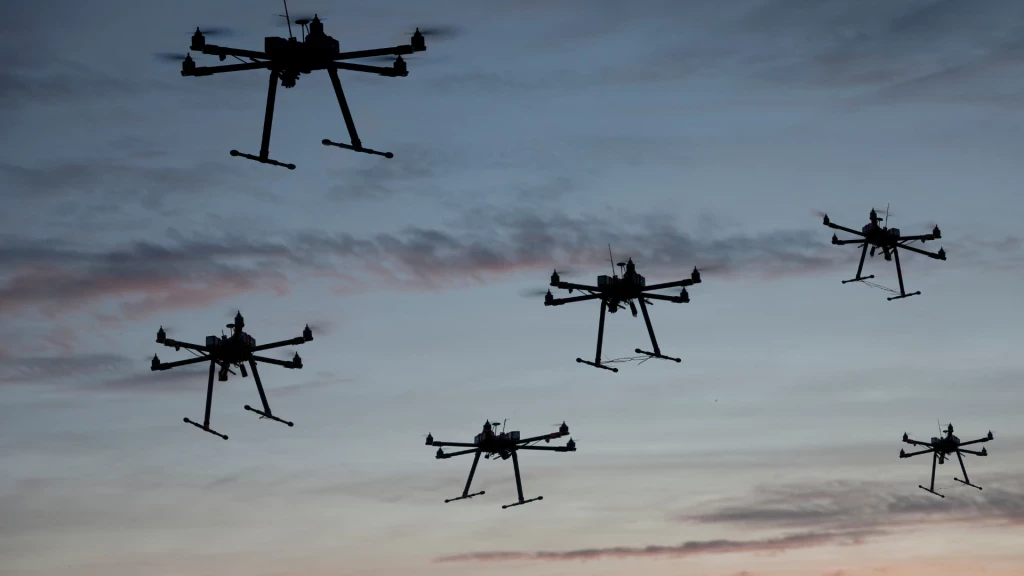
The Pentagon is moving quickly to field new counter-drone sensing systems to protect U.S. military installations and mobile units, issuing an urgent solicitation through the Defense Innovation Unit for a spring 2026 demonstration at Yuma Proving Ground.
The project, titled “Counter UAS Sensing for Homeland and Mobile Defense,” focuses first on defending domestic installations against small Group 1 drones (under 20 pounds) at ranges of at least 2 kilometers. Systems must include radar, filter out clutter such as birds, and integrate with government fire control systems while operating safely near populated areas.
A second track targets mobile protection for maneuver units, emphasizing low-signature or passive sensing to avoid detection. Systems must detect low-flying drones and mount on vehicles like the Joint Light Tactical Vehicle and Infantry Squad Vehicle.
Air Force Expands Engine Options for CCA
The U.S. Air Force has awarded early-stage contracts to Beehive Industries, Honeywell, Pratt & Whitney, and a team of GE Aerospace and Kratos Defense & Security Solutions to mature engine designs for future drone wingmen under the Combat Collaborative Aircraft (CCA) program.
The effort supports CCA Increment 2 and other Autonomous Collaborative Platforms, broadening propulsion options beyond the off-the-shelf engines used in Increment 1. The Air Force is particularly focused on developing lower-thrust engines to enable more flexible, cost-effective drone designs optimized for range, mass and production scalability.
GE Aerospace and Kratos are advancing the 1,500-pound-thrust GEK1500 engine under a $12.4 million contract, while Honeywell is building on its 2,800-pound-thrust Skyshot 1600 engine.
Officials say the multi-vendor approach ensures competitive options before committing to expensive prototype development, reinforcing the Air Force’s push for affordable, rapidly producible autonomous combat aircraft.
CIA Overhauls Acquisition Process
The Central Intelligence Agency (CIA) is overhauling its acquisition process to accelerate how quickly it can procure and deploy emerging technologies, announcing a new framework on February 9 aimed at cutting bureaucratic delays and deepening private-sector collaboration. The update introduces a centralized vendor-vetting system, streamlines IT authorization, and creates clearer pathways for leveraging the agency’s unique authorities to rapidly onboard breakthrough prototypes and modernize core systems.
The effort is being led by Efstathia Fragogiannis, a former Defense Advanced Research Projects Agency official who joined the CIA in November as procurement chief. Director John Ratcliffe has emphasized the need for a cultural shift toward “speed, agility and innovation,” noting that the agency’s increasingly tech-driven mission depends on faster integration of AI, biotech, fintech and microelectronics capabilities.
The acquisition overhaul aligns with broader federal efforts to modernize procurement and ensure intelligence agencies can keep pace with rapidly evolving national security threats.
Army Launches New Office to Drive Innovation
The Army has stood up a new headquarters-level organization, the Pathway for Innovation and Technology (PIT), which aims to accelerate how soldier-generated ideas become fielded capabilities. Led by Col. Shermoan Daiyaan, PIT connects existing innovation hubs directly with Program Acquisition Executives (PAEs), who control funding and program authority, helping bridge the long-standing gap between grassroots experimentation and formal acquisition.
PIT consolidates efforts such as the Army’s FUZE program, Joint Innovation Outpost and Global Tactical Edge Directorate, creating a more streamlined pathway from concept to production. Army officials say the goal is to inject speed and a venture-capital mindset into the acquisition system, reducing bureaucracy and scaling promising ideas more rapidly.
One early focus area is power generation and battery standardization for unmanned aerial systems, where multiple vendors currently create logistical challenges.