Golden Dome Explained: What the U.S. Missile Defense Shield Means for Space, Hypersonics and Homeland Defense
Add bookmarkGolden Dome is one of the most ambitious U.S. missile defense initiatives in decades. Originally announced through the White House's January 2025 executive order, The Iron Dome for America, the initiative calls for a next-generation missile defense shield designed to defend the U.S. homeland against ballistic missiles, hypersonic weapons, advanced cruise missiles and other next-generation aerial attacks.
For the defense community, Golden Dome is not just another missile defense program. It represents a potential shift in how the United States thinks about homeland defense, space-based sensing, hypersonic tracking, boost-phase intercept and integrated air and missile defense. It also raises major questions around affordability, technical feasibility, strategic stability and the future role of industry in building a layered national defense architecture.
As IDGA's report, What to Know About the Pentagon's Golden Dome, explains in more detail, the initiative "marked a significant shift in U.S. missile defense policy by expanding the homeland defense mission to cover not just intercontinental ballistic missiles from rogue states, but also ballistic, hypersonic, and advanced cruise missiles from peer and near-peer adversaries like Russia and China."
What is Golden Dome?
Golden Dome is a proposed U.S. homeland missile defense shield designed to detect, track and defeat missile threats before they reach U.S. territory.
In practical terms, it is expected to combine existing missile defense systems with new space-based sensors, space-based interceptors, ground-based interceptors, radars, command-and-control systems, and potentially directed-energy and non-kinetic capabilities.
The concept is huge in scale, with an all-new constellation of 7,800 space-based interceptors, designed to take out up to 10 intercontinental ballistic missiles launched near simultaneously as well as hypersonic glide vehicle threats.
It would also need nearly 1,600 replacement satellites each year because of their five-year orbital lifespan, on top of a separate tracking constellation of 108 satellites in low Earth orbit and 27 in medium Earth orbit. CBO estimates about 30,000 interceptor satellites would be needed over 20 years just to sustain 7,800 in orbit at any time.
Golden Dome is often compared with Israel's Iron Dome, but the comparison has limits. Iron Dome is designed primarily to defeat short-range rockets and other local threats. Golden Dome is far broader in scale, aiming to address long-range ballistic missiles, hypersonic glide vehicles, advanced cruise missiles and potentially space-enabled threats against the U.S. homeland.
Golden Dome: Key Dates & Numbers
Golden Dome remains at an early stage, but several figures help explain the scale of the initiative.
January 27, 2025 — The White House issued the executive order that launched the missile defense shield initiative.
60 days — The executive order directed the Secretary of Defense to submit a reference architecture, capability requirements and implementation plan within 60 days.
$175 billion — President Trump announced an estimated $175 billion cost for Golden Dome during a May 2025 White House announcement.
Three years — The administration has described an ambition to build or field major elements of the system within roughly three years.
$24.4 billion — The One Big Beautiful Bill Act provided $24.4 billion in mandatory funding for integrated air and missile defense, widely understood as Golden Dome's financial foundation.
$18.8 billion — Of that total, $18.8 billion was directed toward next-generation missile defense technologies, including space-based sensors, boost-phase interceptors, hypersonic test programs, directed energy and expanded satellite capabilities.
$5.9 billion — $5.9 billion supported layered homeland defense, including improved radars, accelerated hypersonic defense, new ICBM defense systems and test infrastructure modernization.
Four layers — The Pentagon concept includes one space-based layer and three land-based layers.
Summer 2028 — The Pentagon has targeted the second half of 2028 for Golden Dome's first major test.
Why Golden Dome is being proposed now
Golden Dome is being driven by a changing missile threat environment.
The White House executive order states that the threat of ballistic, hypersonic and cruise missiles, along with other advanced aerial attacks, remains one of the most serious threats facing the United States. It argues that the threat has become more intense and complex over the past 40 years as peer and near-peer adversaries have developed next-generation delivery systems.
The key shift is that U.S. homeland missile defense is no longer being framed only around limited attacks from rogue states or accidental launches. Golden Dome expands the discussion to include peer-level missile threats, hypersonics, cruise missiles and advanced aerial attacks.
This aligns closely with broader U.S. defense concerns around China, Russia, Iran and North Korea. Hypersonic weapons in particular are a major driver because they can maneuver, fly at high speeds and challenge legacy tracking and interception architectures.
AP reported that China's 2021 test of a warhead system that entered orbit before re-entering the atmosphere helped intensify calls for new ways to defend against missile strikes. The same AP report noted that U.S. Space Command had finalized options for Golden Dome and sent them to Defense Secretary Pete Hegseth for review.
What Golden Dome means for space-based missile defense
The most significant part of Golden Dome is the proposed space layer.
Space is already central to missile warning and tracking. The U.S. relies on satellites to detect missile launches and provide early warning. Golden Dome would go further by accelerating space-based tracking and exploring space-based intercept capabilities.
The White House executive order specifically calls for the acceleration of the Hypersonic and Ballistic Tracking Space Sensor layer and the development of proliferated space-based interceptors capable of boost-phase intercept.
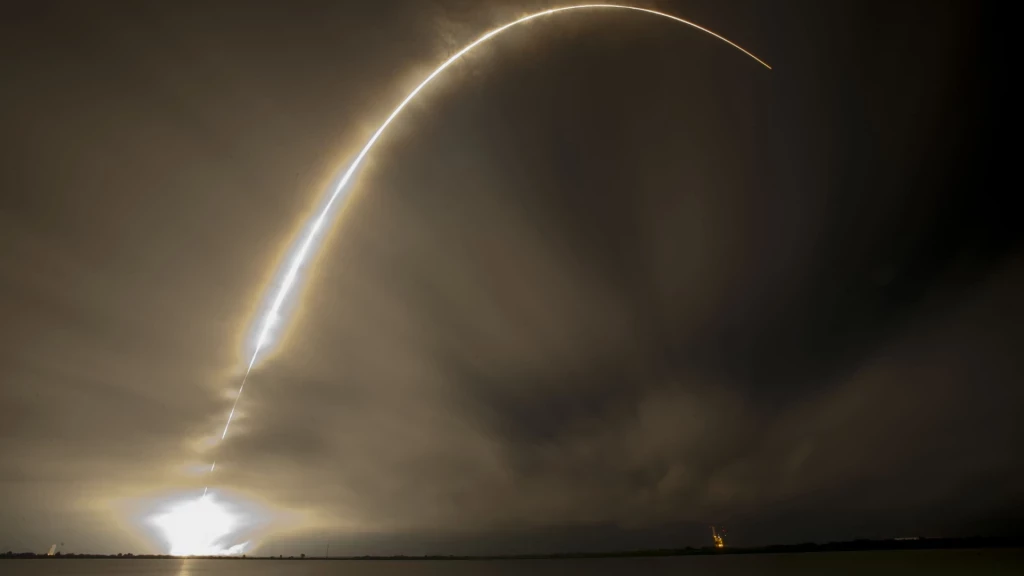
Boost-phase intercept is attractive because a missile is slower, hotter and easier to detect shortly after launch. It is also before the missile can release decoys or maneuver through later phases of flight. However, it is extremely difficult because the intercept window is short and the interceptor must be positioned close enough to respond in time.
That is why Golden Dome's space ambitions are so consequential. If the United States moves toward operational space-based interceptors, it would mark a major expansion of the military role of space and could change the economics and politics of missile defense.
What Golden Dome means for hypersonic missile defense
Hypersonic defense is likely to be one of the central arguments for Golden Dome.
Hypersonic glide vehicles and maneuvering hypersonic systems are difficult to defend against because they do not follow the same predictable ballistic trajectory as traditional ballistic missiles. They can maneuver during flight, operate at high speed and stress both sensor coverage and interceptor timing.
A layered architecture could improve the U.S. ability to detect, track and respond to hypersonic threats across multiple phases of flight. In this context, space-based sensors are particularly important because they can provide wide-area, persistent tracking.
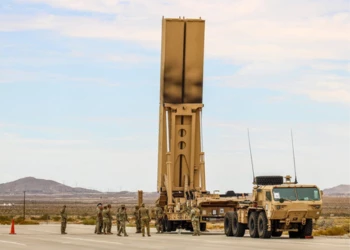
As IDGA's report highlights, Golden Dome sits alongside other next-generation missile and hypersonic capability efforts, including the Army's Dark Eagle Long-Range Hypersonic Weapon and broader developments in hypersonic defense, test range modernization and space-based tracking.
What Golden Dome means for homeland defense
Golden Dome would significantly expand the concept of U.S. homeland missile defense.
Current U.S. homeland missile defense is built around systems such as Ground-Based Midcourse Defense, which is intended primarily to defend against limited ballistic missile attacks. Golden Dome would add a more expansive, layered approach aimed at ballistic, hypersonic and cruise missile threats from multiple adversary categories.
The concept includes a fourth "Limited Area Defense" layer intended to protect population centers and critical locations. This could involve new radars, a common launcher, existing and future interceptors, and potentially systems such as Patriot integrated into a wider defensive network.
That shift matters because it moves homeland defense closer to a layered integrated air and missile defense model, where space, ground, air and sea capabilities work together rather than operating as separate systems.
The role of industry: a new missile defense race
Golden Dome is expected to create a major industrial competition across defense primes, space companies, data platforms, sensor providers and missile defense specialists.
Companies including Varda Space Industries, Anduril and LeoLabs have demonstrated the ability to track hypersonic objects from space in real time, while larger players such as Lockheed Martin, Boeing, RTX and Palantir are positioning themselves for roles in both terrestrial and space-based layers.
Reuters has also reported that potential contractors include SpaceX, Palantir, Anduril, L3Harris Technologies, Lockheed Martin and RTX. The same Reuters article noted that existing systems may form part of early capability, while more advanced space-based systems could define the long-term architecture.
For industry, the opportunity sits across several areas:
- Space-based sensing and tracking
- Proliferated satellite architectures
- Boost-phase intercept concepts
- Hypersonic tracking and fire-control data
- Battle management and command-and-control software
- Radars and terrestrial sensors
- Directed energy and non-kinetic defeat options
- Ground-based and sea-based interceptors
- Test range modernization
- Secure supply chains and resilient space infrastructure
The challenge is that Golden Dome is still being defined. Industry may see major opportunities, but requirements, funding flows, acquisition pathways and testing plans remain unclear.
The biggest challenges facing Golden Dome
Golden Dome faces several major challenges.
1. Cost
Cost is the most obvious concern. The administration's $175 billion estimate is already one of the largest figures associated with a modern U.S. defense initiative. However, independent estimates and experts have warned that a full space-based missile defense shield could cost much more depending on the architecture, the number of satellites required and the lifecycle cost of replacing and maintaining assets in orbit.
Defense experts anticipate the project could cost upwards of $1 trillion in its entirety. The Congressional Budget Office projected the initiative could reach $1.2 trillion over 20 years, however this figure is debated, with the Pentagon's own projection being about $185 billion over roughly a decade, arguing that the trillion figure relies on outdated acquisition assumptions rather than the commercial-space approach the Pentagon is actually pursuing,
2. Technical feasibility
Space-based intercept is not a new idea. It has been debated since the Strategic Defense Initiative era in the 1980s. The challenge is making it work at scale, against realistic threats, within short decision timelines and at an affordable cost.
The physics are demanding. The system would need persistent coverage, rapid detection, accurate tracking, high-speed intercept, resilient communications and a battle management network capable of making sense of large volumes of data.
3. Hypersonic tracking
Hypersonic glide vehicles can maneuver and may fly at altitudes that complicate detection and tracking. This increases the importance of space-based sensors and transport layers that can maintain custody of a target across its flight path.
4. Strategic stability
Golden Dome could also raise concerns among nuclear-armed competitors. If Russia or China believe the United States is trying to build a shield that could undermine their deterrent, they may respond by expanding offensive missile forces, developing countermeasures or accelerating counterspace capabilities.
5. Command and control
Even if each layer works technically, Golden Dome would still require a highly integrated command-and-control architecture. Sensors, interceptors, radars, satellites, existing missile defense systems and decision-makers would need to operate as one coherent system.
This is why Golden Dome is as much a C2 and data architecture challenge as it is a missile defense hardware challenge.
Key takeaways
Golden Dome is a proposed next-generation U.S. missile defense shield designed to protect the homeland against ballistic, hypersonic, cruise missile and other advanced aerial threats.
Its most important innovation is the proposed use of space-based sensors and potentially space-based interceptors as part of a broader layered defense architecture.
The initiative could reshape U.S. space defense, hypersonic missile defense, homeland defense, defense industry investment and missile defense command-and-control.
However, the program faces major questions around cost, technical feasibility, testing, strategic stability and integration with existing missile defense systems.
For the defense community, Golden Dome is one of the most important programs to watch because it sits at the intersection of space, hypersonics, missile defense, homeland security and command-and-control modernization.
FAQs
What is Golden Dome?
Golden Dome is a proposed U.S. next-generation missile defense shield designed to protect the homeland from ballistic, hypersonic, advanced cruise missile and other aerial threats.
Is Golden Dome the same as Iron Dome?
No. Golden Dome is inspired by Israel's Iron Dome, but it is much broader in scale. Iron Dome defends against short-range rockets and local threats, while Golden Dome aims to protect the U.S. homeland from long-range and advanced missile threats.
How much will Golden Dome cost?
President Trump has cited an estimated cost of $175 billion, while defense experts and later cost estimates suggest the full program could cost much more depending on its final architecture.
What role does space play in Golden Dome?
Space is central to Golden Dome. The concept includes space-based sensors for missile warning and tracking, and may include space-based interceptors capable of boost-phase intercept.
Why is Golden Dome important for hypersonic defense?
Hypersonic weapons are difficult to detect and intercept because they travel at high speed and can maneuver. Golden Dome's proposed space-based tracking layer could help maintain custody of hypersonic threats across flight.