How Reconciliation and the NDAA Shape What the Military Really Spends
Add bookmark
This week, Breaking Defense reported that the Defense Department intends to spend all $152 billion of the funding allocated through last year’s reconciliation bill (otherwise known as the One Big Beautiful Bill Act) in FY2026, instead of the previous plan to spend only $113 billion.
The news comes after Congress passed the National Defense Authorization Act (NDAA) for FY2026, which secured $900.6 in defense-related funding, $855.7 billion for the Department of Defense (DoD), and $34.3 billion for the Department of Energy.
On the surface, this might seem like the DoD has over a trillion dollars to spend in this fiscal year, but the reality is, the department won’t be forced to spend all this money over the next 12 months.
Understanding the difference between reconciliation and NDAA funds can be challenging. Both pieces of legislation outline defense strategies and priorities for the years ahead; however, each plays a unique role for the DoD. In this article, we will break down how they work, what they fund for FY 2026, and why they matter.
What is the NDAA?
The NDAA is an annual defense policy bill that serves as the policy and authorization blueprint for DoD spending. It does not itself appropriate money, which is done separately through appropriations bills, but it lays out how much should be authorized and under what rules. The NDAA also sets funding limits, reporting requirements, and program direction.
What is the Reconciliation Bill?
While the NDAA focuses specifically on defense-related funding and initiatives, a reconciliation bill impacts all aspects of government from social security programs to taxes.
A reconciliation bill is a special legislative process that allows Congress to pass budget-related changes with a simple majority in the Senate. It is typically used to implement major tax, spending, and deficit policies. In 2025, Congress passed the partisan One Big Beautiful Bill Act (OBBBA), a large reconciliation package that included a historic $150+ billion in additional “mandatory” defense funding intended to support DoD beyond the regular budget process. The $152 billion the DoD plans to spend from the OBBBA will be available through FY2029.
How These Two Laws Shape DoD Actions in FY2026
Reconciliation bills are not required to be passed annually, and do not always address defense funding. In FY2026, the combination of reconciliation funding and the NDAA places the Department of Defense in a unique dual‑compliance environment.
Under the OBBBA, DoD is obligated to absorb and execute $152 billion in mandatory funding within a single fiscal year, despite the funds being legally available through 2029. That requirement forces the Department to accelerate contracting actions, expand industrial‑base capacity, and rapidly channel money into areas that have been identified as defense priorities. Those areas include:
- Munitions and supply chain ($25 billion)
- Shipbuilding and industrial base ($29 billion)
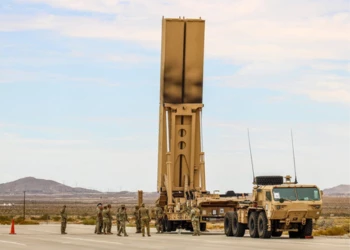
- Missile defense and “Golden Dome” ($24 billion)
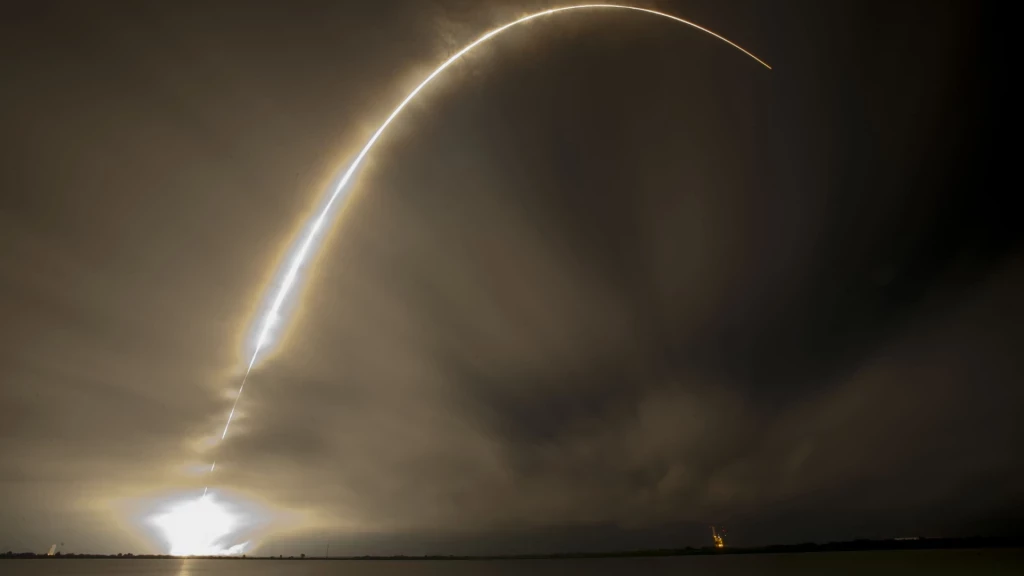
- Space sensors and launch infrastructure
- Unmanned/autonomous systems
Congress has required the DoD to justify these allocations and share detailed spending plans, particularly because reconciliation language lacked the usual explanatory statements or account‑level guidance that accompany annual appropriations bills. As a result, DoD was required to provide both classified and unclassified spending outlines and respond to committee concerns about whether it was honoring congressional intent.
Simultaneously, DoD must operate within the policy, oversight, and authorization limits set by the FY2026 NDAA. Even where reconciliation provides generous funding, the Department must adhere to authorized program structures and congressional directives.
The NDAA also reflects Congress’s ongoing concern about how reconciliation dollars are being used. Oversight letters and hearings cited in CRS reporting illustrate Congress’s insistence that the Department justify its allocation plans, defend its assumptions, and align its funding distribution with legislated intent.
Together, reconciliation and the NDAA determine how much DoD can spend and under what rules. While the reconciliation bill supplies a significant pool of mandatory funds, the NDAA authorizes the broader defense spending framework. Without the reconciliation funds, the defense budget would be significantly smaller in FY2026. And without the NDAA, DoD would lack the policy direction and authorized framework critical to executing those funds effectively.
Take, for example, long-range missile production. The Pentagon has repeatedly identified munitions stockpiles and long-range precision fires as critical gaps, particularly for deterrence in the Indo-Pacific. Last year’s reconciliation bill enables the DoD to increase production of long-range missiles and invest in supplier expansion. Meanwhile, the NDAA authorized procurement quantities and multi-year contracts, and also creates accountability by requiring DoD to provide quarterly updates and submit a munitions industrial base strategy to Congress. Taken together, the NDAA and OBBBA ensure missile production scales rapidly while maintaining oversight requirements.
In FY2026, it is not reconciliation or the NDAA alone that defines defense spending, but the interaction between accelerated mandatory funding and authorized policy guardrails that ultimately determines how quickly the Pentagon can turn historic topline figures into real military capability. One way to learn how the military is turning funds into capabilities is by joining an IDGA conference. These summits provided an opportunity for military and industry leaders to network and ensure that America gets the best value for money and the best-equipped military globally.