Drone Dominance Program Explained: How the Pentagon Plans to Scale Low-Cost Attack Drones by 2027
Add bookmark
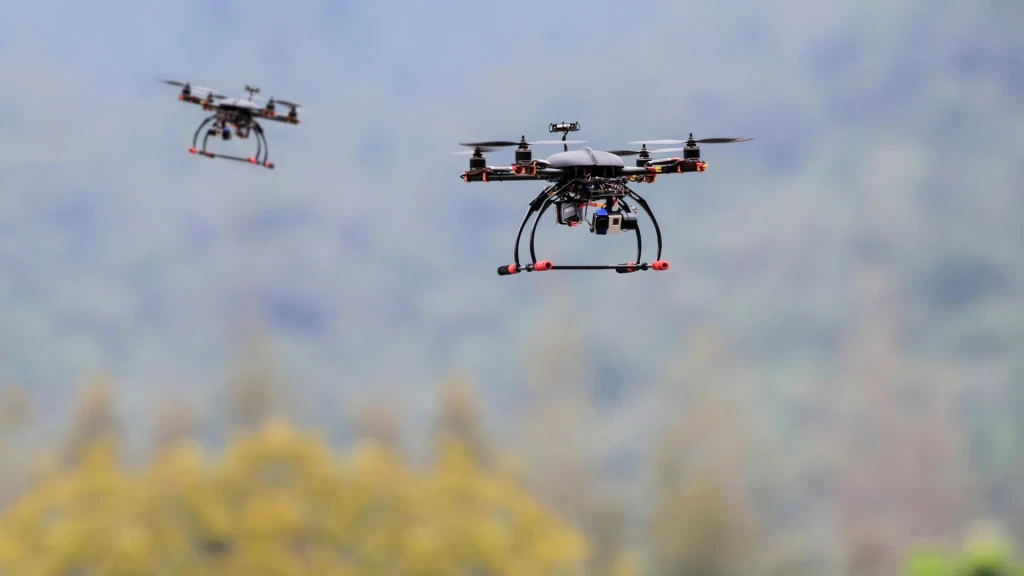
Low-cost drones have become one of the defining weapons of modern warfare. In Ukraine, first-person-view and one-way attack drones are being used at enormous scale for reconnaissance, targeting and direct strike missions, forcing militaries to rethink how quickly unmanned systems can be produced, updated and replaced.
The Pentagon's Drone Dominance Program is its answer to that challenge. Rather than relying on lengthy acquisition cycles for a small number of highly specialized systems, the initiative is designed to rapidly test competing drones, place large production orders and build a U.S. industrial base capable of manufacturing inexpensive lethal unmanned systems at scale.
With the program targeting more than 200,000 drones by 2027, Drone Dominance could significantly reshape U.S. military drone procurement, domestic manufacturing and the way the Department of War (DoW) buys rapidly evolving technology. This article explains how the program works, what the Gauntlet competitions involve, which companies are participating and why the initiative matters for the future of U.S. unmanned warfare.
What is the Drone Dominance Program?
The Drone Dominance Program is a Pentagon initiative designed to rapidly purchase large numbers of low-cost, lethal small drones while creating a U.S. industrial base capable of producing them at scale.
Rather than spending years developing a small number of highly customized systems, the program uses competitive "Gauntlet" events to test commercially developed drones in operational scenarios, rank their performance and then place production orders with the strongest performers.
The current official Drone Dominance Program describes the initiative as an approximately $1 billion, two-year effort intended to purchase more than 200,000 drones by 2027.
However the objective is broader than buying drones. The Pentagon is trying to create sustained demand for inexpensive, attritable unmanned systems, reduce unit prices through competition, strengthen the domestic drone supply chain and give U.S. military units access to capabilities that can be purchased and replaced in far greater numbers than traditional weapons platforms.
That makes Drone Dominance as much an industrial strategy and acquisition reform program as it is a new military drone procurement effort.
Why did the Pentagon launch Drone Dominance?
The program is a response to one of the clearest lessons from recent conflicts: inexpensive drones can have an outsized effect on the battlefield.
Small first-person-view drones and one-way attack systems have been used for reconnaissance, targeting, direct attack and the disruption of logistics and armored formations. Their comparatively low cost means forces can deploy them in numbers that would be financially impossible with conventional precision weapons.
This change has already influenced wider U.S. defense policy. President Trump's June 2025 Executive Order 14307, "Unleashing American Drone Dominance", directed federal agencies to expand domestic drone production, secure supply chains against foreign components, and accelerate commercial drone integration into U.S. airspace.
The following month, Secretary of War Pete Hegseth (then still titled Secretary of Defense) translated that intent into a military-specific mandate with the memorandum "Unleashing U.S. Military Drone Dominance", arguing that U.S. units were not yet equipped with the volume of inexpensive lethal drones required by the modern battlefield.
The challenge, however, is in proving that the United States can manufacture, procure, update and field them at wartime scale.
Drone Dominance and DRPM-UxS: how the Pentagon's drone strategy fits together
Drone Dominance is part of a wider restructuring of how the Pentagon approaches unmanned systems.
IDGA recently examined the organizational side of that transformation in DRPM-UxS Explained: How the Pentagon's New Drone Office Could Reshape U.S. Unmanned Systems.
DRPM-UxS addresses the coordination, acquisition and scaling of unmanned capabilities across the Department.
Drone Dominance addresses a more specific problem: how to create repeated competitive demand for inexpensive lethal drones and turn promising manufacturers into high-volume suppliers.
The two initiatives therefore point toward the same broader shift. The Pentagon increasingly wants unmanned systems to be treated less like niche experimental platforms and more like rapidly evolving consumable military capabilities.
How the Drone Dominance Gauntlet competitions work
At the center of Drone Dominance is a challenge-based acquisition model.
The program is jointly administered by the Defense Innovation Unit and the Test Resource Management Center, while Naval Surface Warfare Center Crane holds contracting authority for prototype delivery orders.
Instead of selecting a single design and locking it into a traditional long-term development program, Drone Dominance repeatedly tests competing systems.
Each phase begins with a Gauntlet competition. Military operators then fly the drones in increasingly difficult mission scenarios. Performance is assessed alongside production capacity, cost, ease of use and supply-chain resilience.
The successful manufacturers receive orders. Later phases increase the quantities being purchased while demanding stronger performance and, potentially, lower prices.
Importantly, the program says this is not a conventional down-select. A company that fails to receive an order in one phase can improve its design and compete again. That creates a very different incentive structure from a winner-takes-all procurement program.
Drone Dominance Program timeline and key numbers
| Date | Drone Dominance milestone | Key number or outcome |
|---|---|---|
| June 6, 2025 | Executive Order 14307 signed | U.S. government directs agencies to strengthen domestic drone production and procurement |
| July 10, 2025 | Pentagon “Military Drone Dominance” memorandum issued | DoD directed to accelerate adoption of inexpensive UAS |
| December 17, 2025 | Initial Request for Solutions released | Launches the competitive procurement model |
| February 17, 2026 | Gauntlet I | 30,000 drones ordered |
| June 8–19, 2026 | Phase II Qualifier at Camp Grayling | 49 companies, approximately 79 drone designs, with 19 companies advancing |
| August 2026 | Gauntlet II at Fort Carson | 19 companies compete, with 60,000 drones expected to be ordered from the top performers |
| August 20, 2026 | White House Drone Dominance industrial event | Links program to $200B+ in Office of Strategic Capital lending |
| October 2026 – estimated | Gauntlet 2.5 | Additional “Bomber Platform” mission |
| 2027 | Gauntlets III and IV | Larger-scale competitions as production volumes increase |
| By 2027 | Current program objective | More than 200,000 drones intended for purchase |
The schedule remains subject to change, but the cadence illustrates what is unusual about Drone Dominance: major procurement competitions are being held roughly every six months rather than every several years.
What happened in Gauntlet I?
The first Drone Dominance competition ran from February 18 through early March 2026 at Fort Benning, Georgia. Twenty-five vendors competed; the Pentagon selected 11 for production orders, evaluated by roughly 100 military operators who flew each system after just two hours of training. Skycutter, a UK-based manufacturer, topped the leaderboard, while Ukrainian Defense Drones, a name that recurs later in Gauntlet II, placed sixth. Orders totaling roughly $150 million for 30,000 drones were announced in early March, about a week after testing concluded.
The original program documents placed particular emphasis on one-way attack systems that could be simple enough for military operators to learn quickly and inexpensive enough to procure in large quantities.
The initial Request for Information described representative missions including a 10-kilometer strike across open terrain and a shorter attack in a simulated urban environment.
But capability was only one part of the evaluation, and manufacturers also had to demonstrate that they could actually deliver systems in volume.
A technically impressive prototype provides little battlefield value if the company behind it cannot manufacture thousands of units, source batteries and motors during a supply disruption or modify the design quickly when countermeasures change. Drone Dominance therefore evaluates the factory as well as the aircraft.
Why Ukraine is central to the Drone Dominance strategy
The scale of Ukrainian drone production demonstrates how far the United States still has to go.
In July 2026, Reuters reported that Ukraine was expected to produce between 6 million and 7 million small FPV attack drones during 2026, or approximately 500,000 every month.
By comparison, the Pentagon's Drone Dominance effort was expected to have ordered just under 200,000 drones cumulatively by February 2027.
The comparison is not exact. Ukrainian wartime production encompasses many designs, missions and procurement channels, whereas Drone Dominance represents one specific Pentagon initiative. But it illustrates the industrial challenge.
The Pentagon needs to move from buying small batches of specialized UAS to supporting a manufacturing ecosystem capable of producing inexpensive systems by the tens or hundreds of thousands.
Ukraine is also influencing the program directly. Several Ukrainian manufacturers have participated in Drone Dominance competitions, and Reuters reported that Ukrainian companies competing in Gauntlet II were being required to establish or move toward U.S. manufacturing partnerships if they wanted to receive future production orders. The approach is intended to combine Ukraine's battlefield experience with American industrial capacity.
Supply Chain Concerns
Scaling the airframe itself may prove easier than scaling the components inside it. Low-cost drones depend on motors, batteries, semiconductors, cameras, communications equipment, flight controllers and other electronic components produced through global supply chains.
For the Pentagon, dependence on Chinese components creates an obvious strategic problem, as a drone production line capable of delivering tens of thousands of systems during peacetime is of limited value if production stops during a conflict because the manufacturer cannot obtain motors or battery cells. The Drone Dominance Program has therefore been tightening its supply-chain requirements as the competitions progress.
Reuters reported that a revised framework introduced in July 2026 established the long-term objective of creating a wholly domestic small-UAS supply chain and prohibited certain foreign components from the Gauntlet II systems.
The White House reinforced the issue again in August 2026, arguing that U.S. dependence on foreign drone components creates both national security and cybersecurity risks. This means Drone Dominance is effectively trying to develop two capabilities simultaneously: A military drone production base and the domestic component ecosystem required to support it.
The Pentagon has already begun enforcing this. Phase II bars any system using motors or batteries sourced from covered countries, chiefly China, starting with this round of testing. The compliance requirements tighten on a set schedule: GPS-module restrictions take effect in February 2027, with full domestic traceability required by August 2027. Suppliers unable to demonstrate compliance are locked out of future procurement rounds entirely, regardless of how their drones perform in the Gauntlet itself.
Why cheap drones require a different acquisition model
Traditional U.S. defense acquisition was largely built around expensive systems expected to remain in service for decades. That model makes sense for an aircraft carrier, strategic bomber or sophisticated radar.
It is much harder to apply to a $3,000–$5,000 drone whose software, radio, guidance approach or counter-countermeasure technology may need to change within months.
Drone warfare creates an acquisition paradox. The systems are individually inexpensive, but they need to be produced at enormous scale and updated continuously. That means the government needs a procurement model capable of accepting technological churn.
Drone Dominance attempts to address this through repeated competitions, short delivery windows, fixed-price orders and the ability for suppliers to return in later phases with improved systems.
The Pentagon is effectively trying to create a continuous competitive market for military drones instead of selecting one platform and freezing the design.
What Drone Dominance means for defense companies
For industry, the program rewards a different set of capabilities from many traditional defense competitions. Technical performance still matters, but so do manufacturability, supply-chain resilience, price and speed.
A company that produces the most advanced prototype may lose to one that can deliver a slightly simpler system reliably in batches of thousands. That could create opportunities for companies outside the traditional prime-contractor ecosystem.
Commercial drone manufacturers, electronics suppliers, battery companies, additive manufacturing specialists, software developers and Ukrainian defense-tech firms can potentially contribute to the market. It also gives investors and manufacturers a clearer demand signal.
One of the long-standing challenges for the U.S. drone industrial base has been uncertainty: companies are encouraged to expand production capacity but may lack sufficient government orders to justify building factories or tooling. Drone Dominance is explicitly intended to change that through recurring procurement.
The White House ties the pieces together
On August 20, 2026, the White House convened nearly 100 government and industry representatives, drawn from around 40 companies, at the Eisenhower Executive Office Building to link Drone Dominance procurement to a broader industrial strategy.
The event tied the program's roughly $1 billion in acquisition funding to more than $200 billion in lending authority available through the Office of Strategic Capital, aimed at building out domestic capacity for motors, batteries, sensors and microelectronics at the volumes a real conflict would demand.
What happens after Gauntlet II?
Gauntlet II is not the end of the program. The official roadmap currently includes an additional Gauntlet 2.5, estimated for October 2026, focused on a bomber-platform mission.
Gauntlet III is expected approximately six months after Gauntlet II, followed by Gauntlet IV roughly another six months later.
As the phases progress, the Pentagon intends to increase production quantities while making testing more operationally demanding.
The broader goal is to emerge with multiple manufacturers capable of producing secure, low-cost drones at scale rather than relying on one winning supplier.
If that succeeds, the individual Drone Dominance competitions may eventually become less important than the industrial base they create.
Why Drone Dominance matters
Drone Dominance represents a significant experiment in U.S. defense acquisition. The Pentagon is not simply attempting to buy a new drone, rather it is trying to establish whether the United States can create an industrial ecosystem that continuously produces, tests, updates and replaces low-cost unmanned weapons at a speed closer to the commercial technology sector than traditional defense procurement.
Ukraine has demonstrated what mass drone warfare can look like. The Pentagon now has to determine whether the United States can reproduce that scale while meeting U.S. security, manufacturing and supply-chain requirements.
The answer could influence not only U.S. drone procurement, but the way the Department approaches other rapidly evolving autonomous and attritable systems.
Frequently asked questions about the Drone Dominance Program
What is the Drone Dominance Program?
The Drone Dominance Program is a Pentagon initiative designed to purchase large numbers of low-cost lethal small drones while expanding the U.S. domestic drone manufacturing base.
How much is the Drone Dominance Program worth?
The current official program website describes Drone Dominance as an approximately $1 billion initiative. Earlier procurement documentation laid out planned orders totaling slightly more than $1 billion across multiple phases.
How many drones will the Pentagon buy through Drone Dominance?
The official program currently states that it intends to purchase more than 200,000 drones by 2027. Gauntlet I produced orders for 30,000 drones, while 60,000 are expected to be ordered following Gauntlet II.
What is Gauntlet II?
Gauntlet II is the second major operational competition within the Drone Dominance Program. Nineteen companies advanced from a June 8–19 qualifier at Camp Grayling, Michigan, involving 49 manufacturers and roughly 79 drone designs. The advancing field, announced July 1, 2026, spans a deliberately international mix, including UK-based Skycutter, Ukrainian Defense Drones, Israel's XTEND Reality, and U.S. firms Neros Technologies and Teal Drones, ahead of testing at Fort Carson, Colorado in August.
What types of drones does Drone Dominance focus on?
The program is primarily focused on low-cost, lethal small unmanned aerial systems, including one-way attack drones designed for battlefield strike missions.
Why is the U.S. trying to manufacture more military drones domestically?
Modern military drones depend heavily on globally sourced components. The Pentagon wants a more secure U.S. supply chain so drone production can continue during a conflict without reliance on potentially unavailable or adversary-controlled components.
How does Drone Dominance relate to DRPM-UxS?
DRPM-UxS is part of the Pentagon's wider effort to coordinate and accelerate unmanned-system acquisition. Drone Dominance is a specific procurement program focused on creating mass production capacity for inexpensive lethal drones.
Key takeaway
Drone Dominance is not simply a competition to find the Pentagon's next small drone. It is an attempt to change how the United States buys and manufactures rapidly evolving weapons.
By combining recurring Gauntlet competitions, large fixed-price orders, military-operated testing and increasingly strict domestic supply-chain requirements, the Pentagon hopes to create multiple U.S. manufacturers capable of producing inexpensive attack drones at scale.
Whether the program succeeds will be measured not only by how well the drones perform at Fort Carson, but by whether American factories can eventually produce them in the numbers required by modern warfare.