How CCA Will Transform Military Flight Training
Add bookmark
Autonomous platforms are not a new concept to airmen. Autopilot has existed for more than a century, and virtually all planes in the Air Force's arsenal are equipped with some form of autopilot.
Major General (Ret.) Jim Sears, former Deputy Commander of Air Education and Training Command (AETC) and chairman of IDGA's Military Flight Training Summit, sees autonomous systems as the next step in aviation's natural evolution.
"Since the Wright brothers, one of the goals of aircraft design has been to make airplanes easier to fly so pilots can focus on the mission. Autonomy is simply the next step in that evolution," Sears said.
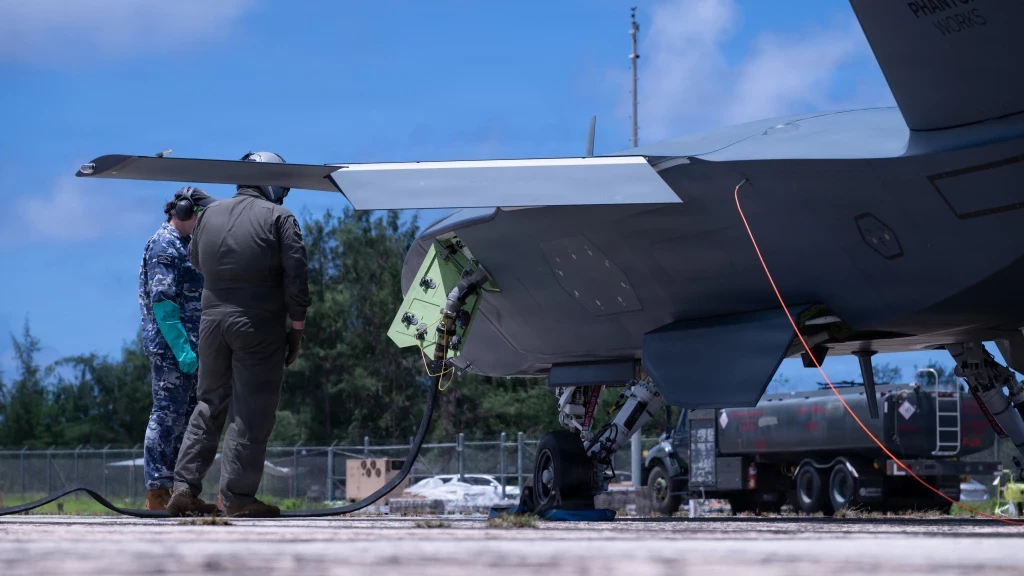
Collaborative Combat Aircraft (CCA) embodies the autonomous evolution of flight training. The Air Force views CCA's as a foundational element of its Next-Generation Air Dominance (NGAD) program. The advanced, autonomous uncrewed aircraft is designed to operate alongside crewed fighter jets. In June 2026, the Air Force selected General Atomics and Anduril Industries to build the first production fleet of CCA for Increment 1. The contracts are to deliver semi-autonomous, uncrewed FQ-42A and FQ-44A aircrafts—slated to field at least 150 drones by 2029.
As the Air Force's goal of delivering manned-unmanned teaming becomes closer to reality, the air division is adjusting how it trains future pilots.
Rather than simply managing a single aircraft, pilots will increasingly be responsible for directing teams of autonomous systems. That places greater emphasis on mission command, tactical decision-making, and integrating manned and unmanned capabilities than on traditional stick-and-rudder flying alone.
"If we do CCA right," Sears said, "we're adding tens, if not hundreds, of aircraft into the airspace. Making sure all of that happens safely while effectively employing those systems becomes a much more complex mission-planning problem."
Those new requirements are already influencing how the Air Force organizes its training enterprise.
In May 2026, the service announced that formal training units for the F-35, F-16, and MQ-9 would transition from AETC to Air Combat Command (ACC). The move allows AETC to concentrate on teaching foundational flying skills while ACC assumes responsibility for advanced tactical training, exposing students to operational environments earlier in their careers and accelerating their path to combat readiness.
The restructuring reflects a broader recognition that preparing pilots for future conflict requires more than mastering aircraft systems. Aviators must also learn how to employ autonomous teammates, operate in distributed formations, and integrate the latest tactics into increasingly complex missions.
Sears believes that shift can eventually extend throughout the training pipeline.
"Those are aviator skills that are developed over time, and they'll become even more important as pilots progress through flight lead upgrades, mission commander training, and eventually advanced tactical employment."
For Sears, the emergence of Collaborative Combat Aircraft also reinforces an important distinction between being a pilot and being a military aviator.
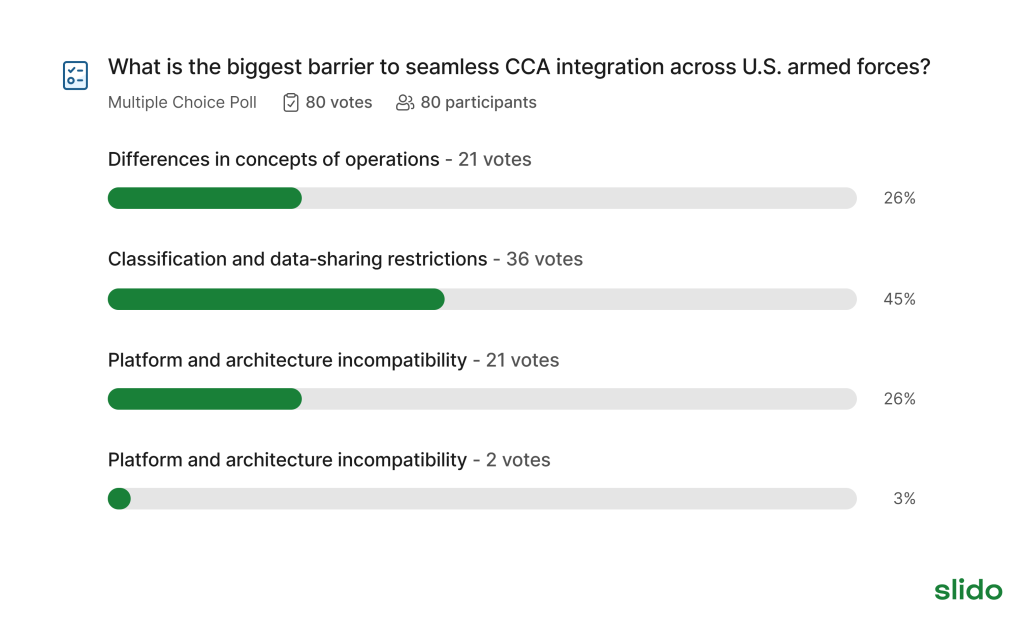 (Survey results from IDGA's Air Dominance Summit)
While pilots must master the technical skill of flying an aircraft, military aviators are also responsible for mission planning, tactical decision-making, threat assessment, and leading forces in combat. As autonomous systems assume more routine flying and support functions, those higher-order responsibilities become even more important.
"The challenge isn't just teaching pilots how to fly with Collaborative Combat Aircraft," Sears said. "It's preparing them to plan and execute missions where dozens, if not hundreds, of autonomous aircraft are part of the fight."
Rather than diminishing the role of the human pilot, CCA shifts the emphasis toward judgment, leadership, and mission command. Future aviators will increasingly be expected to orchestrate teams of crewed and autonomous aircraft, integrating their capabilities into a cohesive combat force.
He also sees autonomy changing the role of the pilot rather than replacing it.
"As a pilot, the ability to have that much more firepower and so many more tools available fundamentally changes what you're able to accomplish."
Instead of reducing the importance of human pilots, autonomy enables them to focus on higher-level decision-making while collaborative aircraft execute supporting tasks. Modern aircraft have already moved in this direction. Sears points to his experience flying the F-35, where automation allows pilots to spend less time managing the aircraft and more time processing information, employing weapons, and accomplishing the mission.
As CCA enters operational service, flight training will need to evolve in parallel. The emphasis will increasingly shift from simply producing skilled pilots to developing military aviators capable of leading human-machine teams, planning complex multi-platform operations, and making tactical decisions in data-rich combat environments.
In that sense, CCA represents more than the introduction of another aircraft, it reinforces what has always distinguished military aviation. Flying remains an essential skill, but success will increasingly depend on judgment, leadership, mission planning, and the ability to command autonomous teammates in combat.