Exclusive Content
The State of Biometric Technology Across U.S. Agencies
As investment in border modernization, biometrics, and AI continues to grow across U.S. agencies, understanding the operational priorities and technology gaps facing the homeland security community has never been more important.
This report shares insights gathered from IDGA's "Biometrics for Government & Law Enforcement" survey, featuring perspectives from federal and state law enforcement, government personnel, industry leaders, consultants, and technology experts.
The findings explore current challenges, adoption priorities, and the future role of biometric technologies across border security and law enforcement operations.
Download the report to explore the full survey findings and key takeaways from the biometrics community.
Biometrics Bundle
IDGA have created the 'Biometrics Bundle', a handpicked collection of expert insights, real-world case studies, and must-read interviews, designed to give biometrics leaders the clarity, foresight, and strategies to lead with confidence in an evolving landscape. Download to read:
- A Guide to Biometrics in Correctional Facilities
- How the 'One Big Beautiful Bill' is Reshaping Biometric Capabilities at U.S. Borders
- The Role of Biometrics Across DHS Agencies
- Leveraging International Collaboration as Biometric Technologies Evolve
Biometrics for Goverment and Law Enforcement Post Show Report 2025
What's shaping the future of biometrics across U.S. government and law enforcement?
IDGA's Biometrics for Government & Law Enforcement Summit returned to Reston, Virginia, bringing together 180 leaders from federal and local law enforcement, government agencies, technology providers, industry and academia.
Across two days, discussions explored where government investment is heading, how agencies including DHS are approaching the evolving security landscape, and the technologies transforming biometric identification and authentication. Speakers also tackled the operational challenges facing the sector and the priorities likely to shape future adoption.
This post-show report brings together the key takeaways from the 2025 Summit, including:
- The biggest themes and insights from two days of discussion
- Emerging priorities across government and law enforcement Key developments in biometric technology
- The challenges agencies and industry still need to solve
- A snapshot of the organisations represented at the Summit
- Download the report for a concise look at what the biometrics community is focused on now, and where the market is heading next.
Biometrics in Action: How U.S. Border Patrol is Enhancing Enforcement with Advanced ID Technologies
How is U.S. Customs and Border Protection approaching the next generation of biometric technology, and what does it need from industry?
With 18 years at U.S. Customs and Border Protection, Supervisory Assistant Chief Matthew Lightner is one of the agency's leading subject matter experts in biometrics. In his current role within U.S. Border Patrol Headquarters, he helps oversee the biometric and enforcement technologies used by frontline agents.
In this exclusive IDGA interview, SASC Lightner shares insight into CBP's evolving biometric requirements and the challenges that need to be solved to support agents in the field.
The interview explores:
- The biometric solutions and capabilities CBP is looking for
- Why data interoperability across federal agencies remains a critical priority
- The operational challenges shaping technology requirements
- Where industry can better support CBP's future needs
Read the full interview to understand what CBP needs from biometric technology today and where its priorities are heading next.
Forging the Future of Identity Intelligence: Glenn Krizay on Biometrics in National Security
How has biometrics evolved over the past four decades, and what does its future look like across U.S. defence and national security?
Few people have had a closer view of that evolution than Glenn Krizay. Across more than 40 years of federal service, Krizay held senior roles spanning the Department of Defense, Department of Homeland Security and U.S. Air Force, including serving as Director of the Defense Forensics and Biometrics Agency.
Now Chairman of IDGA's Biometrics for Government & Law Enforcement Summit, Krizay brings a unique perspective on how biometric capabilities, priorities and applications have changed across government.
In this interview, he sits down with IDGA to explore the evolution of biometrics, drawing on four decades of experience to examine how the field has changed, the lessons government has learned along the way and what could shape its next chapter.
Read the full interview for a rare, long-term perspective on the evolution and future of biometrics across U.S. government.
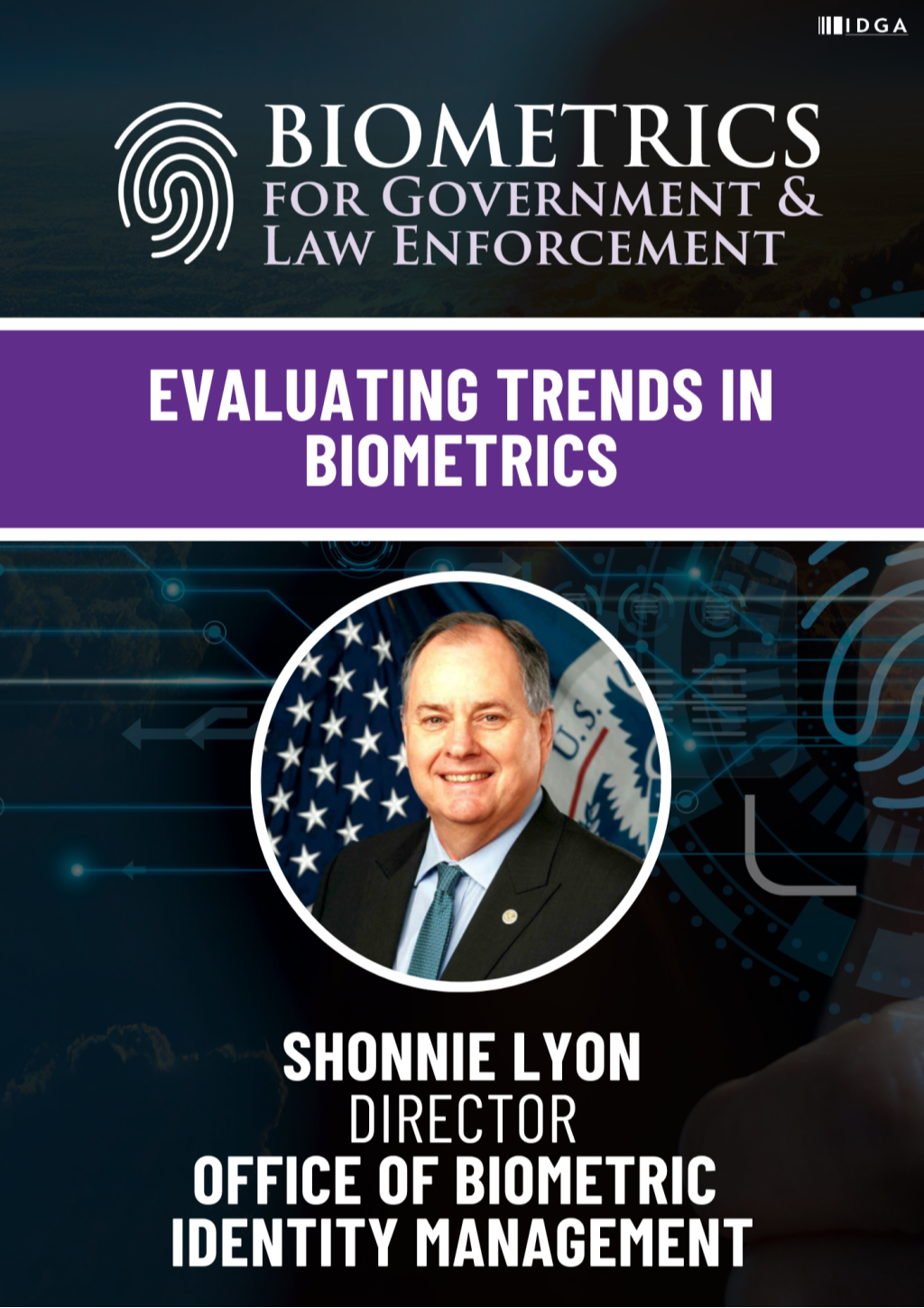
Evaluating Trends in Biometrics with Shonnie Lyon, Director of the DHS Office of Biometric Identity Management
How is DHS approaching the next generation of biometric identity management?
In this presentation, Shonnie Lyon, Director of the DHS Office of Biometric Identity Management, explores the technologies, challenges and policy considerations shaping the future of biometrics across the Department of Homeland Security.
Delivered at IDGA's Biometrics for Government & Law Enforcement Summit, the presentation provides an inside look at how DHS is developing its biometric capabilities while balancing interoperability, emerging technologies, responsible use and privacy.
Download the presentation to explore:
- The current DHS biometrics landscape and key priorities
- The DHS biometrics 'triad' supporting interagency data sharing
- Emerging trends, challenges and opportunities in biometric technology
- The benefits and limitations of contactless biometric modalities DHS's approach to the responsible use of facial recognition and face capture
- How privacy considerations are being built into biometric programmes for citizens and visitors
Download the presentation for insight into how one of the U.S. government's largest users of biometric technology is approaching its future development and deployment.
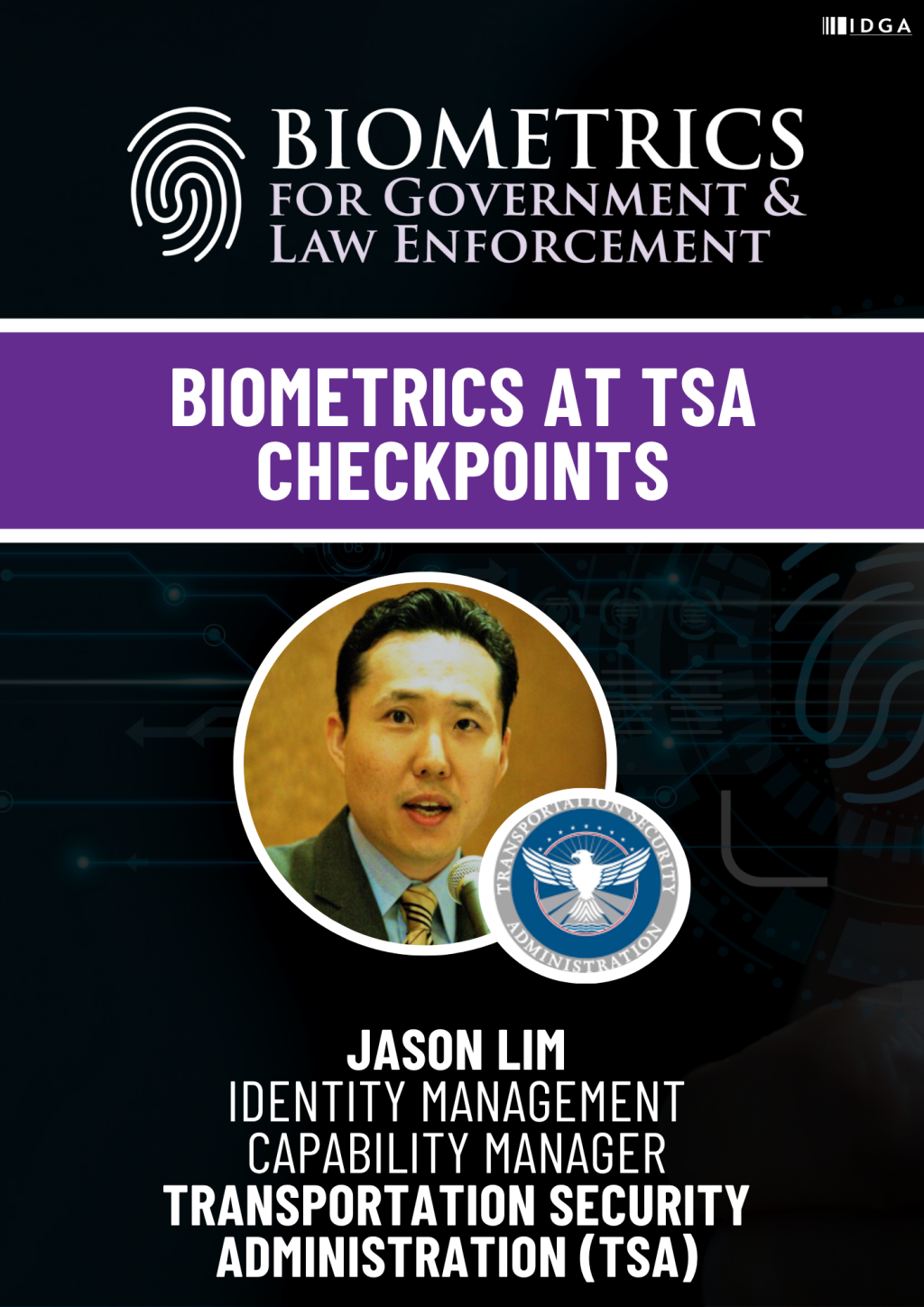
Exploring Biometrics at TSA Checkpoints with Jason Lim, Transportation Security Administration
How is TSA using biometrics and digital identity to transform the airport security experience?
In this presentation, Jason Lim, Identity Management Capability Manager at the Transportation Security Administration (TSA), provides an inside look at the agency's work to modernise identity verification at U.S. airport checkpoints.
Delivered at IDGA's Biometrics for Government & Law Enforcement Summit, the presentation explores TSA's rollout of touchless identity solutions, how biometric technologies are being evaluated and the agency's wider vision for integrating digital identity into the passenger screening experience.
Download the presentation to explore:
- TSA's approach to modernising checkpoint identity verification
- How TSA PreCheck® Touchless Identity works
- Where Touchless Identity Solutions are currently being deployed
- How TSA evaluates biometric technologies TSA's commitments to passengers as biometric capabilities expand
- The agency's long-term vision for biometrics and digital identity
Download the presentation for a closer look at how TSA is moving biometric identity verification from concept to real-world deployment at U.S. airports.

Homeland Security Week 2026 Attendee List
Explore the organizations and senior decision-makers who attended Homeland Security Week 2026 with our Attendee Snapshot.
The list highlights representatives from leading government agencies, law enforcement bodies, military organizations, and industry partners who came together to discuss the future of homeland security, border protection, cybersecurity, AI, counter-UAS, and critical infrastructure resilience.
Download the attendee snapshot to see the caliber of professionals and organizations that participated in Homeland Security Week 2026.
In Partnership With:

QUESTIONS?
Contact us: +1 646 200 7515
Email: idga@idga.org

©2026 IQPC. All rights reserved.