Media Center | Defense Logistics & Energy
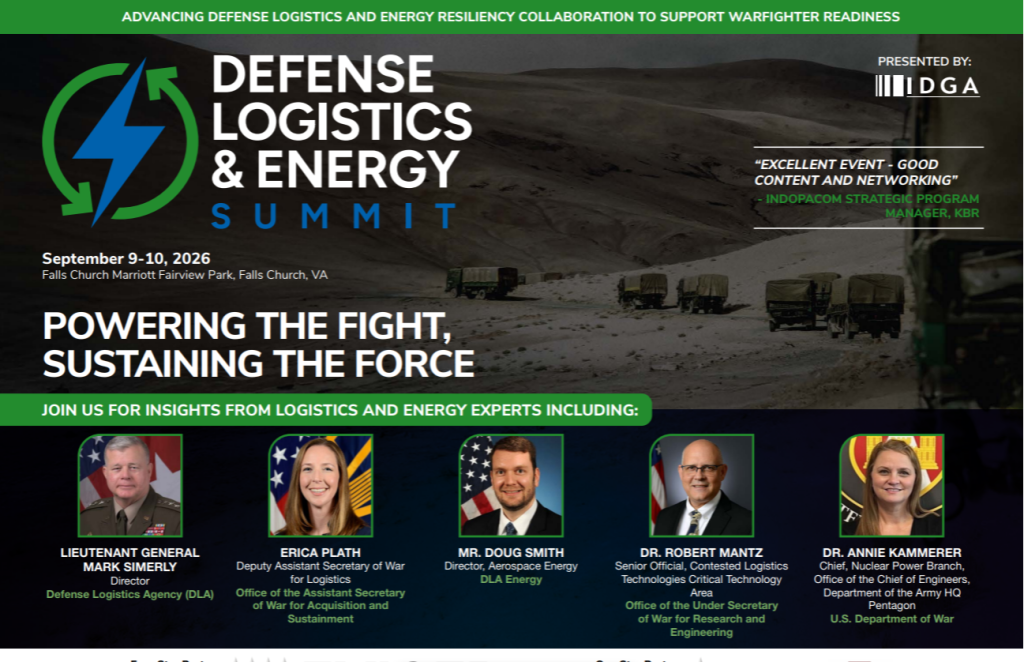
Defense Logistics and Energy Summit - 2026 Official Agenda
IDGA is thrilled to host the Defense Logistics & Energy Summit in September 2026!The summit historically brings together 250+ military, industry, and academic logistics and energy leaders committed to supporting the warfighter through logistical support, energy resilien ...
New Content
How AI Is Changing Military Energy Demand and Security
As artificial intelligence becomes increasingly embedded across defense operations, it is creating new challenges—and opportunities—for military energy resilience. This report explores how the growth of AI is reshaping energy demand, influencing defense infrastructure requirements, and driving new approaches to energy security across the force.
In this report:
- Discover how AI-driven computing and data centers are increasing military energy requirements and why resilient power infrastructure is becoming a critical component of operational readiness.
- Explore how AI is helping strengthen energy security through smarter energy storage, grid optimization, cyber threat detection, and resilient infrastructure management.
Programs, Projects and Initiatives Shaping Defense Energy & Logistics
As the defense landscape evolves, logistics and energy programs are playing an increasingly critical role in ensuring mission readiness, operational resilience, and global force projection. This report highlights the key initiatives and projects shaping how the U.S. military and its partners are modernizing sustainment capabilities for future conflicts.
Download to gain:
- An overview of leading defense logistics and energy programs driving innovation across supply chains, infrastructure, and operational support.
- Insights into how emerging technologies and strategic investments are strengthening resilience, scalability, and readiness in contested environments.
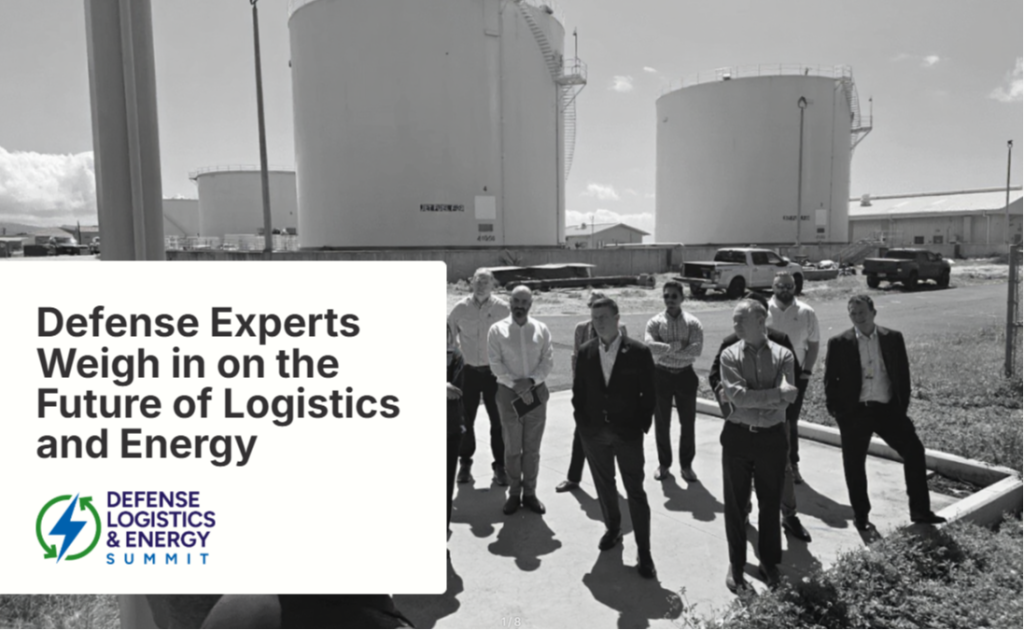
Defense Experts Weigh in on the Future of Logistics and Energy
As the demands of modern warfare evolve, logistics and energy are no longer separate challenges—they are deeply interconnected drivers of military readiness and operational success. In this exclusive IDGA advisory board interview series, senior defense leaders share insights on how the Department of War is rethinking sustainment, strengthening resilience, and integrating emerging technologies to compete in contested environments.
Key Highlights:
- How converging logistics and energy strategies are reshaping military planning, with energy now seen as a critical enabler of operational reach and resilience.
- Expert perspectives on emerging technologies—from AI and predictive analytics to nuclear microreactors and autonomous systems—transforming the future of defense sustainment.
5 Key Themes of IDGA's Defense Logistics & Energy Summit 2026
This fall's Defense Logistics & Energy Summit brings together two mission‑critical domains to reflect how the DoW sustains, powers, and modernizes the force in contested environments. This report summarizes the five key themes shaping discussion at the 2026 conference, offering a strategic preview of the challenges and priorities facing defense logistics and operational energy leaders.
Download to gain:
- A snapshot of the core themes driving the Defense Logistics & Energy Summit agenda, from contested logistics and industrial base resilience to data, AI, and energy security.
- Insight into how logistics and energy strategies are converging to improve speed, endurance, and resilience across modern military operations.
Event Information
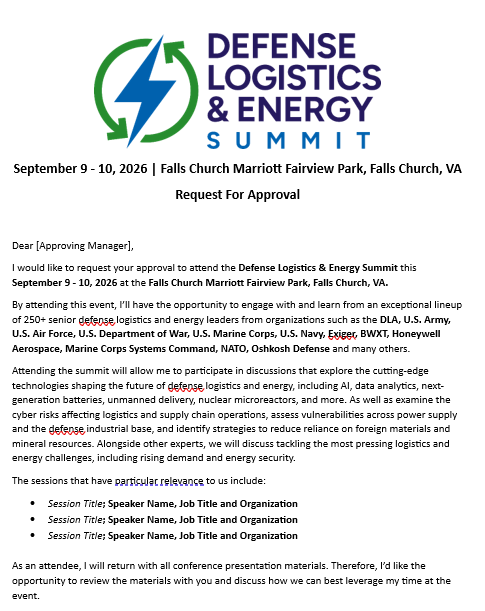
Request for Approval Letter
Download our ready-to-use "Request for Approval" letter.
Customise it to reflect your role, goals and company priorities, then send it directly to your manager providing a clear business case for attending the Defense Logistics & Energy Summit this September
2026 Early Attendee Snapshot | Defense Logistics & Energy Summit
The IDGA team have put together an Early Attendee Snapshot to give you an idea of who has signed up so far to attend the Defense Logistics & Energy Summit 2026 so you can get an idea of who you can meet and network with at the conference.
Attending organizations include: DLA Energy, Department of Homeland Security Headquarters, Exiger, Honeywell Aerospace, Marine Corps Systems Command, NATO, Oshkosh Defense, US Air Force, US Army, US Department of War and more.
➡️View your copy of the snapshot
2025 Post-Show Report
Following record-breaking editions of IDGA's Defense Logistics & Support and Operational Energy Summits in 2025, the two flagship events are joining forces for 2026.
Taking place September 9-10 in Falls Church, Virginia, the new Defense Logistics & Energy Summit will unite logistics, procurement, and operational energy leaders from across the U.S. DoD, allied nations, industry, and academia to explore the future of defense sustainment in an increasingly contested and technology-driven environment.
Ahead of the event, this report highlights key insights and takeaways from both 2025 conferences, including attendee survey results, participating organisations, and an introduction to the chairman of the 2026 summit.
Industry Insights

How DLA is Transforming Defense Logistics Through Data and AI
The Defense Logistics Agency (DLA) recently published its Digital Strategy 2025–2030, outlining the agency’s critical focus areas and supporting initiatives for industry partners over the next five years.
IDGA had the privilege of interviewing Adarryl Roberts, Chief Information Officer at the DLA and the lead architect behind this digital strategy. In this exclusive conversation, Mr. Roberts shares how the agency is aligning with the DLA Strategic Plan, the National Defense Strategy, and other broader Department of Defense strategies to provide a framework that supports long-term growth and innovation.

How the Trump Administration is Reshaping the Defense Industrial Base
On April 9, President Trump signed Executive Order (EO) “Modernizing Defense Acquisitions and Spurring Innovation in the Defense Industrial Base.” The order includes several directives for DoD leadership intended to reform the “antiquated defense acquisition system” and establish new processes that will speed and scale procurement to establish a military edge. The order was the first in a series of actions from the White House that will reshape the defense industrial base in the US.
Read the latest report from IDGA to gain insights into President Trump's executive orders and their impact on the defense industry.
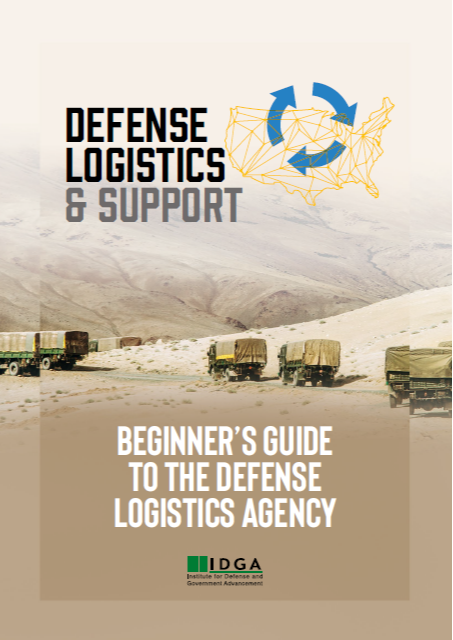
Beginner's Guide to the Defense Logistics Agency (DLA)
The US DoD is the federal government’s largest agency employing over 2.8 million active military service members and civilian personnel. In order to keep both military and civilian personnel equipped to complete their duties effectively, the DoD relies on the Defense Logistics Agency (DLA) to manage the global defense supply chain.
This report will look at the work the DLA is doing in 2025, including a glimpse at the challenges they face, and the various supply chains the organization is responsible for, but first, it’s important to take a step back and understand how the agency was formed.

Sparking Lines: Energy and Russia's War on Ukraine
The conflict between Russia and Ukraine has highlighted the critical interplay between energy and warfare, shaping global security in the 21st century. In Sparking Lines: Energy and Russia’s War on Ukraine, Sharon Burke examines energy’s pivotal role in the conflict, from Ukraine's disconnection from Russia's power grid to the deliberate targeting of energy infrastructure, revealing how energy functions as both a strategic tool and target in modern warfare.
Burke analyzes Russia’s use of energy to further geopolitical ambitions, Europe’s shift away from Russian energy, and Ukraine’s struggle to maintain its grid under attack. Originally published by the International Stability Operations Association (ISOA), the whitepaper also explores broader vulnerabilities in critical infrastructure in an increasingly interconnected world.
Sponsorship & Exhibition Information
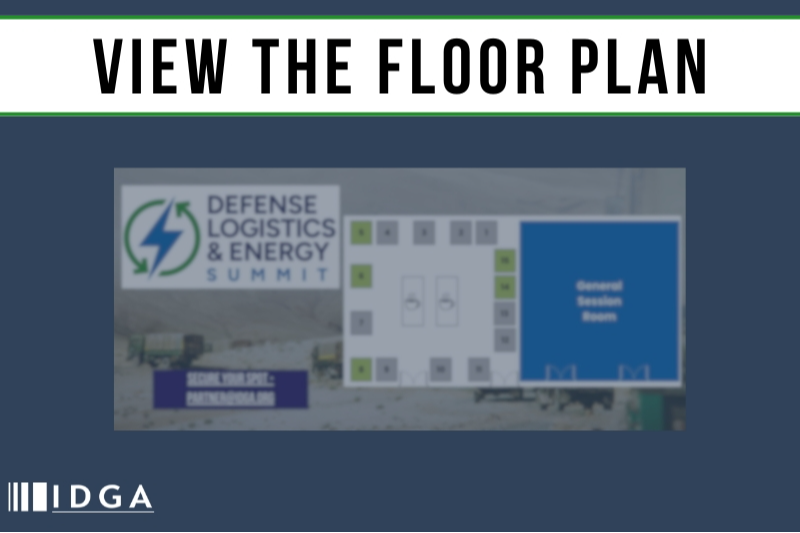
2026 Defense Logistics & Energy Summit - 2026 Floor Plan
Check out the Defense Logistics & Energy Summit - 2026 Floor Plan, and explore:
- Sponsors joining our expo floor
- Remaining booths you can secure

2026 Defense Logistics & Energy Summit - 2026 Sponsorship & Networking Prospectus
View the Defense Logistics & Energy Summit - 2026 Sponsorship & Networking Prospectus, and explore:
- 2026 Confirmed Expert Speakers
- Event Overview
- Attendee Breakdown
- Who You Can Meet Onsite
- Sponsorship Opportunities
- Attendee Testimonials
If you have any questions, contact Lauren Lally (Sponsorship Sales Director) - partner@idga.org
2026 Defense Logistics & Energy - 2026 Attendee Snapshot
View the Defense Logistics & Support Summit - 2026 Early Attendee Snapshot, and explore:
- 2026 Attendee Organisations confirmed to join us
- 2026 Attendee Job Titles confirmed to join us
- 2026 Event Sponsors & Partners
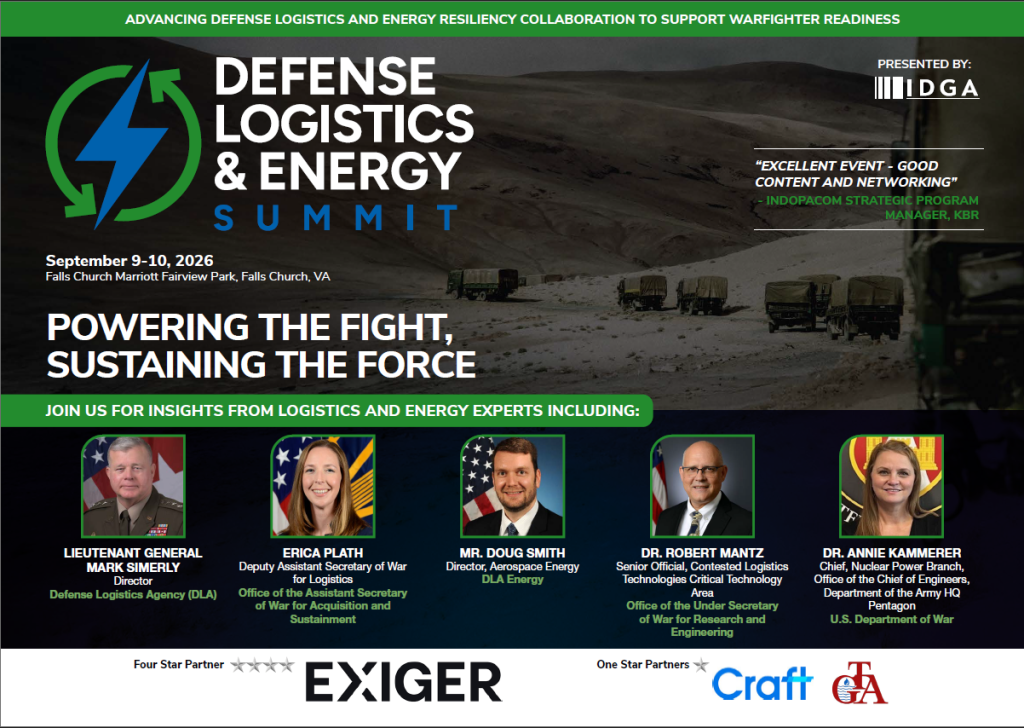
2026 Defense Logistics & Energy - 2026 Agenda
Check out the Defense Logistics & Energy Summit - 2026 Agenda, and explore:
- Confirmed Expert Speakers
- Producer's Welcome
- Meet the Chairman
- Day 1 Themes/Tracks/Panels
- Day 2 Themes/Tracks/Panels
- 2026 Event Partners
If you have any questions, please reach out to Lauren Lally (Sponsorship Sales Manager) - partner@idga.org

2026 Defense Logistics & Energy - 2025 Post Show Report
View the Defense Logistics & Energy - 2025 Post Show Report, and explore:
- Defense Logistics Daily Summaries
- Operational Energy Daily Summaries
- Survey Results
- Attendee Organizations
- 2025 Partners & Sponsors
2026 Defense Logistics & Energy - 2025 Attendee Snapshot
View the Defense Logistics & Energy - 2025 Attendee Snapshot, and explore:
- 2025 Attendee Organization
- 2025 Attendee Job Titles
In Partnership With:

QUESTIONS?
Contact us: +1 646 200 7515
Email: idga@idga.org

©2026 IQPC. All rights reserved.