Industry Insights
Next Generation UAS | 2026 Attendee Snapshot
Curious who you'll meet at the Next Generation UAS Summit 2026?
Our attendee snapshot features senior leaders from across the United States Air Force, United States Army, United States Navy, and United States Space Force, alongside key organizations such as Office of Naval Research, Federal Aviation Administration, and Joint Air Power Competence Centre, as well as innovative companies like Skydio and Thales Group.
With representation spanning operational units, acquisition commands, and emerging tech leaders, this is a highly targeted audience driving the future of unmanned and autonomous systems.
Breaking Down the Blue UAS List
As drones become central to modern defense strategy, the U.S. is accelerating efforts to reduce reliance on foreign supply chains and field secure, NDAA‑compliant systems. This report breaks down the rapidly evolving Blue UAS program and explains why it has become a critical pillar of America’s drone dominance strategy.
Key Highlights
- A clear understanding of the Blue UAS ecosystem
- Insight into emerging trends and vulnerabilities
- The latest update to the Blue UAS list
U.S. Military Expands One-Way Attack Drone Programs Under New Funding
As global conflicts accelerate demand for low‑cost precision weapons, the U.S. military is rapidly scaling its one‑way attack drone programs. Backed by new funding, reorganized acquisition structures, and real‑world lessons from recent conflicts, these drones are shifting from experimental concepts to core elements of future force design. This report breaks down the programs, policies, and technologies driving that transformation.
What You'll Gain
- A clear understanding of how new funding and policy changes are accelerating the development and fielding of one‑way attack drones across the U.S. military.
- Insight into emerging operational concepts, including the Air Force’s new experimental unit, the Pentagon’s Gauntlet evaluation event, and the shift toward treating small drones as expendable munitions.
How the FY 2026 NDAA Reshapes U.S. Drone Policy
The FY 2026 National Defense Authorization Act marks one of the most significant shifts in U.S. drone policy in years—expanding investment, accelerating domestic production, and strengthening international cooperation around unmanned and counter‑unmanned systems. This IDGA report breaks down the major UAS‑related provisions shaping America’s defense landscape, from industrial base modernization to global partnerships and emerging operational applications.
Key Highlights
- Congress is prioritizing U.S. drone manufacturing with new mandates to onshore sUAS production and modernize the defense industrial base.
- The FY 2026 NDAA expands international UAS collaboration to strengthen shared capabilities in an era of rapid global drone proliferation.

Building the Industrial Backbone of American Drone Dominance
In this exclusive interview, retired U.S. Navy CAPT Dennis Monagle—former Program Manager for Multi‑Mission Tactical UAS at NAVAIR—shares firsthand insights on the future of drone dominance, the challenges shaping the defense industrial base, and the operational realities driving next‑generation unmanned systems.
Download to Learn
- Actionable insights into how the U.S. can scale domestic drone manufacturing, strengthen supply chains, and accelerate procurement to meet rising UAS demand.
- A clear understanding of emerging operational needs, interoperability challenges, and the service‑wide alignment required to build the next era of unmanned aviation.
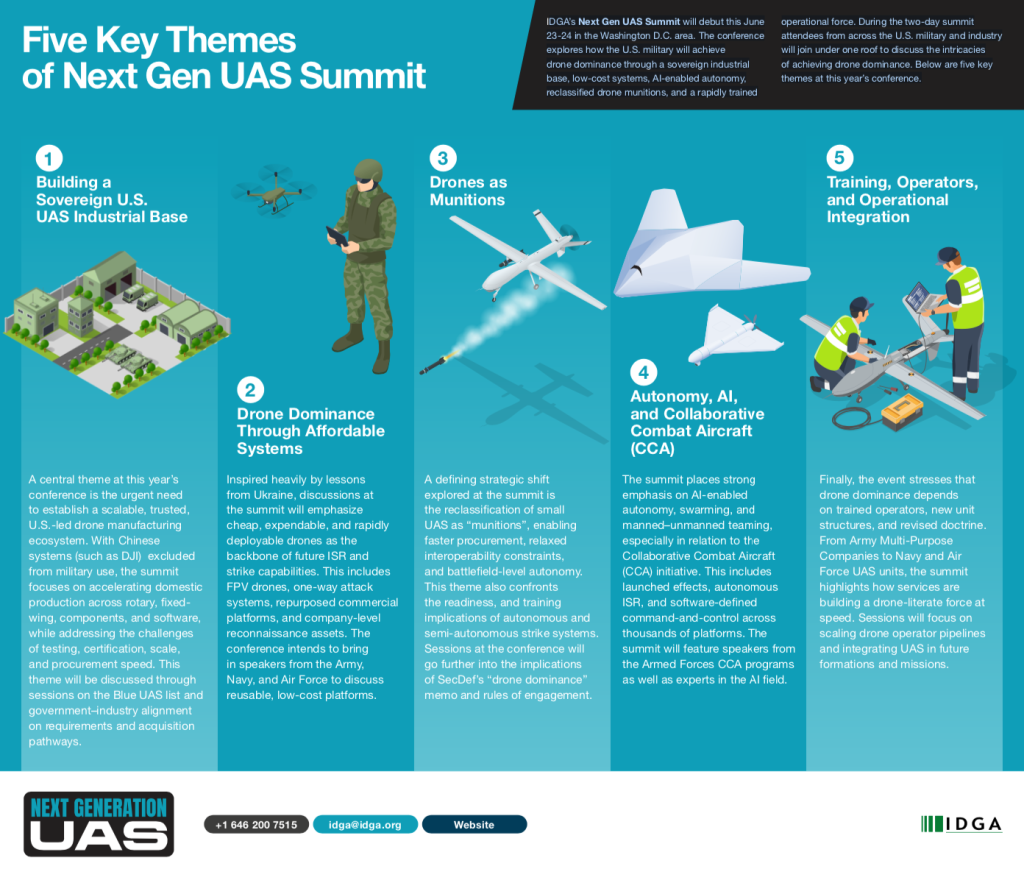
Five Key Themes of Next Generation UAS Summit
IDGA’s Next Generation UAS Summit will debut this June 23-24 in the Arlington, VA area. The summit will explore how the U.S. military will achieve drone dominance through a sovereign industrial base, low-cost systems, AI-enabled autonomy, reclassified drone munitions, and a rapidly trained operational force.
During the two-day summit, attendees from across the U.S. military and industry will join under one roof to discuss the intricacies of achieving drone dominance. The following infographic shares five key themes at this year’s conference.
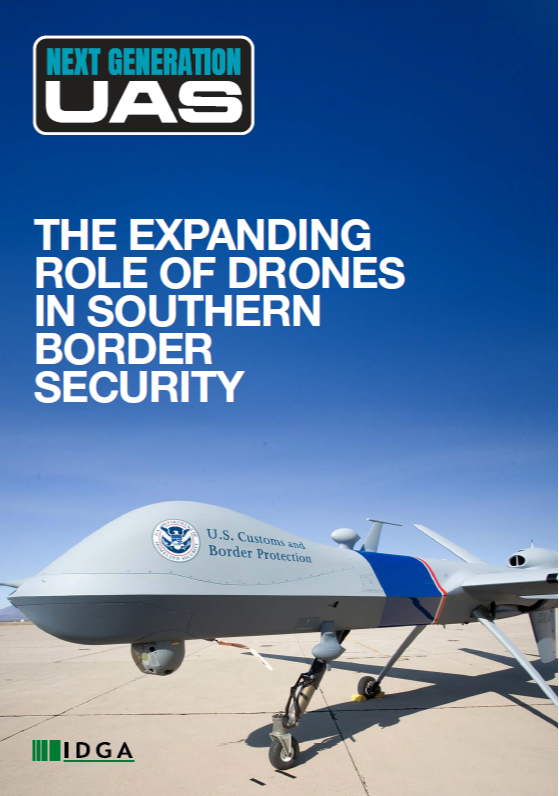
The Expanding Role of Drones in Southern Border Security
With record-setting shifts in migration patterns and growing security challenges along the U.S.–Mexico border, drones have become one of the most impactful tools in Customs and Border Protection’s modern operations. This report explores how unmanned aircraft are enhancing surveillance, supporting agents in the field, and countering the rising threat of cartel-operated drones.
Key Highlights
- A clear understanding of how CBP is using drones—from MQ‑9 Predator B platforms to rapidly deployed small UAS—to improve detection, safety, and response along the southern border.
- Insight into the growing threat of malicious drone activity, including cartel surveillance, smuggling operations, and documented incursions that have prompted new counter‑UAS measures.
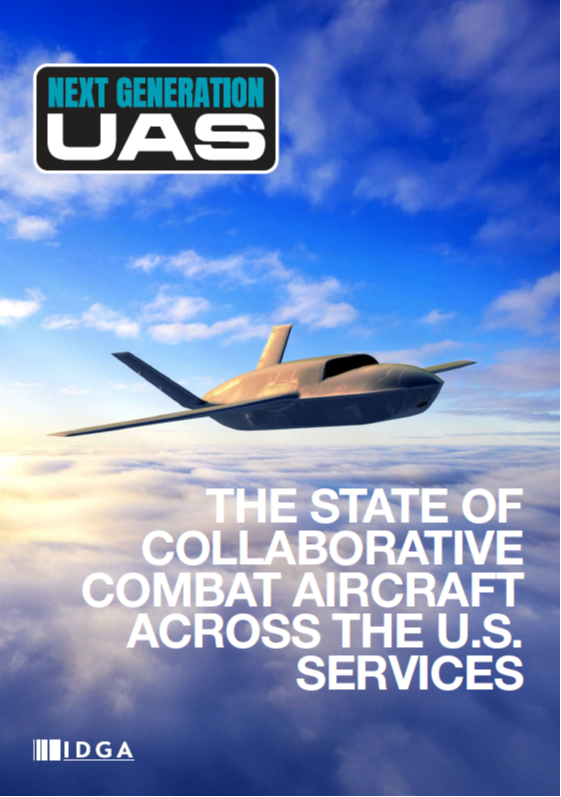
The State of Collaborative Combat Aircraft Across the U.S. Services
Collaborative Combat Aircraft (CCA) programs are rapidly reshaping the future of U.S. airpower, with the Air Force, Navy, Marine Corps, and now the Army advancing unique yet interconnected approaches to autonomous wingmen and manned‑unmanned teaming. This report breaks down the major developments across all four services—from prototype test flights and new contract awards to evolving requirements and emerging operational concepts.
What Readers Gain
- A clear, service‑by‑service breakdown of where each CCA program stands today—including Air Force prototype testing, Navy concept development, Marine Corps acquisitions, and the Army’s early experimentation.
- Insight into the technologies, timelines, and strategic priorities driving the next generation of autonomous combat aviation—and how these developments will shape U.S. air dominance in the years ahead.
In Partnership With:

QUESTIONS?
Contact us: +1 646 200 7515
Email: idga@idga.org

©2026 IQPC. All rights reserved.