Industry Insights
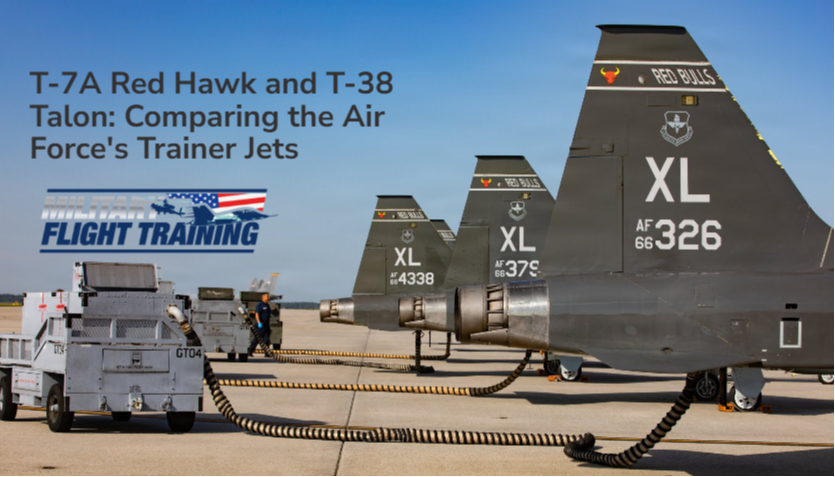
T-7A Red Hawk and T-38 Talon: Comparing the Air Force's Trainer Jets
As the U.S. Air Force transitions from the iconic T-38 Talon to the next-generation T-7A Red Hawk, pilot training is entering a new era. Designed to prepare aviators for fifth-generation and future combat aircraft, the T-7A combines advanced simulation, digital engineering, and immersive training capabilities that go far beyond traditional flight instruction.
Download this piece to:
- Compare the T-38 Talon and T-7A Red Hawk, including performance, design, capabilities, and training applications.
- Explore how the T-7A is modernizing pilot training through integrated live, virtual, and constructive training, embedded simulation, and advanced digital systems.
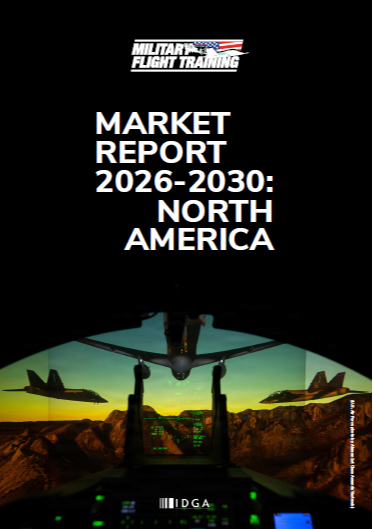
Market Report 2026-2030: North America
North America remains the world's largest military flight training market, driven by major U.S. and Canadian investments in advanced aircraft, synthetic training environments, and next-generation pilot development. This report examines the programs, technologies, and spending priorities shaping the market through 2030, highlighting how military organizations are modernizing training to support fifth- and sixth-generation airpower.
Inside the report:
- Market forecasts and investment trends across the U.S. and Canada, including major training aircraft and simulation programs through 2030.
- The rise of AI, VR/AR, and synthetic training, and how these technologies are transforming pilot and maintainer readiness.
- Key modernization programs supporting platforms such as the F-35, T-7A Red Hawk, future trainer aircraft, and next-generation combat aviation systems.
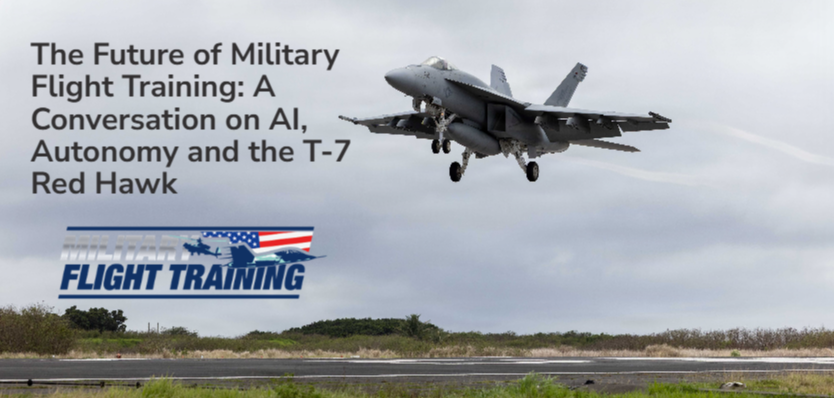
The Future of Military Flight Training: A Conversation on AI, Autonomy, and the T-7 Red Hawk
How is military flight training evolving to prepare pilots for an era of AI, autonomy, and next-generation aircraft? Ahead of the Military Flight Training Summit, the new conference chair, Major General (Ret.) Jim Sears shares his perspective on the technologies, training philosophies, and operational demands shaping the future of military aviation.
Read the interview to:
- Explore the impact of AI, advanced simulation, and Collaborative Combat Aircraft (CCA) on pilot training, instructor effectiveness, and future aircrew skill requirements.
- Learn how platforms like the T-7 Red Hawk are transforming the training pipeline, enabling earlier exposure to networked operations, modern systems, and mission-focused learning.
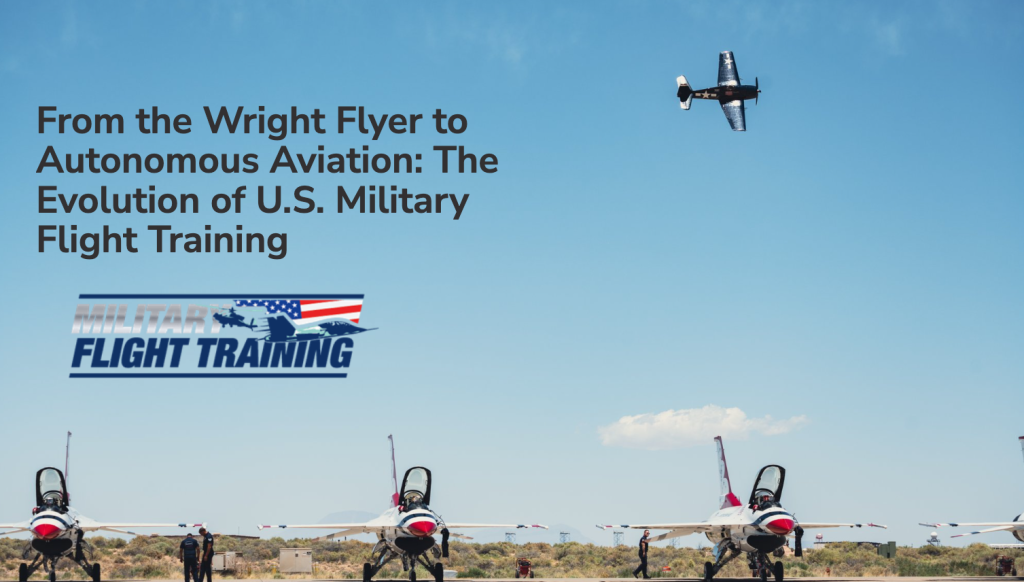
From the Wright Flyer to Autonomous Aviation: The History of U.S. Military Flight Training
From the Wright Military Flyer to AI-enabled training environments, military flight training has evolved alongside every major advance in aviation. This report traces the history of military flight training across the U.S. armed forces, highlighting the milestones, organizations, and innovations that have shaped how pilots are trained for more than a century.
Download the report to:
- Explore the key milestones in military flight training, from the Army's first aviators and the birth of naval aviation to the creation of the U.S. Air Force and modern pilot training commands.
- Discover how training has evolved over time, incorporating advanced simulators, specialized training pipelines, fifth-generation aircraft, and human-machine teaming concepts.
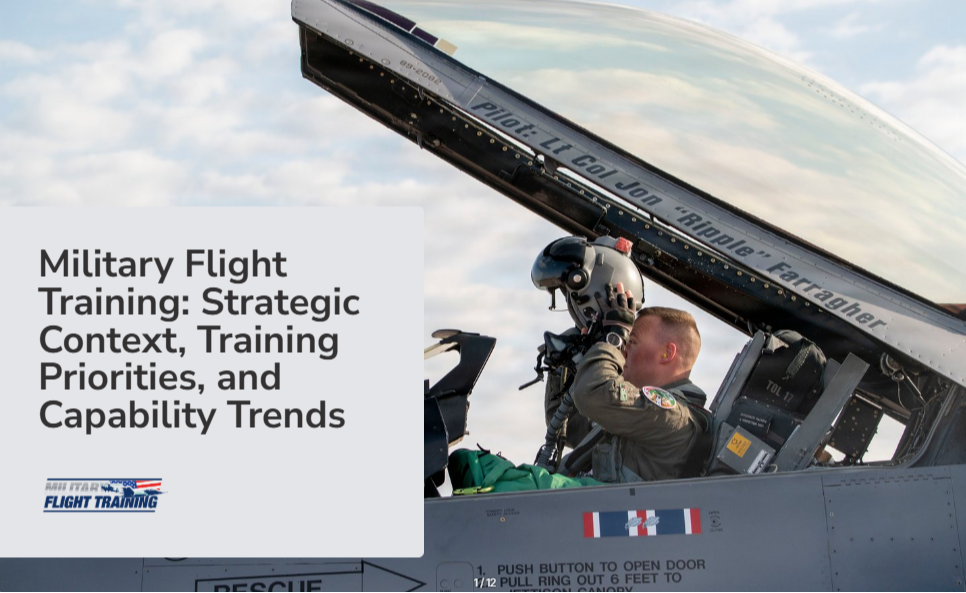
Military Flight Training: Strategic Context, Training Priorities, and Capability Trends
How are air forces preparing pilots for the complexity of modern warfare?
As advanced threats, multi-domain operations, and next-generation aircraft redefine the battlespace, military flight training is undergoing a rapid transformation. This report explores how air forces are adapting training systems to produce resilient, mission-ready aircrew capable of operating in high-pressure, information-heavy environments.
Download to learn:
- Key trends shaping pilot training, including simulation, Live Virtual Constructive environments, and multi-domain integration
- Critical challenges and priorities, from pilot shortages to rising cognitive demands and high-threat preparedness
In Partnership With:

QUESTIONS?
Contact us: +1 646 200 7515
Email: idga@idga.org

©2026 IQPC. All rights reserved.