Submission Form

Next Generation Missiles and Hypersonics Summit | Official 2026 Agenda
IDGA is thrilled to host its 7th Annual Next Generation Missiles and Hypersonics Summit, taking place December 15-16, 2026 at the Hilton Arlington in Arlington, Virginia.
Led by Dr. Mark J. Lewis, the summit will bring together senior defense leaders, program executives, acquisition decision-makers and hypersonics experts to explore the latest developments across missile defense, Golden Dome, offensive fires, space sensing and affordable mass.
View the 2026 agenda to learn more >>>
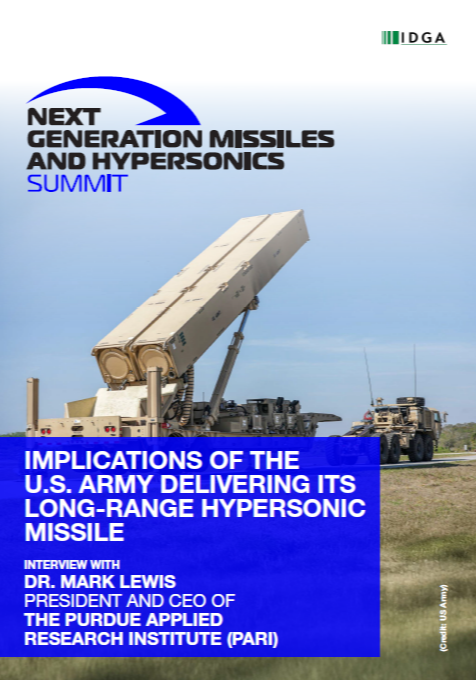
Implications of the U.S. Delivering its Long-Range Hypersonic Missile
The growth of the U.S. hypersonic industry has accelerated in the past decade as significant investments continue, notably in programs like Hypersonic Attack Cruise Missile, Army Long Range Hypersonic Weapon, and Navy Conventional Prompt Strike. While successful testing has brought hypersonic deployment closer for the United States, technological and operational challenges still exist in the space.
Dr. Mark Lewis, president and CEO of the Purdue Applied Research Institute (PARI), is well-versed in these challenges and the potential impact of hypersonics for the Defense Department. A renowned researcher, professor, and former deputy undersecretary of defense, Lewis brings a wealth of national security, scientific, and academic experience to IDGA as chairman for its Next Generation Missiles and Hypersonics Summit, taking place December 8-9, 2026, in Arlington, VA.
Before the summit, IDGA sat down with Dr. Lewis to discuss the status of hypersonics and what he looks forward to as chairman of the Next Generation Missiles and Hypersonics Summit.
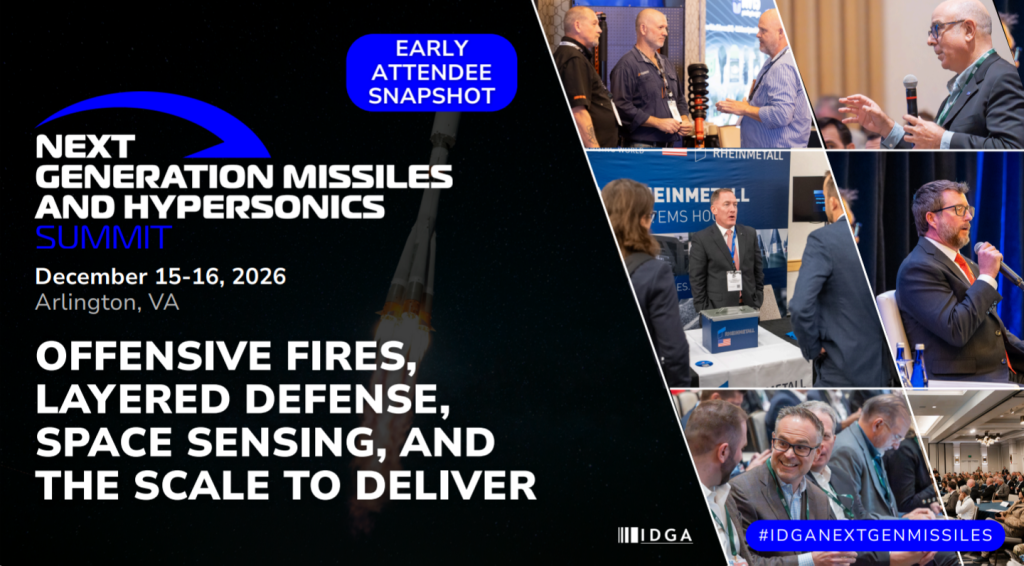
Early 2026 Attendee Snapshot
Curious who you'll meet at the Next Generation Missiles & Hypersonics Summit 2026?
Our early attendee snapshot includes senior leaders from the U.S. military, Department of Defense, federal agencies, allied nations, national laboratories, academia, and leading missile and hypersonics companies.
With representation spanning missile development, acquisition, testing, research and engineering, strategic deterrence, hypersonic weapons, sensing and tracking, and air and missile defense, this is a highly targeted audience shaping the next generation of missile and hypersonic capabilities.

Request for Approval Letter
Need to justify your attendance? Download our Request for Approval Letter to make the case for attending the Next Generation Missiles & Hypersonics Summit.
The letter outlines the key topics, networking opportunities, and business value of attending, helping you demonstrate the relevance of the event to your organization and role.

Modernizing the Army’s Missile and Space Portfolio for Multi-Domain Operations
As missile threats evolve and the demand for speed, precision, and integration grows, the U.S. Army is rethinking how it develops and delivers next-generation fires capabilities.
In this exclusive presentation, Lieutenant General Frank Lozano, Portfolio Acquisition Executive for Fires, U.S. Army, explores the modernization of the Army's missile and space portfolio—from PrSM, LTAMDS, and IBCS-M to high-energy lasers and next-generation interceptors. He also examines acquisition reform, integrated offensive and defensive fires, digital transformation, and closer collaboration with industry.
Download the presentation to discover how the Army is accelerating capability delivery and building a more integrated, joint- and coalition-ready fires ecosystem for multi-domain operations.
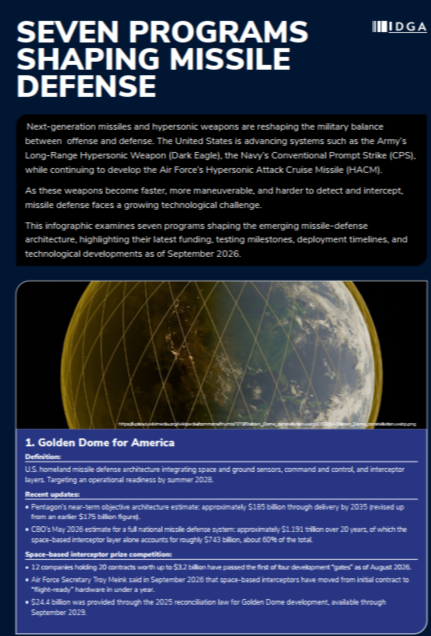
Seven Programs Shaping Missile Defense
Next-generation missiles and hypersonic weapons are reshaping the military balance between offense and defense. The United States is advancing systems such as the Army's Long-Range Hypersonic Weapon (Dark Eagle), the Navy's Conventional Prompt Strike (CPS),while continuing to develop the Air Force's Hypersonic Attack Cruise Missile (HACM).
As these weapons become faster, more maneuverable, and harder to detect and intercept, missile defense faces a growing technological challenge.
This infographic examines seven programs shaping the emerging missile-defense architecture, highlighting their latest funding, testing milestones, deployment timelines, and technological developments as of September 2026.

The Latest on International Hypersonics Programs
The global hypersonic missile industry was valued at US$6.8 billion in 2023, and is expected to grow to US$14.5 billion by 2030. In the latest report from IDGA, we will look at the largest (non-U.S.) players and programs in the hypersonics space to understand how their contribution will impact the expected growth of the hypersonic missile industry.
For the past three years, IDGA has published an update on key hypersonics programs for allies and adversaries alike. Last year, our international hypersonics update returned with details on China’s new air-to-air missile, joint programs between the U.S. and Australia, and much more.
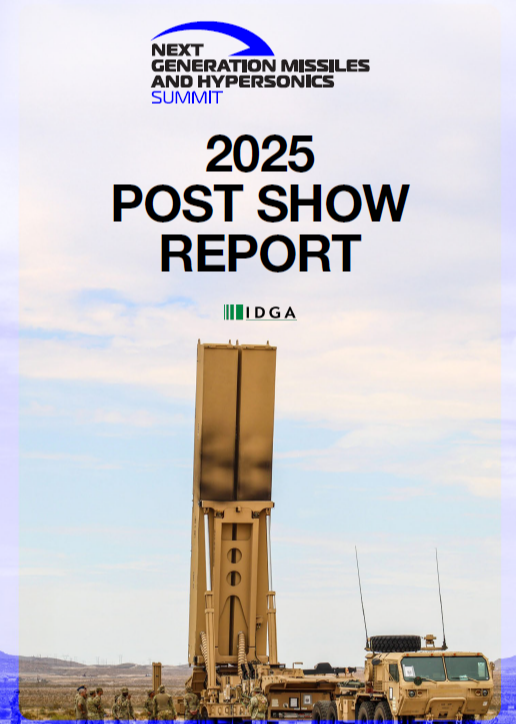
2025 Post Show Report
IDGA's Next Generation Missiles and Hypersonics Summit 2025 brought together senior leaders from government, industry, academia, and the defense community to examine the future of hypersonic weapons, missile defense, advanced manufacturing, and strategic deterrence. This post-show report captures the key discussions, insights, and priorities that emerged from two days of dialogue on accelerating the development and deployment of next-generation capabilities.
Download to gain:
- Summaries of keynote presentations and panel discussions covering hypersonic development, missile defense architectures, test and evaluation modernization, advanced manufacturing, and acquisition priorities.
- Attendee feedback, speaker highlights, and participating organizations from across the Department of War, military services, industry, and academia.
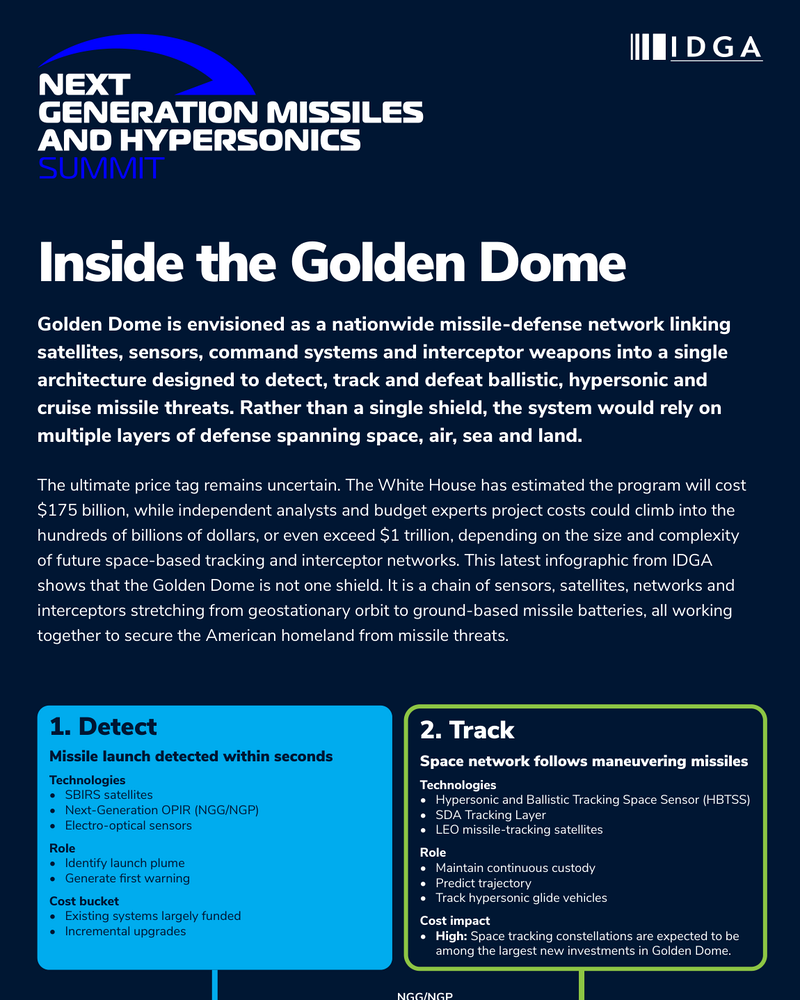
Inside the Golden Dome: Understanding Next-Generation Missile Defense Architecture
The Golden Dome represents an ambitious vision for the future of U.S. homeland missile defense - bringing together satellites, sensors, command-and-control networks and interceptor systems to detect, track and defeat increasingly complex ballistic, cruise and hypersonic missile threats.
But what could this multi-layered architecture actually look like, and how would its different capabilities work together?
This exclusive infographic breaks down the Golden Dome from space to ground, exploring the technologies and systems that could underpin each stage of the kill chain. Download the infographic to explore:
- How missile threats could be detected and continuously tracked across Geostationary Earth Orbit (GEO), Medium Earth Orbit (MEO) and Low Earth Orbit (LEO)
- The role of Hypersonic and Ballistic Tracking Space Sensor (HBTSS), the Space Development Agency Tracking and Transport Layers and next-generation space-based sensors
- How data could move from sensors to decision-makers and interceptors through an integrated battle management network
- The layered roles of Ground-based Midcourse Defense (GMD), Aegis Ballistic Missile Defense (BMD), Terminal High Altitude Area Defense (THAAD) and other interceptor capabilities
- Where AI-assisted command and data-fusion technologies could support faster threat assessment and engagement decisions
- How future space-based interceptors could add an entirely new layer to U.S. missile defense and why this could become one of the most significant areas of Golden Dome investment

A Guide to the DoD's Hypersonic Attack Missiles
The U.S. Department of Defense has increased its focus on hypersonics in recent years, spending $6.9 billion for hypersonic research in FY2025, up from $4.7 billion in FY2023. In an era where maneuverability and stealth have become critical, hypersonic missiles have become a key form of artillery for the U.S. as it looks to remain a global defense leader
The DoD and its branches have several ongoing programs researching and developing hypersonic attack missiles. These include Conventional Prompt Strike (CPS) in the Navy, the Army’s Long-Range Hypersonic Weapon (LRHW), and the Air Force’s Hypersonic Attack Cruise Missile (HACM). This report will explain what sets each hypersonic attack missile apart and provide an update on the latest information shared for each respective program.
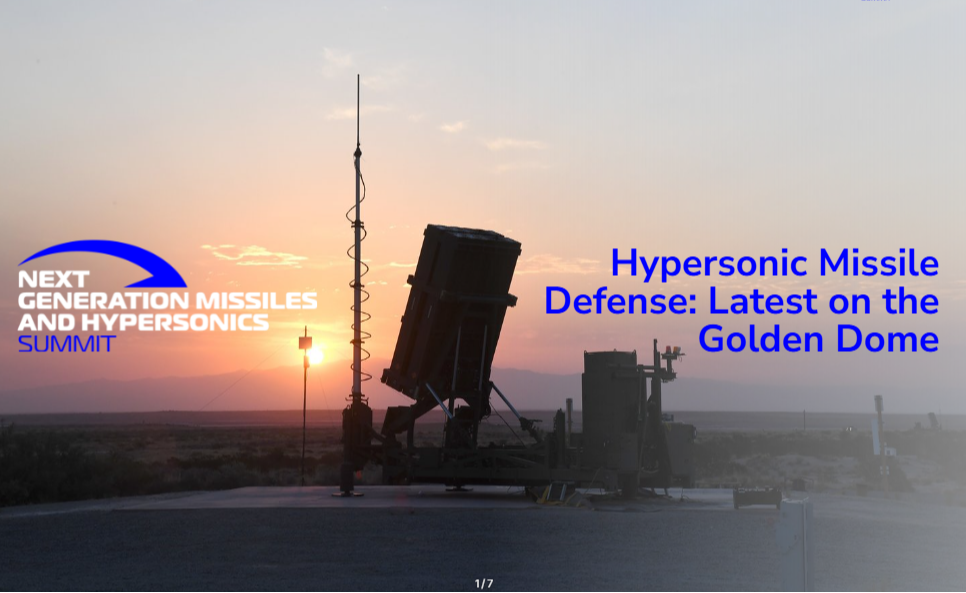
Hypersonic Missile Defense: Latest on the Golden Dome
More than a year after its launch, the Golden Dome for America remains one of the most ambitious and closely watched defense initiatives in U.S. history. As the Pentagon moves forward with plans for a layered missile defense architecture designed to counter ballistic, cruise, and hypersonic threats, key questions remain around funding, technical requirements, and long-term affordability.
In this report:
- Explore the latest updates on Golden Dome funding, requirements, and planned capabilities, including space-based sensors, next-generation interceptors, and integrated missile defense systems.
- Examine the major questions still surrounding the program, from total lifecycle costs and architecture decisions to the feasibility of large-scale space-based missile defense.
![[Sponsorship] Next Generation Missiles & Hypersonics | 2026 Prospectus](https://eco-cdn.iqpc.com/eco/images/event_content/pASoY5sKpeun2m8UFncsCn7e7h09m4djhhUsHeeZ.png "[Sponsorship] Next Generation Missiles & Hypersonics | 2026 Prospectus")
[Sponsorship] Next Generation Missiles & Hypersonics | 2026 Prospectus
Want to know whether IDGA's Next Generation Missiles & Hypersonics Summit is the right place to build relationships, showcase your solutions, or elevate your brand?
The 2026 Prospectus gives you:
- A preview of the industry and military experts taking the stage
- An insight into this year's esteemed chair
- A detailed audience breakdown
- Our expert confirmed speaker lineup
- A clear breakdown of sponsorship and networking opportunities
Share your information to access the full prospectus and discover where your organization fits into this year's summit.

What to Know About the Pentagon's Golden Dome
On January 27, 2025, the second Trump Administration began with the president signing a flurry of executive orders, including one directed towards U.S. missile defense systems.
The order, titled “The Iron Dome for America,” outlines a sweeping initiative to build a next-generation missile defense shield for the U.S. homeland, similar to Israel’s Iron Dome that has been operational since 2011. The U.S. Iron Dome, which as of May has been rebranded as the Golden Dome for America, is expected to cost $175 billion over approximately three years. However, defense experts anticipate the project could cost upwards of $1 trillion in its entirety. This report will look at what we know about the Golden Dome so far, and expectations for the project for the remainder of the year and beyond.
IDGA’s Next Generation Missile and Hypersonics Summit provides an opportunity to connect with DoD decision-makers about ongoing initiatives such as the Golden Dome, the Army’s Dark Eagle Long-Range Hypersonic Weapon (LRHW), and more. From acquisition roadmaps to test range modernization, university research collaboration to strategic deterrence policy, this year’s Summit offers a uniquely holistic look at where missile and hypersonic capability development is headed, and how the U.S. plans to engage in defending against the latest missile threats.

International Hypersonic Weapons Programs: 2026 Developments Among U.S. Allies and Adversaries
Hypersonic weapons development is accelerating across the globe as major powers and U.S. allies race to field new offensive and defensive capabilities. From operational hypersonic missiles and glide vehicles to next-generation missile defense systems, nations are investing heavily in technologies that could reshape the future battlespace.
Download this report to:
- Explore the latest developments across nine countries' hypersonic programs, including China, Russia, Iran, France, Japan, Australia, and other key defense powers.
- Track major milestones in both hypersonic weapons and missile defense, from new missile deployments and flight tests to emerging counter-hypersonic capabilities.
In Partnership With:

QUESTIONS?
Contact us: +1 646 200 7515
Email: idga@idga.org

©2026 IQPC. All rights reserved.