New for 2026!
Inside the Golden Dome: Understanding Next-Generation Missile Defense Architecture
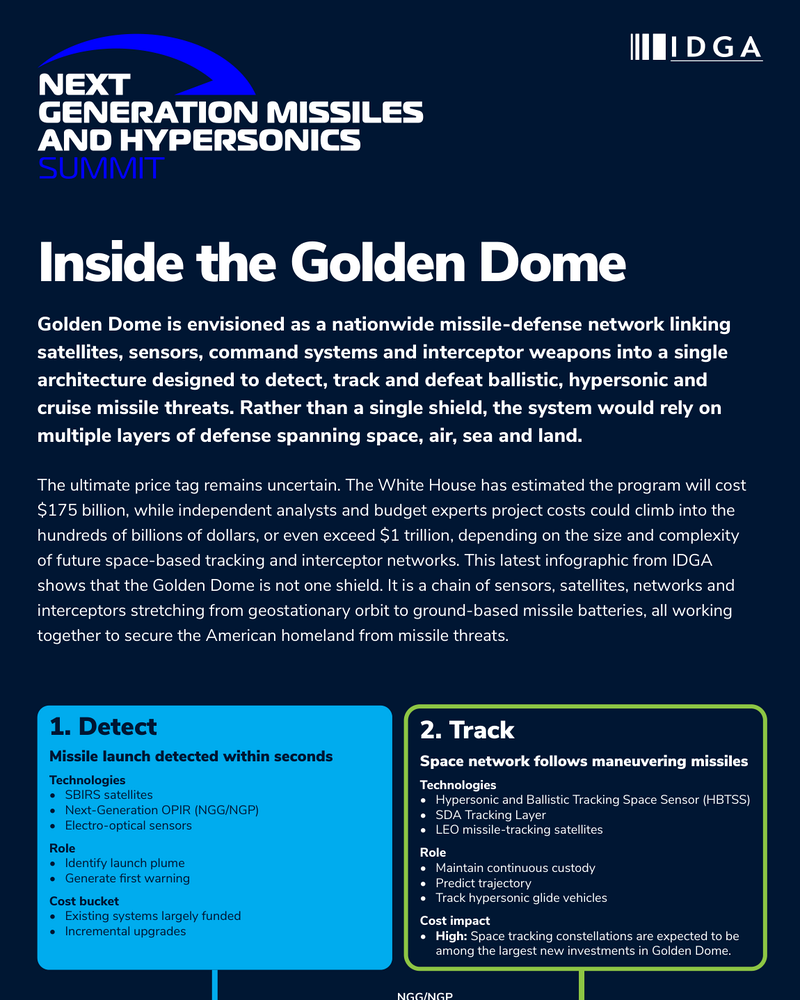
The Golden Dome represents an ambitious vision for the future of U.S. homeland missile defense - bringing together satellites, sensors, command-and-control networks and interceptor systems to detect, track and defeat increasingly complex ballistic, cruise and hypersonic missile threats.
But what could this multi-layered architecture actually look like, and how would its different capabilities work together?
This exclusive infographic breaks down the Golden Dome from space to ground, exploring the technologies and systems that could underpin each stage of the kill chain. Download the infographic to explore:
- How missile threats could be detected and continuously tracked across Geostationary Earth Orbit (GEO), Medium Earth Orbit (MEO) and Low Earth Orbit (LEO)
- The role of Hypersonic and Ballistic Tracking Space Sensor (HBTSS), the Space Development Agency Tracking and Transport Layers and next-generation space-based sensors
- How data could move from sensors to decision-makers and interceptors through an integrated battle management network
- The layered roles of Ground-based Midcourse Defense (GMD), Aegis Ballistic Missile Defense (BMD), Terminal High Altitude Area Defense (THAAD) and other interceptor capabilities
- Where AI-assisted command and data-fusion technologies could support faster threat assessment and engagement decisions
- How future space-based interceptors could add an entirely new layer to U.S. missile defense and why this could become one of the most significant areas of Golden Dome investment
Hypersonic Missile Defense: Latest on the Golden Dome
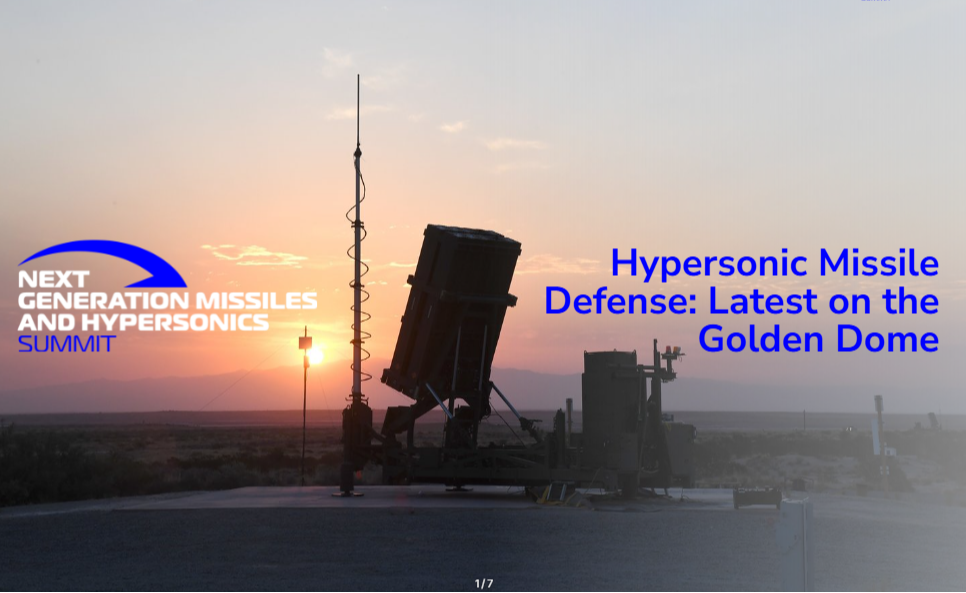
More than a year after its launch, the Golden Dome for America remains one of the most ambitious and closely watched defense initiatives in U.S. history. As the Pentagon moves forward with plans for a layered missile defense architecture designed to counter ballistic, cruise, and hypersonic threats, key questions remain around funding, technical requirements, and long-term affordability.
In this report:
- Explore the latest updates on Golden Dome funding, requirements, and planned capabilities, including space-based sensors, next-generation interceptors, and integrated missile defense systems.
- Examine the major questions still surrounding the program, from total lifecycle costs and architecture decisions to the feasibility of large-scale space-based missile defense.

International Hypersonic Weapons Programs: 2026 Developments Among U.S. Allies and Adversaries
Hypersonic weapons development is accelerating across the globe as major powers and U.S. allies race to field new offensive and defensive capabilities. From operational hypersonic missiles and glide vehicles to next-generation missile defense systems, nations are investing heavily in technologies that could reshape the future battlespace.
Download this report to:
- Explore the latest developments across nine countries' hypersonic programs, including China, Russia, Iran, France, Japan, Australia, and other key defense powers.
- Track major milestones in both hypersonic weapons and missile defense, from new missile deployments and flight tests to emerging counter-hypersonic capabilities.
In Partnership With:

QUESTIONS?
Contact us: +1 646 200 7515
Email: idga@idga.org

©2026 IQPC. All rights reserved.