Industry Insights
2025 Attendee Snapshot | BGLE
View the 2025 Attendee Snapshot to find out who attended last year's Biometrics for Government and Law Enforcement Summit in Reston, VA, and is likely to return in 2026.
Don't miss out on the opportunity to network with industry leaders, build new connections, share best practices, and explore innovations in biometrics.
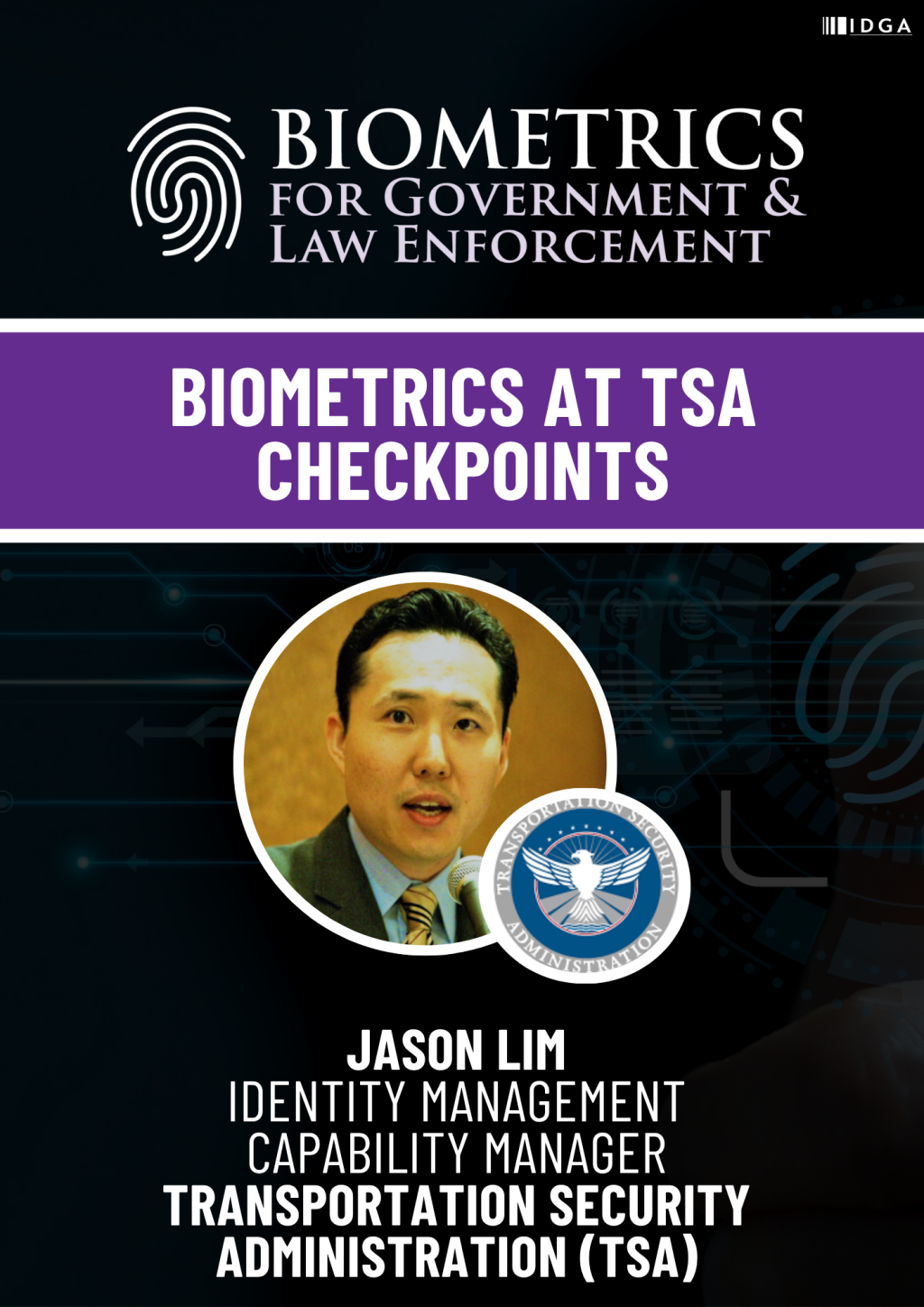
Biometrics at TSA Checkpoints Presentation by Jason Lim
Delivered by Jason Lim, Identity Management Capability Manager, Transportation Security Administration, at the Biometrics for Government and Law Enforcement Summit, this presentation delves into the TSA’s latest efforts in biometric identity verification and digital ID integration at airport checkpoints.
Download to find out:
- TSA's Commitments to The Traveling Public
- TSA’s Approach to Modernizing Checkpoint Identity Verification
- TSA PreCheck®: Touchless Identity Solution
- Current Touchless Identity Solutions (TIS) Locations
- TSA’s Evaluation of Biometric Technology
- Implementing TSA’s Vision for Biometrics

Biometrics in Action: How U.S. Border Patrol is Enhancing Enforcement with Advanced ID Technologies
Supervisory Assistant Chief (SASC) Matthew Lightner has 18-years of experience at U.S. Customs & Border Protection. In that time, he has become one of the agency’s leading SMEs in biometrics. Currently as SASC in the Systems Division of the U.S. Border Patrol Headquarters’ Strategic Planning and Analysis Directorate, SASC Lightner plays a pivotal role in overseeing the US Border Patrol’s biometrics and various enforcement systems technologies utilized by front-line agents. On top of his years of experience for the border security agency, SASC Lightner holds a Bachelor’s degree in Criminal Justice, a Master’s degree in Criminal Justice Leadership and Management and is currently pursuing a Doctor of Philosophy in Criminal Justice-Homeland Security.
In the latest interview from IDGA, SASC Lightner sat down to discuss biometrics solutions CBP is seeking, data interoperability across federal agencies, and much more.

Mini Survey Report: The Future of Biometric Technology in Government Operations
Biometric technologies are playing an increasingly vital role in modern law enforcement and government operations, offering enhanced capabilities for identity verification, border security, and criminal investigations. As these technologies evolve, understanding the practical challenges, strategic priorities, and operational readiness of agencies and organizations becomes essential. To explore these dynamics, IDGA sent a “Biometrics for Government & Law Enforcement” survey to our network of biometrics professionals.
In this mini survey of 27 respondents from a diverse group of participants, including representatives from state and local law enforcement agencies, government employees, industry professionals, federal law enforcement, consultants, educators, contractors, and retired officials.
This report analyzes responses to key survey questions spanning biometric modalities in use, areas needing improvement, perceived threats, AI integration, organizational preparedness, and future priorities.
Forging the Future of Identity Intelligence: Glenn Krizay on Biometrics in National Security
Glenn Krizay is the former Director of the Defense Forensics and Biometrics Agency (DFBA), an Army agency responsible for developing and implementing strategic biometric plans and concepts for the DoD. Prior to his role with DFBA, (DHS), he served as the Executive Director, Information Sharing and Safeguarding Executive Staff and Deputy Undersecretary for Plans, Policy and Performance Management in the Department of Homeland Security. He also retired from the Air Force with 26-years of honorable service. In total, Krizay has over four-decades of experience in biometrics and identity intelligence that ranges across the DHS, DoD, and other key federal agencies.
In 2024, Krizay officially left the federal government, and he has since been named chairman IDGA’s Biometrics for Government and Law Enforcement Summit. Before arriving in Reston last winter, Krizay sat down with IDGA to discuss the evolution of biometrics.
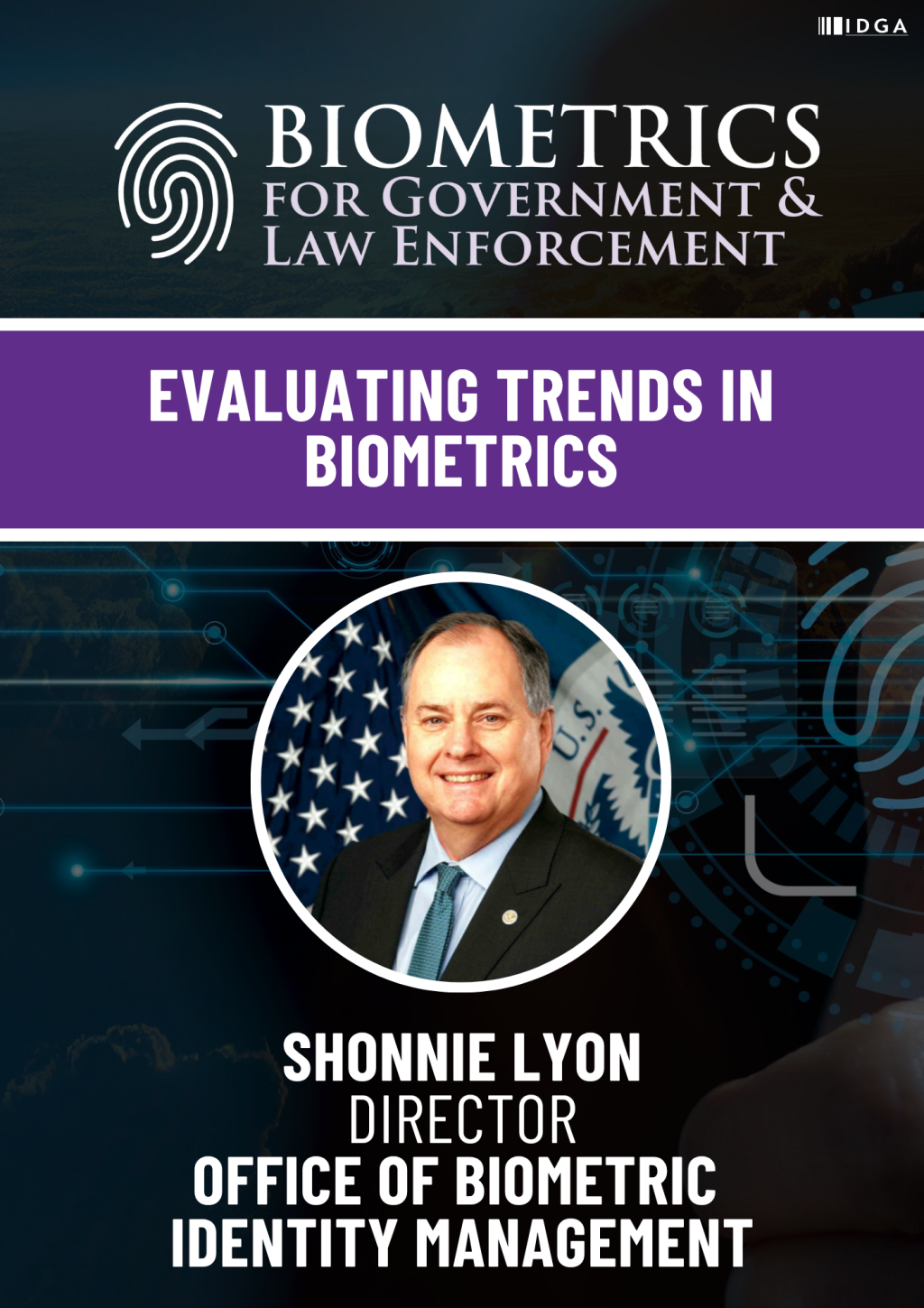
Evaluating Trends in Biometrics Presentation by Shonnie Lyon
Delivered by Shonnie Lyon, Director of the DHS Office of Biometric Identity Management, at the Biometrics for Government and Law Enforcement Summit, this presentation delves into evaluating the trends in biometrics.
Download to find:
- A detailed overview of DHS biometrics
- DHS's biometrics 'triad' for interagency data sharing
- Trends, challenges, and opportunities in biometrics
- Contactless biometrics modalities with their benefits and challenges
- DHS's commitment to responsible use of facial recognition and face capture
- How the DHS is protecting privacy for citizens and visitors
Biometric Bundle | Covering Exclusive Biometric Insights
Ahead of IDGA's Biometrics for Government & Law Enforcement Summit (November 19-20, 2025 | Reston, VA), IDGA have created the 'Biometrics Bundle', a handpicked collection of expert insights, real-world case studies, and must-read interviews, designed to give biometrics leaders the clarity, foresight, and strategies to lead with confidence in an evolving landscape.
Download to read:
- A Guide to Biometrics in Correctional Facilities
- How the 'One Big Beautiful Bill' is Reshaping Biometric Capabilities at U.S. Borders
- The Role of Biometrics Across DHS Agencies
- Leveraging International Collaboration as Biometric Technologies Evolve

A Guide to Biometrics in Correctional Facilities
While the average person is accustomed to using biometric technologies in airports, banks, and hospitals and to access their smartphones, one place we rarely think of needing biometric identification solutions is in correctional institutions. However, as biometrics have become more widely used in our everyday lives, they are also becoming a key resource to the US carceral system.
Whether as a resource to monitor prisoner and staff activities, assist release procedures, identify visitors, or improve inmate health and wellness, biometrics are used in correctional facilities.
This report will look at each of those uses, analyze the latest news in correctional biometrics, and assess how biometrics are beginning to have an impact on inmate safety.

The Role of Biometrics Across DHS Agencies
The Department of Homeland Security (DHS) states the core uses of biometrics are for identity assurance, meaning the ability to verify an individual’s identity for the US government, and quality of life and security, meaning protecting US citizen's personal identities and safety.
In this article, we will explore the organizations within DHS overseeing biometrics tools to deliver on these core uses. Those organizations include:
- Office of Biometric Identity Management (OBIM)
- Transportation Security Administration (TSA)
- Customs and Border Protection (CBP)
- US Citizenship and Immigration Services (USCIS)
- Immigration and Customs Enforcement (ICE)

Leveraging International Cooperation as Biometric Technologies Evolve
While ground-breaking biometric technologies can help catch criminals and prevent terrorism attacks, biometric solutions still have many unsolved questions. One of which is how international entities plan to collaborate and share the biometric information they collect. For Dr. Brian Plastow (Scottish Biometrics Commissioner) and Tony Eastaugh (Biometrics & Surveillance Camera Commissioner for the UK Home Office), this is a question they are already beginning to address.
In their respective roles both men are constantly communicating and collaborating with other biometrics leaders across the UK. IDGA sat down with the these two to discuss that very topic, as well as:
- Ethical uses of biometrics
- The short-term future of biometrics in the UK
- What Dr. Plastow and Eastaugh hope attendees gain from attending the Biometrics for Government and Law Enforcement Summit
2024 Attendee Snapshot | Biometrics for Government and Law Enforcement
Interested in seeing who attended the IDGA Biometrics for Government and Law Enforcement Summit in 2024? Take a look at the attendee snapshot, featuring the companies, military leaders, and government officials who joined us in 2024, many of whom are expected to return in 2025!
![[WEBINAR] Responsible and Transparent Approaches to AI in Biometric Algorithms](https://eco-cdn.iqpc.com/eco/images/event_content/BbOXcsRtztW8y4XHUM2kvYeac8HUZnh9FobrMHKj.png "[WEBINAR] Responsible and Transparent Approaches to AI in Biometric Algorithms")
[WEBINAR] Responsible and Transparent Approaches to AI in Biometric Algorithms
Watch Matt Gilkeson of the Transportation Security Administration (TSA) and Evan Bays of IDEMIA as they discuss how to bring security and transparency to the AI used in biometric algorithms.
By watching the webinar you'll gain the following:
- An overview of DHS and IDEMIA's commitment to developing fair and ethical technologies
- Case studies sharing real-world improvements to AI algorithms
- An understanding of AI security and regulatory requirements
In Partnership With:

QUESTIONS?
Contact us: +1 646 200 7515
Email: idga@idga.org

©2026 IQPC. All rights reserved.