US Demand for UAVs Rising Due to Unprecedented Capability
Posted: 01/26/2010 12:00:00 AM EST | 6
|
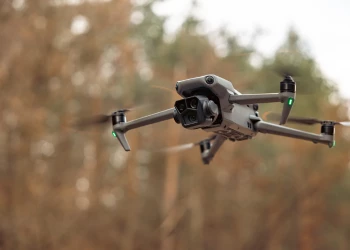
Unmanned aerial vehicles (UAVs) are bringing "unprecedented" intelligence, surveillance and reconnaissance (ISR) capability, director of the Army Unmanned Aerial System Center of Excellence at Fort Rucker, Army Colonel Christopher Carlile, said this month.
His comments are the latest of many recommending the technology, which is one of the fastest-growing fields in the Army.
"There's an old saying that science and science fiction is only separated by timing, and that timing is now. We have it," Carlile stressed.
Although UAVs met with some scepticism when they first emerged in the mid-1990s, they are seen as proven force multipliers that save lives on the battlefield.
Carlile said that Army UAVs have clocked up almost one million flight hours in Iraq and Afganistan and the force is now committed to expanding its programme in order to keep pace with demand for unmanned systems.
UAV Fleet
The Army plans to train more than 2,000 operators of UAVs who will eventually be deployed along with the ground troops they will support, Colonel Carlile revealed.
There are three main forms of UAV used by the Army—the Raven, the Shadow and the Extended Range Multi-Purpose system.
The Raven supports battalions down to platoon level, the 11-foot-long Shadow is designed for use at brigade level and the Extended Range Multi-Purpose, with its 56-foot wingspan, supports division-level operations.
Carlile said that these UAVs help soldiers to track down enemy targets. In the past, troops were forced to find out what was behind a building or around a corner when gunfire or a rocket-propelled grenade came at them. Now, the Raven can be used to conduct this reconnaissance work.
"They can take that and fly it and put it above and see if there is an ambush on the other side of the street, in real time," the colonel said.
"Troops also can determine what the enemy is up to—such as hiding behind civilian shields—to reduce the risk of collateral damage during operations."
Asymmetrical Challenges
Deputy Defense Secretary William Lynn III has also highlighted the potential of UAVs in modern warfare.
"Our dominance in conventional warfare has led adversaries to seek new avenues to challenge us," he said.
Improvised Explosive Devices are one of the main tools that the Taliban are using against troops in Afghanistan. However, the US military has been developing new technology to meet these asymmetrical challenges.
UAVs can track and identify insurgent activities, including the placing of roadside bombs.
"Because of a significant investment in intelligence surveillance, surveillance and reconnaissance [capabilities], commanders receive actionable intelligence in minutes rather than in hours," Lynn said.
"Unmanned aircraft now combine surveillance with attack abilities," he added.
It is not just the US Army which is investing in UAVs. The National Oceanic and Atmospheric Administration in partnership with BAE Systems has completed the first successful test flight of the small, electric-powered Coyote, which is being developed for military use.
The project was initially funded by the US Navy and the 14-pound Coyote, with a 58-inch wingspan, can perform ISR missions as well as having the potential to be used in weather research.
-
Irregular Warfare Necessitates Flexibility in Joint Operations -
F-35 Program on Schedule to Enhance US Combat Power -
US Strives For Enhanced Military Communication and Military Logistics with JTRS -
Weapons Remain Key Focus For US Army -
Arming the Vessel’s Crew vs. Armed Security Professionals -
Unmanned Air Systems xxx -
USAF Wants New Military Helicopters to Replace 62 Bell UH-1Ns xxx -
NATO Recognises Importance of Radio Spectrum for Army Use xxx -
“Hurry Up and Wait” Logistics Bottlenecks for Afghanistan xxx -
Light Armored Vehicle Upgrade Vital for Marines in Afghanistan xxx
|
|
Our Armed Forces budget for this type of technology will be growing at extreme rates which is good money going to an excellent technology. Our nation is leading the pack within this technology sector in order to support our ground forces and to retain valuable data retrieved from insurgents in the field. We as a nation need to support unmanned vehicles for air, sea, and ground in order to best serve our troops who may be in harm’s way.
My only concern is getting technologies that support our Unmanned Vehicle Programs into to the appropriate departments to have them accessible for future designs that maybe coming to market. We need to come up with a process to expedite this endeavor, making technologies more available to our scientist who design the next evolution within this market segment.
|
|
|
Are these UAVs using MIL-STD-1553 data bus for low-speed functions like flight controls? and then alos High-speed "Fibre Channel-like data buses for streaming ISR data?
|
|
|
The Army should have more of their own aircraft for support ops. The Key West Agreement with the USAF must be changed.
|
|
|
This is all great, but the Army operates their UAV's from territorially based in VAN's organic to the Brigades, which has both purpose and utility as they support and work closely with the intelligence groups. This is all well but in Afghanistan the areas of operations for the Battalions and Companies can stretch out and add the adverse terrain the line-of-sight (LOS) requirement from the VAN's to control the UAV's is greatly stressed. The Army has tried helicopters to control them from the air but that comes out more like a Chinese fire drill. They needs small military aircraft (SMA) that can fly like a drone yet carry a man that can work the interface with one or more drones from an altitude that extends the LOS of the VAN's and perhaps do other things. There is a manned drone called Dragoon, it may be the right vehicle for the moment. It is doing counter-mine work in North Africa now. Also can carry cargo and extract a casualty. COIN requires the ability to fill in the gaps. The Army's need to stay suborbital with their tactical drones in both smart and necessary - the Dragoons are flown by Sergeants - hummm??
|
|
|
Fortunately we're not yet publishing everything we're doing to stop terrorists which slows down their ability to adapt. Remember what happened the last time we allowed terrorist havens to flourish? September 11th. I'll give you the benefit of your lack of knowledge though, the news media does everything it can to make Afghanistan and Iraq look like disasters. Unfortunately, our own government is also often our worst enemy by feeding into the lies and by publishing stuff that is classified which causes loss of American lives.
|
|
|
But remember, enemies can ADAPT faster than TECHNOLOGY.
Top down views do not see inside of buildings and IED's can be deployed rapidly, as can squads of RPG carriers hiding under cover until troops approach. Better armor is also a priority. But best solution may be to GET OUT and support SCHOOLS and INDUSTRY in these countries. Buy the poppy crop for Pharma companies iinstead of letting Taliban finance their adventures with it. Use some human tricks.
|
-
Armoured Vehicles Africa
76 Portland Place, London, UK
July 2- 4, 2013 -
10th Annual Global MDA: Coastal Surveillance 2013
Singapore Expo, Singapore
November 11- 14, 2013 -
Maritime Reconnaissance and Surveillance
Radisson Blu es. Hotel, Rome, Italy
September 24- 26, 2013 -
Mission Command
Waterview Conference Center, Arlington, VA
June 10- 12, 2013


Replies (0)
Not a member? Sign Up
Reasons for Joining