Not a member? Sign Up

Reasons for Joining

    Address your challenges through knowledge sharing with peers from our global network of specialists.

    Benchmark your business initiatives with the who's who in the field.

    Hear from industry pioneers how to maximize ROI in today's challenging economy.

    And best of all It's FREE!
Sign in using your existing
IDGA account
Username or Email:

Sign Up   | Already a member? Sign In
Defense

Space, China’s Tactical Frontier

Contributor:  IDGA Editorial Staff
Posted:  11/04/2011  12:00:00 AM EDT  | 
0

Rate this Article: (Be the First!)

In recent years, China has made stunning progress in its satellite reconnaissance capabilities. Matthew Durnin, Researcher at the Center for Defense Information will present a workshop at IDGA’s Military Satellites Summit, entitled ‘Space, China’s Tactical Frontier’. The @DefenseInsider Chris Archer recently spoke with Matthew about the progress China has made in its reconnaissance capabilities, and what this means to the USA, and the world.


Chris Archer @DefenseInsider: Matthew, could you explore some of the unique advances China has made with regards to reconnaissance capabilities in recent years?

Ten years ago China had no capability for real-time satellite reconnaissance; today it has about 15 low-earth orbiting recon satellites that can provide imagery or target location data and quickly transfer the data to ground stations. China has developed a diverse, fairly modern fleet of electro-optical, synthetic aperture radar (SAR), and electronic intelligence (ELINT) satellites. In terms of technology—resolution, for example—China still lags significantly far behind the United States. But for fairly large targets such as ships, China's capabilities are not dramatically different from those available to American military planners. Also, by focusing on smaller and cheaper satellites, China is building a system with impressive redundancy and increasingly smaller gaps between revisits. 


Explain the level of risk to the US, as China ramps up its A2/AD capabilities? What can be done?

China's development of A2/AD capabilities is not in itself a threat to the US. But to the extent that there is still a chance of conflict over Taiwan, China's ability to deny the US freedom of movement in the Western Pacific will continue to grow into a preoccupying concern for American military planners. In my view, the most effective countermeasures to China's A2/AD capabilities will take place in the electromagnetic spectrum. Signal warfare will be the front line of any future battle between superpowers. It's worth noting that many of the technologies theoretically supporting China's A2/AD capabilities—e.g., the anti-ship ballistic missile (ASBM)—are highly dependent on sensors that are fairly easy to disrupt. 


Examine the current trends within military dedicated satellite programs – what are these trends teaching us?

The future for most militaries will be a large number of relatively cheap and small satellites. My guess is that the US will remain somewhat of an exception to this trend. There's a lot of inertia behind the large, expensive, and long-lived platforms that make up the backbone of US satellite reconnaissance. I suspect the US will end up with a hybrid system of small numerous TACSAT-like satellites augmented by the legacy classified programs. 

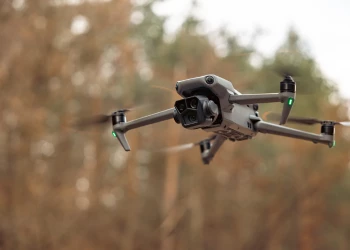
An interesting trend to watch will be the development of high altitude UAVs, which can provide persistent, high-resolution coverage. China is very interested in these technologies and appears to be developing prototypes. In many ways, this route could be more suitable to limited scope of China's defensive concerns than in-orbit assets. Still, space retains some advantages and the significant bureaucratic inertia behind China's satellite programs mean that their continuation is a safe bet for years to come.


What are the implications for China mass producing ‘good enough' technology that can be reliably and affordably put into mass production? *

The advantages of China's satellite innovation strategy are redundancy and, with sufficient numbers, good temporal resolution. The trends in China’s space related defense industry are to leverage common platforms adapted for different payloads and missions. As such, they are attempting to mate production efficiency with the technologies required, which in some fields are advanced, breakthrough technologies, but in many cases “good enough” is enough. China seems to be applying this strategy for its reconnaissance assets. Put simply, China is positioning itself to have frequent views of militarily relevant targets at adequate resolution for military planners. Because of the relatively large number of satellites China will soon be operating, its reconnaissance capabilities will have good survivability from isolated anti-satellite attacks. 

* [http://battleland.blogs.time.com/2011/07/13/china%e2%80%99s-rapid-space-ascent/#ixzz1YbXpwzTf]


Tell us about some of the key results and aims of your paper (China’s Anti-Ship Ballistic Missile), with regards to satellites and space-based targeting.

The anti-ship ballistic missile (ASBM) is in theory a threatening weapon to US naval operations. The reality of the missile's efficacy depends on several crucial links in the sensor to shooter chain. The first and most important link in the chain is getting at least an approximate location for the vessel. That can be accomplished by terrestrial/airborne recon or by over-the-horizon radar; however, satellites present unique advantages and appear to be a major focus for the PLA. In particular, China launched a trio of electronic intelligence (ELINT) satellites last year that are likely designed to work in close coordination with China's ASBM and cruise missiles. 

The broader concern for China is situational awareness in times of crisis. In the 1995-1996 Taiwan Strait Crisis, the PLA lost track of two American aircraft carriers and seems to have been in a constant state of confusion about their whereabouts throughout the crisis. That embarrassment has not been forgotten. Even if the possibility of an actual shooting war in the Pacific is minuscule, the PLA cannot operate with confidence while lacking an accurate picture of what's going on in its front yard. 


LIKE THIS ARTICLE? Click on the buttons below to rate OR share this on your Social Media...


IDGA Editorial Staff Contributor:   IDGA Editorial Staff


* = required.

Not a member yet? Sign up
User Name:
Password:
Be the first to leave a comment
Sign in or Sign up to post a comment

Advertisement

Events of Interest
Download Brochure

Please complete the information below to complete your download.

Please note: That all fields marked with an asterisk (*) are required.

First Name *
Last Name *
Job Title *
Company Name *
Email Address *
Telephone *
Country *
Where did you hear about us? *

I would like to receive information about sponsorship and exhibition opportunities

Yes, sign me up for the FREE IDGA e-newsletter, including information on FREE Podcasts, Webinars, event discounts and online learning opportunities.

You Might Also Like


Advertisement